
How Western Economies Can Avoid the Japan Trap
NEW YORK – Not too long ago, the conventional wisdom held that “Japanification” could never happen in Western economies. Leading US economists argued that if the combined threat of weak growth, disinflation, and perpetually low interest rates ever materialized, policymakers would have the tools to deal with it. They had no problem lecturing the Japanese about the need for bold measures to pull their country out of a decades-old rut. Japanification was regarded as the avoidable consequence of poor policymaking, not as an inevitability.
And yet the specter of Japanification now looms over the West. After the 2008 financial crisis, the recoveries in both Europe and the United States were more sluggish and less inclusive than the majority of policymakers, politicians, and economists expected. And, more recently, hopes for achieving “escape velocity” out of the “new normal” of low growth and persistent disinflationary pressure have been dashed in Europe and Japan, and some worry that they may be receding in the US.
Europe, in particular, is back in the grips of a worrisome regionwide slowdown. Growth projections have been consistently revised downward, and the European Central Bank has acknowledged that its earlier optimism about achieving on-target inflation was misplaced. With yields on government bonds having fallen, the global trade in securities at negative interest rates has reached around $10 trillion.
Meanwhile, Japan is approaching its fourth consecutive decade of consistently low nominal growth, inflation, and interest rates. And in the US, a growing number of economists are worried about a coming slowdown, with some urging the US Federal Reserve to cut interest rates, and others calling for it to adopt a higher inflation target in order to combat the risk of excessive disinflation.
Were all those Western economists who dismissed the threat of Japanification in the past being too glib? Yes and no.
Today’s Japanification fears stem from legitimate worries about structural disinflationary forces that could cause lower, less inclusive growth, both directly and indirectly. These forces include societal aging, rising inequality (in terms of income, wealth, and opportunity), social and economic insecurity among broad segments of the population, and a loss of trust in institutions and expert opinion.
Along with the zombification of firms after the last asset bubble, these structural factors have led to lower demand, as well as increased risk aversion and self-insurance, rather than growth-promoting risk-pooling, at the margin. Innovation, particularly in artificial intelligence, big data, and mobility, is another factor. Though the economic impact of these technologies is ambiguous, there is no doubt that they are reducing entry barriers across a growing number of economic activities and putting downward pressure on prices (the “Amazon effect”), at least in the short term. Nonetheless, their long-term effects on growth and productivity remain to be seen.
Growth is also being undercut in less direct ways. For example, persistently low – and in some cases negative – interest rates tend to eat away at the institutional integrity and operational effectiveness of the financial system, thereby reducing bank lending and limiting the range of long-term products that insurance/retirement firms can offer to households. Another indirect effect stems from expectations about the future. The longer growth and inflation remain low, the more tempted households and companies will be to postpone consumption and investment decisions, thus prolonging low growth and inflation.
The Western economists who initially underestimated the threat of Japanification did so because they had downplayed or simply ignored these direct and indirect factors. In retrospect, they should not be surprised to find that the societies with the fastest-aging populations and less inward migration are the ones now struggling with Japanification.
Still, those economists were not wrong to argue that policies can play a decisive role in macroeconomic outcomes – especially when structural forces are being amplified by excessive cyclical tightening, as was the case in Japan in 1989. The problem is that they have tended to focus too narrowly on monetary policy, while overestimating its effectiveness. Countries at risk of Japanification need a much broader mix of policies to address both the demand side and the supply side of the economy.
Monetary policy, after all, is less effective near the “zero bound” and in scenarios where other “liquidity trap” factors are in play. Large-scale balance sheet operations like quantitative easing (QE) can buy time by seeking to inject more liquidity directly into the system. But they don’t address the underlying issues, and they come with their own set of costs, forms of collateral damage, and unintended consequences.
The strongest protection against Japanification, then, is a combination of demand- and supply-side measures at the national, regional (in the case of Europe), and global levels. In countries with adequate fiscal space, this could mean looser government budgets and more productivity-enhancing investments (such as in infrastructure, education, and training). And in any country facing skills shortages, increased legal migration and better policies to facilitate labor mobility can help close the gap.
Moreover, these policies would need to be accompanied by more effective protections for the most vulnerable segments of the population, particularly when it comes to health, training, and labor retooling. None of this will materialize without better political leadership and more enlightened global policy interactions.
Japanification offers three lessons that Western policymakers and politicians have yet to internalize sufficiently. First, structural pressures make prompt action to reverse low growth, disinflation, and zero-to-low interest rates all the more critical. Second, unconventional monetary measures may be necessary, but they certainly are not sufficient. And, third, when crafting the required comprehensive policy response, we must recognize that the hurdles are a lot less technical, and a lot more political.
© Project Syndicate 1995–2019
à lire aussi

Article : La Princesse Lalla Asmaa lance à Rabat le programme “La prothèse auditive pour tous”
La Princesse Lalla Asmaa, présidente de la Fondation Lalla Asmaa, a présidé mardi 16 juin à Rabat la première Journée des patients souffrant de surdité. L’événement a été marqué par le lancement du programme national "La prothèse auditive pour tous". Un programme inédit destiné à rendre l’appareillage auditif gratuit et accessible aux Marocains les plus démunis.

Article : André Azoulay reçoit le prix Boutros Boutros-Ghali de la Paix
Le Forum de Crans Montana salue l’engagement de longue date du conseiller du Roi Mohammed VI en faveur du dialogue interculturel, de la mémoire judéo-marocaine et du rayonnement d’Essaouira.

Article : Fruits rouges : l’émirati Elite Agro porte son pari marocain à 1,3 MMDH
Avec une septième ferme de 200 hectares inaugurée à Kénitra, le groupe place le Royaume au cœur de sa production de myrtilles et de framboises.
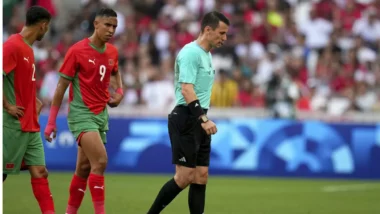
Article : Maroc-Écosse : l'Ouzbek Tantashev au sifflet, deux ans après la demi-finale olympique mouvementée contre l’Espagne
Désigné par la FIFA pour la rencontre du 19 juin au Boston Stadium, celui qui est arbitre international depuis 2013 avait quitté le terrain dès la 15e minute aux Jeux olympiques de Paris après une collision avec Marc Pubill.

Article : Mr. Bricolage vise 45 magasins au Maroc d'ici 2032 et un plan d'investissement de 700 MDH
Mr. Bricolage Maroc prévoit le déploiement de 45 magasins d’ici 2032, au rythme d’une ouverture toutes les huit semaines, dans le cadre d’un plan porté par un investissement de 700 millions de DH.

Article : Loi 16.22 sur les adouls : l’Ordre réagit à la décision de la Cour constitutionnelle
L’invalidation partielle du texte par la Cour constitutionnelle est accueillie avec soulagement par une partie de la profession, qui y voit la confirmation de réserves exprimées depuis plusieurs mois. Mais pour Maître Driss Trali, membre du bureau exécutif de l’Ordre national, la réforme reste incomplète tant que le dépôt des fonds, l’officialité pleine de l’acte et l’indépendance de l’instance professionnelle ne sont pas consacrés par la loi.