
How Africa Can Self-Finance its Economic Recovery
CASABLANCA – For Africa, the COVID-19 pandemic will likely mean negative GDP growth at unprecedented rates. In addition, several African countries are dealing with the aftermath of a commodity price collapse – another key contributor to current recessionary trends.
The continent must now navigate economic recovery while building resilience to future shocks. From strengthening the healthcare sector to nurturing broad-based economic growth, African leaders need to develop new strategies for solving structural challenges. With the continent’s external partners also hit by COVID-19 and focusing on their own domestic needs, and with capital fleeing from emerging markets (including Africa) at a record rate, even before the pandemic, Africa’s policymakers need to look inward.
One possible solution is a large-scale infrastructure investment program partly funded by mobilizing domestic resources through asset recycling, which enables governments to unlock capital tied up in what they already own. By offering these assets through concession schemes to credible private-sector investors, governments could free up funding for critical new projects. Such concessions promise long-term revenue streams and new infrastructure-investment opportunities that should attract more investment capital to Africa. Thus, asset recycling can help close the continent’s massive infrastructure financing gap, which the African Development Bank (AfDB) estimates at $68-108 billion annually.
Recyclable assets include power plants, toll roads, ports, airports, fiber-optic networks, pipelines, and more. The funds generated by monetizing these assets could be deployed in new projects with powerful multiplier effects, creating jobs and business opportunities throughout a country’s economy. This is critical, considering the massive job losses that the continent is likely facing and the millions of young people entering the workforce every year.
While asset recycling has never been tried in Africa, Australia has used it successfully to generate over A$25 billion ($18 billion) in three years by recycling just 12 state-owned assets. African governments could repeat this process across the continent to help close the annual infrastructure-financing gap.
Aside from the immediate benefits, asset recycling in Africa could attract a new class of infrastructure investors. In Australia, a combination of sovereign wealth funds, pension funds, and several private investment funds participated in such projects. Attracting similar investors by leveraging existing assets would end African governments’ dependence solely on donors and development finance institutions. My organization, Africa50, is currently discussing the implementation of asset-recycling projects with several governments across the continent.
Large-scale infrastructure investment dovetails with a focus on digitalization, which can reduce public and private actors’ costs, boost their efficiency, overcome physical obstacles, and improve the quality of services provided to customers and citizens. The continent’s digital transformation is well underway by any metric: the number of new broadband connections is soaring, mobile phone usage continues to trend upwards, and the continent is a global leader in mobile money. And the “new normal” of working remotely, and changes in consumer behaviors triggered by COVID-19, present a continent-wide opportunity to accelerate this process.
But, while economic growth and job creation in Africa would clearly benefit from continued digitalization, broadband penetration is still below the global average. A full digital transformation will not be possible without a reliable infrastructure backbone. Achieving universal broadband access with 4G/5G and expansion of fiber-optic cable networks will require an additional $100 billion by 2030, according to the World Bank. Raising the necessary funds is becoming a top priority for African governments as they seek to adapt to a post-COVID-19 world, and Africa50 is already working on one such transaction in a shareholder country, using asset-recycling principles.
Asset-recycling strategies clearly offer a viable way for African governments to contribute significantly to self-financing the investments that their countries need. And while large-scale digital infrastructure development is, rightly, a priority for African countries, governments must also focus on supporting entrepreneurs with ecosystems that enable digital innovation. Initiatives such as the Kigali Innovation City will provide “plug-and-play” support to tech- and knowledge-based companies.
Finally, African governments must emphasize further regional integration through the African Continental Free Trade Area (AfCFTA). Shared infrastructure is vitally important in developing manufacturing capacity, but many African economic communities are lagging in this regard. Integrating energy infrastructure, in particular, would stabilize supplies and reduce costs, with economy-wide effects. The AfDB’s Desert to Power initiative, for example, seeks to develop 310 gigawatts of renewable energy across the Sahel region to supply power to 11 countries, including Nigeria, Mauritania, Mali, Burkina Faso, Niger, Djibouti, and Eritrea.
Similarly, regional integration of supply chains through full implementation of the AfCFTA would boost local economies and strengthen domestic production capacity. Most African countries rely on trade with non-African partners for around 30% of their GDP. By encouraging intra-continental trade, the AfCFTA will support the growth of the continent’s manufacturing sector catering to local markets. And increasing intra-continental trade from its current level (15% of all trade) to around 60% is likely to create millions of jobs.
Clearly, a recovery designed and financed largely by Africans is well within reach. While the pandemic is hitting the continent hard, strategies such as asset recycling, continued digitalization, and stronger regional integration can help ensure that Africa is strong enough to fight back.
à lire aussi

Article : Ouahbi avant l’Écosse : “Nous voulons imposer notre rythme et notre style”
À la veille du choc face à l'Écosse pour la deuxième journée de la Coupe du Monde 2026, le sélectionneur Mohamed Ouahbi et le milieu de terrain Azzedine Ounahi ont tenu une conférence de presse à Boston. État des troupes, ajustements tactiques, rumeurs de transferts et ambitions populaires : aucun sujet n'a été éludé.
Article : Maroc-Écosse (Mondial 2026) : quelle heure, quelles chaînes
Le Gillette Boston Stadium de Foxborough sera le théâtre, ce vendredi 19 juin, de la deuxième rencontre de l’équipe nationale en cette Coupe du monde 2026.
Article : Exploration de gaz naturel au Maroc : les puits tant attendus de 2026 prêts à forer
Deux forages attendus dans l'Oriental, quatre projets offshore en développement et de nouveaux blocs en négociation… Le second semestre 2026 s'annonce déterminant pour l'exploration gazière au Maroc. Décryptage.
Article : Par région et par filière, voici les cracks du baccalauréat 2026
Après la publication des résultats du baccalauréat 2026, les académies régionales ont dévoilé les noms de leurs meilleurs élèves. De Dakhla à Tanger, les premières moyennes avoisinent 19/20, tandis que Omar Dahab signe la meilleure performance nationale avec 19,76/20.
Article : Le port de Casablanca réceptionne une turbine de près de 500 tonnes destinée à un projet énergétique
Le port de Casablanca a accueilli une turbine à gaz de 495 tonnes et son générateur, destinés à une future centrale électrique au barrage Al Wahda.
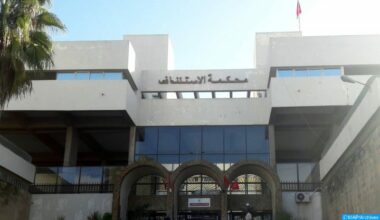
Article : Procès “Escobar du Sahara” : les débats sont clos, une ultime audience avant le verdict
La Chambre criminelle près la cour d'appel de Casablanca a bouclé les plaidoiries dans le dossier de trafic de drogue dit "Escobar du Sahara". Les accusés prendront une dernière fois la parole le 25 juin avant la mise en délibéré.