

How to Govern a Digitally Networked World
WASHINGTON, DC – Governments built the current systems and institutions of international cooperation to address nineteenth- and twentieth-century problems. But in today's complex and fast-paced digital world, these structures cannot operate at "Internet speed."
Recognizing this, United Nations Secretary-General António Guterres last year assembled a high-level panel – co-chaired by Melinda Gates and Alibaba co-founder Jack Ma – to propose ways to strengthen digital governance and cooperation. (Fadi Chehadé, a co-author of this article, is also a member.) It is hoped that the panel's final report, expected in June, will represent a significant step forward in managing the potential and risks of digital technologies.
Digital governance can mean many things, including the governance of everything in the physical world by digital means. We take it to mean the governance of the technology sector itself, and the specific issues raised by the collision of the digital and physical worlds (although digital technology and its close cousin, artificial intelligence, will soon permeate every sector).
The issue is rapidly rising to the top of the global agenda. At this year's annual meeting of the World Economic Forum in Davos, the leaders of Japan, South Africa, China, and Germany called for global oversight of the technology sector, while acknowledging the difficulty of designing a workable governance system.
Some business leaders also accept the need for digital rules and conventions. Microsoft President Brad Smith has called for a "Digital Geneva Convention" to protect citizens from peacetime cyberattacks, while Apple CEO Tim Cook argues that the United States needs its own version of the European Union's General Data Protection Regulation regarding personal data. Both recognize that a continued lack of norms will hit business growth and further erode trust in their companies' stewardship of the digital world.
Because the Internet is a network of networks, its governing structures should be, too. Whereas we once imagined that a single institution could govern global security or the international monetary system, that is not practical in the digital world. No group of governments, and certainly no single government acting alone, can perform this task.
Instead, we need a digital co-governance order that engages public, civic, and private leaders on the basis of three principles of participation. First, governments must govern alongside the private and civic sectors in a more collaborative, dynamic, and agile way. Second, customers and users of digital technologies and platforms must learn how to embrace their responsibilities and assert their rights. Third, businesses must fulfill their responsibilities to all of their stakeholders, not just shareholders.
In the digital order we envisage, representatives of governments, businesses, and civil society would form peer-to-peer, self-governing horizontal networks. A central hub would activate these groups to address specific digital issues – such as the use of facial-recognition data, the sharing of patients' health records with insurance providers, and hidden advertising aimed at children – and ensure that relevant experts are included.
Participants in these networks would co-design digital norms, or actionable rules and implementation guidelines that give companies and citizens clear incentives to cooperate responsibly in the digital world. These co-designers should produce the best possible solutions at Internet speed, and make them available for anyone to adopt voluntarily.
In some cases, national or international authorities may adopt new laws and regulations to ensure that digital norms are implemented and enforced. But such "top-down" actions should be only a last resort, and would ideally use the co-designed digital norms as blueprints.
The central hub or clearing house would loosely coordinate the networks and ensure that the entire co-governance order operates according to principles of openness, inclusivity, subsidiarity, resiliency, and innovation. Furthermore, the hub would serve as an exchange for different networks' digital norms, thereby encouraging their spread and adoption. This would also help to increase cohesion and limit unnecessary duplication.
In time, the hub might actively help governments, businesses, and user groups, as well as other relevant national and international organizations, to participate in the design – and, crucially, the adoption – of digital norms. But it would push resources and power to the participants rather than acting as a top-down authority.
Horizontal networks are a practical design for governing the digital world. At the same time, they draw heavily on the successes (and failures) of existing networks of national regulators, such as the Basel Committee on Banking Supervision, the Financial Stability Board, and the Internet Corporation for Assigned Names and Numbers (ICANN). Instead of spending another year debating the perfect digital governance system, it would be wiser to start with a functional and proven approach and adapt along the way.
The world urgently needs a workable digital governance system that serves the common good. If public, private, and civic leaders do not act soon, we risk economic decline, faster weaponization of digital technologies, and further erosion of trust and security. The consequences of this failure would extend well beyond the digital world.
à lire aussi

Article : La Princesse Lalla Asmaa lance à Rabat le programme “La prothèse auditive pour tous”
La Princesse Lalla Asmaa, présidente de la Fondation Lalla Asmaa, a présidé mardi 16 juin à Rabat la première Journée des patients souffrant de surdité. L’événement a été marqué par le lancement du programme national "La prothèse auditive pour tous". Un programme inédit destiné à rendre l’appareillage auditif gratuit et accessible aux Marocains les plus démunis.

Article : André Azoulay reçoit le prix Boutros Boutros-Ghali de la Paix
Le Forum de Crans Montana salue l’engagement de longue date du conseiller du Roi Mohammed VI en faveur du dialogue interculturel, de la mémoire judéo-marocaine et du rayonnement d’Essaouira.

Article : Fruits rouges : l’émirati Elite Agro porte son pari marocain à 1,3 MMDH
Avec une septième ferme de 200 hectares inaugurée à Kénitra, le groupe place le Royaume au cœur de sa production de myrtilles et de framboises.
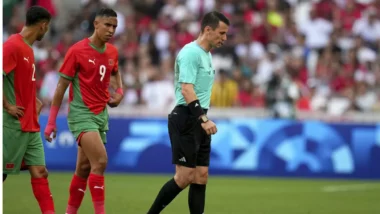
Article : Maroc-Écosse : l'Ouzbek Tantashev au sifflet, deux ans après la demi-finale olympique mouvementée contre l’Espagne
Désigné par la FIFA pour la rencontre du 19 juin au Boston Stadium, celui qui est arbitre international depuis 2013 avait quitté le terrain dès la 15e minute aux Jeux olympiques de Paris après une collision avec Marc Pubill.

Article : Mr. Bricolage vise 45 magasins au Maroc d'ici 2032 et un plan d'investissement de 700 MDH
Mr. Bricolage Maroc prévoit le déploiement de 45 magasins d’ici 2032, au rythme d’une ouverture toutes les huit semaines, dans le cadre d’un plan porté par un investissement de 700 millions de DH.

Article : Loi 16.22 sur les adouls : l’Ordre réagit à la décision de la Cour constitutionnelle
L’invalidation partielle du texte par la Cour constitutionnelle est accueillie avec soulagement par une partie de la profession, qui y voit la confirmation de réserves exprimées depuis plusieurs mois. Mais pour Maître Driss Trali, membre du bureau exécutif de l’Ordre national, la réforme reste incomplète tant que le dépôt des fonds, l’officialité pleine de l’acte et l’indépendance de l’instance professionnelle ne sont pas consacrés par la loi.