
A Confrontation from Hell
CANBERRA – Former US Ambassador to the United Nations Samantha Power once called genocidal wars “a problem from hell.” As US President Donald Trump’s administration ratchets up tensions with Iran, the world must now reckon with the prospect of a “confrontation from hell” between the two countries.
For now, both the United States and Iran say they do not want a war. Yet, step by inexorable step, they are moving onto a collision course. The US has significantly stepped up its military deployment in Iran’s neighborhood, dispatching the USS Abraham Lincoln aircraft carrier strike group and a bomber task force to the Middle East to warn the Iranian regime against taking any threatening actions. Iran’s leaders, meanwhile, have decried the move as psychological warfare and regard it as a provocation aimed at drawing their country into a military conflict.
Since he took office, Trump has been relentless in his depiction of Iran as the source of all evil – including international terrorism – in the region and beyond. He has reversed his predecessor Barack Obama’s policy of engagement and is exerting maximum pressure on the Iranian regime with three objectives in mind.
First and foremost, the Trump administration wants to bring about regime change, or at least a change in the regime’s behavior. It also seeks to degrade Iran’s economy so that the country can no longer be an influential regional player. And it wants to shore up Israel’s position as America’s most loyal and powerful ally in the Middle East, and to forge close strategic ties between the Jewish state and Arab countries opposed to Iran, including the Gulf states – led by Saudi Arabia – and Egypt.
To achieve these objectives, Trump has withdrawn the US from the 2015 Iran nuclear deal, officially known as the Joint Comprehensive Plan of Action (JCPOA). His administration has imposed harsh sanctions on Iran that affect every sector of its economy, leading some foreign companies to stop doing business with the country. And in an unprecedented move last month, Trump designated the key branch of Iran’s military forces, the Islamic Revolutionary Guard Corps, as a terrorist organization.
Trump’s hawkish national security adviser, John Bolton, backed by Secretary of State Mike Pompeo, recently said that: “The United States is not seeking war with the Iranian regime, but we are fully prepared to respond to any attack, whether by proxy, the Islamic Revolutionary Guard Corps, or regular Iranian forces.” This takes the US and Iran a step closer to a military confrontation that could be triggered either intentionally or by miscalculation.
In the event of a war, Iran would not have the military capacity to stand up to American firepower. The US could quickly take out Iranian military installations, nuclear sites, and major infrastructure facilities. In addition, it could prevent Iran from blocking the Strait of Hormuz, through which some 30% of the world’s oil is shipped.
Yet Iran is capable of making any US military assault – with or without Israeli and Saudi Arabian support – very costly for America and the region. The Iranian regime may be able to sink a few ships at the Strait of Hormuz’s narrowest point – where the shipping lanes in either direction are only two miles (3.2 kilometers) wide – in an effort to choke it off. More important, Iran has nurtured an asymmetric-warfare strategy based on both hard and soft power. Although Iran lacks a modern frontline air force, for example, it has made significant progress in developing and producing short-, medium- and long-range missiles, which have the capacity to hit targets as far away as Israel.
Furthermore, the regime could target landmarks such as the Burj Khalifa in Dubai – the world’s tallest building ‒ in order to trigger a financial meltdown across the region. Even if the accuracy of Iranian missiles cannot be guaranteed, many of them could still evade defensive systems. Israel’s state-of-the-art Iron Dome anti-missile defenses, for example, have been unable even to neutralize all the primitive missiles launched from Gaza.
Moreover, the Iranian regime has forged a network of proxy forces across the region. Syria and Iraq have become crucial links in an Iran-led Shia strategic arc stretching from Afghanistan to Lebanon. The regime’s proxy forces include segments of Afghanistan’s Shia population, Iraqi Shia militias, and Hezbollah, which controls southern Lebanon and has thousands of rockets ready to target Israel. Indeed, Hezbollah emerged from its 2006 war with Israel stronger than before.
In addition, Iran can mobilize thousands of extremely dedicated suicide bombers to sacrifice themselves for the cause of Shia Islam and nationalism that the regime has successfully promoted. These bombers are embedded within the Iranian security forces, and across the region.
The Iranian regime has worked hard to strengthen its national security within a supportive regional framework. In a conflict with the US, therefore, Iran would not be a pushover. On the contrary, any major military assault could result in an uncontrollable regional inferno. Both sides have good reason not to start a war.
à lire aussi
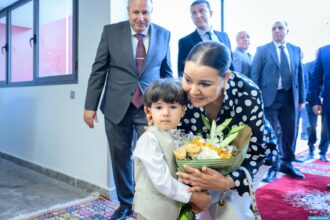
Article : La Princesse Lalla Asmaa lance à Rabat le programme “La prothèse auditive pour tous”
La Princesse Lalla Asmaa, présidente de la Fondation Lalla Asmaa, a présidé mardi 16 juin à Rabat la première Journée des patients souffrant de surdité. L’événement a été marqué par le lancement du programme national "La prothèse auditive pour tous". Un programme inédit destiné à rendre l’appareillage auditif gratuit et accessible aux Marocains les plus démunis.
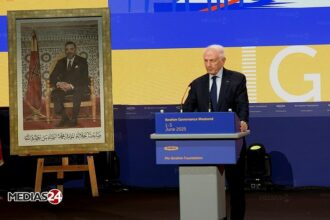
Article : André Azoulay reçoit le prix Boutros Boutros-Ghali de la Paix
Le Forum de Crans Montana salue l’engagement de longue date du conseiller du Roi Mohammed VI en faveur du dialogue interculturel, de la mémoire judéo-marocaine et du rayonnement d’Essaouira.
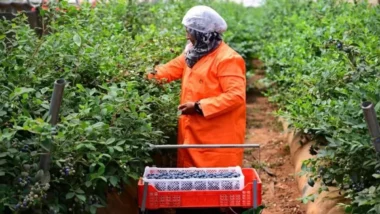
Article : Fruits rouges : l’émirati Elite Agro porte son pari marocain à 1,3 MMDH
Avec une septième ferme de 200 hectares inaugurée à Kénitra, le groupe place le Royaume au cœur de sa production de myrtilles et de framboises.
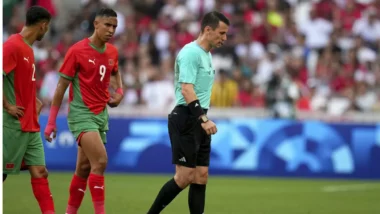
Article : Maroc-Écosse : l'Ouzbek Tantashev au sifflet, deux ans après la demi-finale olympique mouvementée contre l’Espagne
Désigné par la FIFA pour la rencontre du 19 juin au Boston Stadium, celui qui est arbitre international depuis 2013 avait quitté le terrain dès la 15e minute aux Jeux olympiques de Paris après une collision avec Marc Pubill.

Article : Mr. Bricolage vise 45 magasins au Maroc d'ici 2032 et un plan d'investissement de 700 MDH
Mr. Bricolage Maroc prévoit le déploiement de 45 magasins d’ici 2032, au rythme d’une ouverture toutes les huit semaines, dans le cadre d’un plan porté par un investissement de 700 millions de DH.

Article : Loi 16.22 sur les adouls : l’Ordre réagit à la décision de la Cour constitutionnelle
L’invalidation partielle du texte par la Cour constitutionnelle est accueillie avec soulagement par une partie de la profession, qui y voit la confirmation de réserves exprimées depuis plusieurs mois. Mais pour Maître Driss Trali, membre du bureau exécutif de l’Ordre national, la réforme reste incomplète tant que le dépôt des fonds, l’officialité pleine de l’acte et l’indépendance de l’instance professionnelle ne sont pas consacrés par la loi.