
Davos 2026: what Morocco highlights to attract investors
From January 19 to 23, 2026, Morocco took part in the World Economic Forum (WEF) in Davos, represented by a delegation led by the head of government and joined by AMDIE, the country’s investment promotion agency. The Kingdom came to defend a clear promise: offering a “stable and ready” base in an era of nearshoring, decarbonization, and reconfigured supply chains.
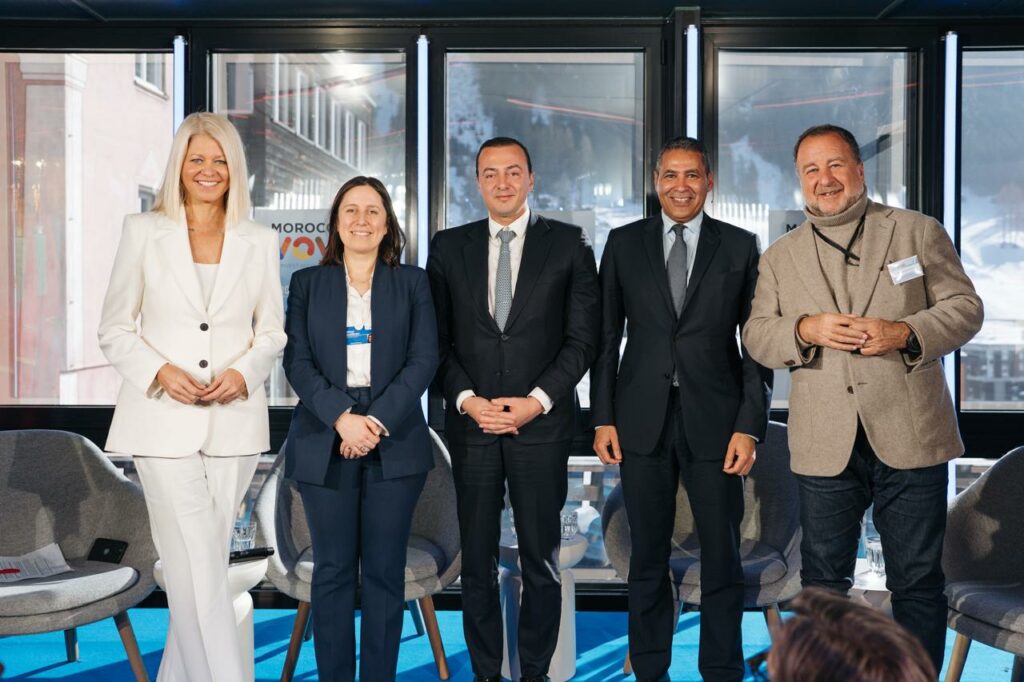
At Davos, countries are no longer relying solely on geography or competitive costs. Investors today are looking for more, weighing their choices in an increasingly unstable environment marked by energy price volatility, geopolitical tensions, logistical disruptions, climate-related regulatory pressure, and growing demands for supply chain traceability.
Aware of these challenges, Morocco now presents itself as a platform "close to Europe, anchored in Africa," emphasizing three decisive criteria:
- the resilience of value chains (the ability to produce and export without interruption, supported by an already structured industrial ecosystem),
- access to more decarbonized electricity (to meet the demands of customers and the European market),
- and speed of execution (land, procedures, connections, ramp-up).
In other words, a capacity to deliver. However, this promise faces the reality of intense competition to attract nearshoring. Arbitration often revolves around operational details (land, timelines, connections, skills).
The Kingdom's presence in Davos unfolded in several sequences. First, the Head of Government presented and defended the Moroccan model of the State social and economic resilience.
He explained that Morocco demonstrates that there is no opposition between social ambition and economic credibility. Aziz Akhannouch indicated that Morocco now asserts itself as a major logistical platform, while positioning itself as a key player in decarbonization, with, by the end of 2025, over 46% of electrical capacity coming from renewable energies and structuring projects in solar, wind, and green hydrogen. He also emphasized the importance of political predictability for long-term investment.
The second part of Morocco's participation revolved around an "Invest in Morocco" meeting organized by the Moroccan Agency for Investment and Export Development (AMDIE). It featured a discussion between Ali Seddiki, Director General of AMDIE, and journalist Jane Witherspoon from Euronews.
"A stable, competitive, and future-ready platform"
In his responses to Jane Witherspoon, Ali Seddiki provides a more operational framework for the Head of Government's advocacy. He explains that Morocco is "clearly positioned in the current landscape of international investments as a stable, competitive, and future-oriented platform, at a time when investors seek countries capable of offering predictability, connectivity, and long-term visibility." In essence, Morocco promises a "foundation" more than just a simple destination.
- The first argument put forward is market access. Ali Seddiki highlights the network of free trade agreements: "Thanks to its network of free trade agreements, Morocco provides access to over 2.5 billion consumers, including Europe and the United States."
- The second pillar is industrial depth. Ali Seddiki noted that Morocco has spent two decades building "a robust industrial ecosystem", spanning automotive, aerospace, electronics, textiles, and advanced manufacturing, with an "expanding roster of global leaders" producing and exporting from the country.
- The third focus is decarbonization. Ali Seddiki stressed that Morocco is "gaining recognition" for its "green competitiveness," positioning itself as a "credible hub" for sustainable production, particularly in emerging sectors such as electric mobility and batteries.
"Morocco is increasingly recognized for its green competitiveness. With strong ambitions in renewable energies and concrete projects in clean energy and industrial decarbonization," he recalls, specifying that the message to investors in Davos is that "Morocco is not just a promising destination — it is a proven platform."
The question is no longer "why Morocco?" but "how quickly can we build together?" assures the Director General of AMDIE.
CAN 2025 and World Cup 2030: showcase and calendar requirement
Asked about the impact of major sports events, especially CAN 2025 and the World Cup 2030, Ali Seddiki argues that they are "more than just competitions." They are "powerful accelerators of investment and global attractiveness," and above all a way to "demonstrate through actions" that Morocco can "deliver at the highest level, on time, and on a large scale."
He adds that these milestones strengthen the country's image as a "stable, efficient, and reliable" partner and concludes: "For investors, this reinforces the image of a country of execution, predictability, and long-term vision."
Regarding attractiveness mechanisms, Ali Seddiki presents AMDIE as a "one-stop shop" and a "trusted partner," "from the first contact to project delivery," assisting in site selection, connecting with public and private actors, and structuring projects within the Investment Charter framework. He also emphasizes aftercare (post-investment follow-up), "ensuring close monitoring with administrations and partners to address bottlenecks and secure implementation."
And Ali Seddiki concludes: "We are not just promoting Morocco: we help investors succeed in Morocco. We ensure the right conditions and deliver results — from the largest factories to the most innovative initiatives."
à lire aussi
Article : Aéroport Mohammed V : l'ONDA engage une refonte architecturale à 300 MDH
L’appel d’offres porte sur les études et le suivi d’un chantier destiné à donner une même identité aux terminaux T1, T2 et domestique, tout en repensant les parcours passagers, les accès, les façades et l’expérience d’accueil.

Article : Désinformation : comment la machinerie hostile au Maroc a fabriqué “l’affaire Wassim”, jusqu'au sommet de l’État algérien
Comme lors de chaque grand rendez-vous sportif, les réseaux de propagande hostiles au Maroc redoublent d'activité. La dernière tentative en date, "l’affaire Wassim", a cherché à imputer à la communauté marocaine résidant aux États-Unis l'agression présumée d'un mineur algérien à Boston.
Article : Énergie verte : les futurs câbles Maroc-France et le gazoduc H2 prennent place dans les plans européens
Les projets énergétiques reliant le Maroc au continent européen se multiplient dans le Plan décennal de développement du réseau européen, version 2026. Portés par Xlinks, Fortescue ou encore Enagás, ils confirment le positionnement du Royaume comme futur fournisseur d'énergie verte de l'Europe.
Article : Une fusion-absorption de l'Université internationale privée Averroès par LCI Africa Holding en projet
Le Conseil de la concurrence a été saisi le 2 juillet de l’opération, qui rapprocherait l’établissement casablancais du groupe LCI Education, déjà présent au Maroc à travers HEM, Collège LaSalle International Maroc et Foncière L’AGORA pour l’Éducation.
Article : À Tétouan, les juges constitutionnels veulent rendre l’État de droit plus visible
Organisé avec la Commission de Venise, le colloque a réuni pendant deux jours des intervenants marocains et étrangers autour d’un enjeu central : l’indépendance des cours et leur capacité à dialoguer au-delà des frontières. Les travaux ont aussi été marqués par la présentation de la version révisée de la Liste des critères de l’État de droit.
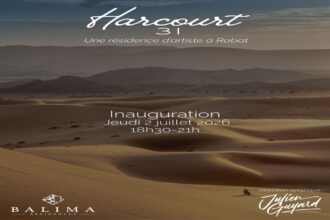
Article : Rabat : pour faire revivre son patrimoine, Balima mise sur des appartements-galeries
La marque a inauguré, le 2 juillet, la Senior Suite Balima Harcourt 31, conçue avec le photographe Julien Guyard et consacrée aux paysages du Sud marocain, dans le cadre d’un programme associant hébergement, création artistique et vente d’œuvres.