
Saved by the Pandemic?
HAY-ON-WYE – COVID-19 has killed more than 500,000 people worldwide, made millions more ill, and continues to wreak havoc. But as the saying goes – and without wishing to downplay this human tragedy in any way – it’s an ill wind that blows nobody any good. If we make the right choices as lockdowns ease, then the pandemic might just have thrown humanity a lifeline in dealing with the much greater challenge of climate change.
Before the coronavirus struck, activists like me had all but given up hope that the world would meet the Paris climate agreement’s target of limiting global warming to 1.5-2°C above pre-industrial levels. Instead, it looked like the world would heat up by 3-4°C.
That would be a planetary catastrophe. We would lose all of the world’s coral reefs and the majority of its rainforests, while many of the most densely populated regions would become intolerably hot. Food production would plummet, threatening famine and starvation as harvests failed in the world’s major breadbaskets.
Now, however, none of that needs to happen. The coronavirus has forced us to lock down economies to such an extent that carbon dioxide emissions have plunged. We have all seen the evidence, in the form of bluer skies, smog-free cities, and pedestrians and cyclists replacing polluting cars. Scientists estimate that global CO2 emissions will fall by up to 7% this year, and that maintaining this level of annual emissions reductions would put the world back on track to meet the 1.5-2°C target. That in turn would save coral reefs and rainforests, avert a global refugee crisis, limit sea-level rise, and keep the Arctic ice cap mostly frozen.
But while the COVID-19 crisis has given us an unexpected climate opportunity, we obviously can’t maintain lockdowns forever. Millions of people are currently out of work, and a prolonged economic shutdown would have a disastrous effect on livelihoods, with the burden falling mostly on the poor.
Fortunately, the choice we face is not between economic collapse and climate breakdown. By an extremely lucky coincidence, the world urgently needs to invest trillions of dollars in decarbonization just when the global economy equally urgently needs a huge stimulus to get people back to work.
To help finance these measures, countries such as the United States and the United Kingdom should issue long-term government bonds with maturities of 50 or even 100 years. With interest rates on some advanced economies’ government debt currently negative, national treasuries could raise large amounts of money at very little short-term cost. And because deflation is currently a much bigger risk than inflation, creating extra money via bond issues would help to stave off a potential global economic depression.
Some might object on moral grounds to governments borrowing money that our children and grandchildren will have to repay. But issuing long-term public debt to deal with a civilizational-scale challenge is far from unprecedented. The UK, for example, paid off its last remaining World War I debt only in 2014, and UK citizens today are about five times richer per capita than the generation that fought in that war. And assuming economic growth continues over the next century, our descendants will be better off still, thus easing future debt-service burdens.
Greta Thunberg and millions of young climate strikers around the world have rightly tried moral exhortation to persuade today’s leaders to take future generations’ interests seriously. But now we need to talk hard cash.
Tackling climate change requires huge capital investments now. For starters, ensuring a habitable climate in the second half of this century requires scaling up renewable energy technologies such as solar and wind power sufficiently, so that they replace fossil fuels as the major primary-energy providers.
Furthermore, we will need to produce liquid fuels, most likely ammonia and synthetic hydrocarbons, on an even larger scale than electric power in order to decarbonize shipping, aviation, and industrial processes such as steelmaking. Next-generation nuclear technologies such as advanced modular reactors, or AMRs, will play an essential role in this effort.
Major infrastructure investments are by nature long-term projects, and the cost of capital must be lowered if clean technologies are to out-compete fossil fuels. Governments can borrow the required amounts at much lower rates than the private sector, and the resulting investments will create millions of jobs to replace those lost in dirty industries, and help to revive the global economy after the pandemic.
The UK government has already issued £72 billion ($90 billion) worth of bonds with maturities of 50 years or more, which will fall due from 2055 onward. The UK and other countries could issue 50 times this much debt – £3-4 trillion ($3.7-5 trillion) –redeemable later this century, to help finance the investment needed to overcome the climate challenge.
Such long-maturing bonds could be a safe asset for pension funds and other long-term investors, and also offer them a way to divest permanently from fossil fuels. After all, there will be no “safe” assets in a world of escalating climate damage.
I am not suggesting that governments should financially support clean technologies indefinitely. Rather, the challenge is to reduce their costs – as has been done successfully with solar energy – through research and development and large early deployments, until clean tech becomes cheaper than fossil fuels and the energy transition becomes self-sustaining.
The COVID-19 crisis has brought climate and economic imperatives into closer alignment than ever before. If we seize this historic opportunity, future generations will surely remember 2020 as the year in which humanity both defeated a pandemic and saved the planet.
à lire aussi

Article : Le Nouvel an de l'hégire (1er Moharram) sera célébré ce mercredi 17 juin au Maroc
Le 1er Moharram de la nouvelle année de l’Hégire 1448 correspondra au mercredi 17 juin 2026, a annoncé le ministère des Habous et des affaires islamiques.

Article : Adouls : la Cour constitutionnelle valide l’essentiel de la réforme, mais écarte plusieurs dispositions
Saisie par 93 députés avant la promulgation du texte, la Cour a déclaré non conformes des articles touchant aux incompatibilités professionnelles, aux personnes en situation de handicap, au témoignage collectif dit “lafif” et à l’organisation des instances représentatives. Le texte devra donc être corrigé sur ces points, sans remettre en cause le cœur de la nouvelle loi 16.22.

Article : En commission, les conseillers votent la nationalisation de la Samir et le plafonnement des hydrocarbures
Deux propositions de loi portant sur les hydrocarbures et la Samir ont été récemment adoptées en commission à la Chambre des conseillers. Un vote "surprise" rendu possible par un rapport de forces numérique défavorable à la majorité, lors d’une séance où l’opposition était majoritaire en nombre. Si ces textes ont franchi l’étape de la commission, leurs promoteurs sont conscients qu’ils ont peu de chances d’être adoptés en plénière.

Article : Retail : la guerre silencieuse pour conquérir le panier des Marocains
Pendant longtemps, les courses du quotidien se sont surtout jouées entre l’épicier du quartier, le grossiste et quelques grandes surfaces. Ce modèle commence à se fissurer. Entre fusion capitalistique, rachats d’enseignes, master-franchises, centrales d’achat, logistique commune et formats de proximité, les grands opérateurs installent peu à peu des réseaux capables d’accompagner le consommateur du café du matin aux achats du week-end. Non sans bousculer les équilibres.

Article : Crédit du Maroc : ce que cache l’augmentation de capital à 699 MDH
Depuis son passage sous le contrôle de Holmarcom, Crédit du Maroc a changé de rythme. La banque affiche des bénéfices en hausse, prépare son plan CDM Boost 2028, et propose désormais à ses actionnaires de suivre le mouvement via une opération ouverte du 26 juin au 16 juillet. Derrière le prix fixé à 938 DH par action, le marché devra surtout juger si cette nouvelle étape confirme une trajectoire ou ouvre un pari plus large. Décryptage.
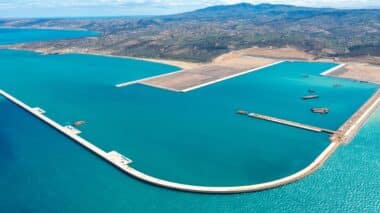
Article : Nador West Med : derrière le port, le pari industriel de l’Oriental
ROUND UP. Prévu pour entrer en service fin 2026, Nador West Med se construit déjà au-delà de ses quais : routes dédoublées, future autoroute vers Guercif, projets chinois dans l’éolien, les pneus et les alliages, ambition énergétique autour du GNL et de l’hydrogène vert. L’enjeu est désormais de transformer cette infrastructure en véritable moteur économique régional.