
Preventing a Media Mental Health Crisis
LONDON – Nothing highlights the importance of reliable news quite like a crisis. And yet, as the COVID-19 pandemic puts journalists under intensifying pressure to deliver that news, it is also upending their industry and transforming their working conditions. The stress this is placing on their mental health should not be underestimated.
Even before the COVID-19 crisis, many journalists were burned out or on the brink. The cycle of breaking news was relentless, income from advertising revenues was falling, newsroom budgets were strained, and public trust in media was declining.
The pandemic has compounded these challenges, while generating even more uncertainty. Most journalists are now working from home, unable to meet with colleagues, contacts, or subjects. Some are overwhelmed with responsibilities, as they attempt to deliver timely – and potentially life-saving – information about a fast-changing crisis. Many have lost their jobs.
The news industry needs to ensure it is doing all it can to support journalists’ mental health and wellbeing. According to Anthony Feinstein, a psychiatry professor at the University of Toronto, this is both about managing individual responses to the crisis and about news management validating the vital work of journalists at this time.
In an interview, Feinstein told me that rather than worrying about things they can’t control – an emotionally draining habit that can lead to catastrophic thinking – journalists should reflect on where they can make a difference and limit the attention they devote to where they cannot. More broadly, maintaining a healthy routine – getting enough sleep, eating well, exercising (even if indoors), and connecting with friends and family – is vital.
Most people could stand to heed this advice. But Feinstein’s third main recommendation – disconnecting from the news for a period of time before bed each night – is particularly difficult for those whose job it is to report it. According to Feinstein, the key is to delineate clearly one’s professional roles and responsibilities – including where they end.
Failure to do so puts journalists at risk of moral injury – that is the stress that arises when a person witnesses, perpetrates, or fails to prevent acts that contradict their values. (Moral injury has been shown to affect journalists covering issues such as forced migration, for example.) It can cause severe emotional distress if unmanaged and untreated.
Journalists also need direct support from their employers. The BBC, Agence France-Presse (AFP), and Reuters – all of which have global workforces with diverse needs – are three major media organizations that have placed mental health at the center of their COVID-19-response plans.
A key lesson to be learned from their strategies is the importance of communication and understanding. “There is constant communication about what we are doing, making sure everyone is seeing the messages that yes, we are a news organization, we have a mission; but the first thing we are thinking about is the health and safety of our people,” AFP’s global news director, Phil Chetwynd, told me.
Likewise, Kari Cobham, Senior Associate Director of Journalism Fellowships at the Carter Center in Atlanta, encourages managers to ensure their teams understand that “their wellbeing, unique family situations, and the community are important in these difficult times.” As Feinstein points out, it would be very unusual if we didn’t feel some kind of anxiety amid the current tumult.
More concretely, managers should rotate tough assignments when possible and validate journalists’ essential work. They should also keep staff informed, including about what resources are available to them and any changes to guidelines or policies. And they should check in regularly, encouraging staff to share any questions, concerns, or feedback, including privately, if they so choose.
“But we also need to be mindful,” Roz Orchard of Reuters told me, that “constant check-ins can be overwhelming,” especially at a time when people are coping with the conflicting experiences of physical isolation and digital hyper-connection. And, as Cobham points out, managers should ensure they protect their own mental health.
All of this should serve to foster a sense of trust and community that keeps journalists from feeling alone or unmotivated, without exacerbating the pressures they face. To help ensure success, media organizations should provide remote coaching to managers, giving them the tools they need to support their teams effectively.
The BBC already does just that, in addition to offering regular virtual sessions on mental health and resilience. “We talk a lot about sense of purpose,” BBC News and Current Affairs Managing Editor Sarah Ward-Lilley, one of the corporation’s mental-health leads, told me.
For those who cannot do their journalism jobs as they did before, purpose can become a sensitive topic. The BBC is addressing this challenge by carrying out skills audits, and reassigning those who fall into this category – say, because they usually work on a program that has been decommissioned or on a subject area where there is currently no news coverage – to skills-appropriate jobs that can be performed during the pandemic. But many others may not have that option, heightening feelings of a lack of purpose and insecurity – and making access to mental-health resources all the more important.
COVID-19’s effects on journalists will continue to reverberate well into the future. News organizations must act now to ensure that those effects do not include serious mental-health consequences.
à lire aussi
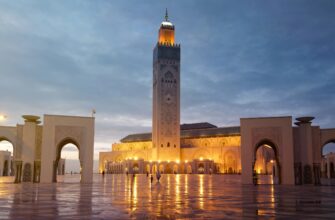
Article : Le Nouvel an de l'hégire (1er Moharram) sera célébré ce mercredi 17 juin au Maroc
Le 1er Moharram de la nouvelle année de l’Hégire 1448 correspondra au mercredi 17 juin 2026, a annoncé le ministère des Habous et des affaires islamiques.
Article : Adouls : la Cour constitutionnelle valide l’essentiel de la réforme, mais écarte plusieurs dispositions
Saisie par 93 députés avant la promulgation du texte, la Cour a déclaré non conformes des articles touchant aux incompatibilités professionnelles, aux personnes en situation de handicap, au témoignage collectif dit “lafif” et à l’organisation des instances représentatives. Le texte devra donc être corrigé sur ces points, sans remettre en cause le cœur de la nouvelle loi 16.22.
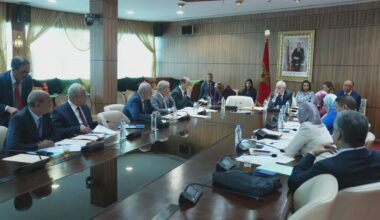
Article : En commission, les conseillers votent la nationalisation de la Samir et le plafonnement des hydrocarbures
Deux propositions de loi portant sur les hydrocarbures et la Samir ont été récemment adoptées en commission à la Chambre des conseillers. Un vote "surprise" rendu possible par un rapport de forces numérique défavorable à la majorité, lors d’une séance où l’opposition était majoritaire en nombre. Si ces textes ont franchi l’étape de la commission, leurs promoteurs sont conscients qu’ils ont peu de chances d’être adoptés en plénière.

Article : Retail : la guerre silencieuse pour conquérir le panier des Marocains
Pendant longtemps, les courses du quotidien se sont surtout jouées entre l’épicier du quartier, le grossiste et quelques grandes surfaces. Ce modèle commence à se fissurer. Entre fusion capitalistique, rachats d’enseignes, master-franchises, centrales d’achat, logistique commune et formats de proximité, les grands opérateurs installent peu à peu des réseaux capables d’accompagner le consommateur du café du matin aux achats du week-end. Non sans bousculer les équilibres.

Article : Crédit du Maroc : ce que cache l’augmentation de capital à 699 MDH
Depuis son passage sous le contrôle de Holmarcom, Crédit du Maroc a changé de rythme. La banque affiche des bénéfices en hausse, prépare son plan CDM Boost 2028, et propose désormais à ses actionnaires de suivre le mouvement via une opération ouverte du 26 juin au 16 juillet. Derrière le prix fixé à 938 DH par action, le marché devra surtout juger si cette nouvelle étape confirme une trajectoire ou ouvre un pari plus large. Décryptage.
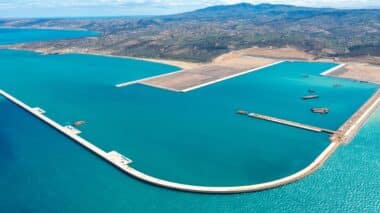
Article : Nador West Med : derrière le port, le pari industriel de l’Oriental
ROUND UP. Prévu pour entrer en service fin 2026, Nador West Med se construit déjà au-delà de ses quais : routes dédoublées, future autoroute vers Guercif, projets chinois dans l’éolien, les pneus et les alliages, ambition énergétique autour du GNL et de l’hydrogène vert. L’enjeu est désormais de transformer cette infrastructure en véritable moteur économique régional.