

The Virus that Changed the World
BERLIN – The COVID-19 pandemic has mercilessly exposed the weaknesses of institutions upon which the overwhelming majority of the world’s people rely. That includes both national governments and the international order. Neither is likely to survive in their current form – nor should they.
Long before clever commentators proclaimed the arrival of “the Anthropocene” – a geological epoch defined by humankind’s command over nature – it was a truism in advanced industrialized economies that the world was eminently under our control. Then along came a microscopic organism, and with it a global shock. Despite all our scientific knowledge and technological capabilities, COVID-19 has the upper hand, at least for the time being.
Compounding the irony, the world’s most advanced and powerful countries were among the least prepared for the pandemic. Having spent hundreds of billions of dollars on research and development, they have the world’s most powerful technologies and the strongest militaries, but they did not take seriously the risk that the next big threat might come from nature. We now know that this was a mistake of historic proportions. The seemingly implausible has come to pass; the mother of all black swans has landed.
At first blush, the COVID-19 crisis seems to be strengthening established institutions. The traditional nation-state has assumed the immediate task of containing the virus and its economic repercussions, and the post-war multilateral institutions have played only a supporting role. Even in Europe, nation-states, rather than the European Union, are leading the fight against the pandemic.
And yet, this points to a looming misconception. The international system comprises states of vastly different sizes, with varying degrees of power, but all of which embrace the old myth of national sovereignty. That system, as we know it, emerged from the ashes of Europe’s religious wars in the seventeenth century, consolidating itself through colonialism and then decolonialization (itself a reaction born of new nation-states).
In the first half of the twentieth century, the trauma of two world wars and the advent of the nuclear age demonstrated the need for a radical reform of the international system. The main innovation was the establishment of the United Nations as a counterweight to the claims of nation-states. Transnationalism became the new ethos: all nation-states were expected to curb their egoism and maintain peace and cooperation through a framework of global institutions.
In reality, of course, power was never really handed off to the UN. It still resided with the world’s superpowers, meaning, roughly, the permanent members of the UN Security Council. As a result, the international system rested for decades on an implicit compromise between nationalism and transnationalism, with America both preserving and operating within the multilateral framework. But, since President Donald Trump entered office, the United States has no longer felt duty-bound to anything.
As it happens, the period following World War II is also when the world really entered the Anthropocene, fully embracing the idea of human-driven material progress at the global level. Over the ensuing decades, the world’s population increased dramatically, from around 2.5 billion to nearly eight billion today.
Yet the Anthropocene has also been a period of mass extinctions. And as ever more parts of the world have industrialized, the consumption of natural resources has soared. One result of this is that anthropogenic global warming has reached a dangerous stage before we have even begun to marshal an appropriate response.
At the same time, new information and communication technologies, changes in the distribution of labor, and the rise of global value chains have all led to increased interdependence. But now that a virus has brought the entire world to a standstill, we are learning that a globalized economy is like a high-performance race car: highly efficient and highly fragile.
Looking ahead, the traditional nation-state – even one as powerful as the US or China – will not be able to manage an interconnected world of more than eight billion people. The nation-state’s horizon of interests is simply too narrowly defined. The Anthropocene inevitably will place a growing emphasis on humankind’s shared interests, not least the question of its continued survival. The COVID-19 pandemic, which ultimately will require international coordination, is demonstrating that national interests eventually will have to recede into the background. The looming crises wrought by climate change will be much larger, and their consequences irreversible.
While nation-states will remain indispensable in providing good governance and contributing to global efforts, the principle of nationalism will only exacerbate future systemic crises. The pandemic must be followed by a new age of international cooperation and a strengthening of multilateral institutions. This applies to Europe, in particular.
Now more than ever, we need to reclaim the spirit of 1945. We need the twenty-first century’s two superpowers, America and China, to set the example, by burying their rivalry and uniting all of humankind around a collective response to the current crisis, and to those that await us. As COVID-19 has taught us, the old international system can no longer guarantee humankind’s safety and security. We cannot afford to be taught that lesson twice.
à lire aussi
Article : Le Nouvel an de l'hégire (1er Moharram) sera célébré ce mercredi 17 juin au Maroc
Le 1er Moharram de la nouvelle année de l’Hégire 1448 correspondra au mercredi 17 juin 2026, a annoncé le ministère des Habous et des affaires islamiques.
Article : Adouls : la Cour constitutionnelle valide l’essentiel de la réforme, mais écarte plusieurs dispositions
Saisie par 93 députés avant la promulgation du texte, la Cour a déclaré non conformes des articles touchant aux incompatibilités professionnelles, aux personnes en situation de handicap, au témoignage collectif dit “lafif” et à l’organisation des instances représentatives. Le texte devra donc être corrigé sur ces points, sans remettre en cause le cœur de la nouvelle loi 16.22.
Article : En commission, les conseillers votent la nationalisation de la Samir et le plafonnement des hydrocarbures
Deux propositions de loi portant sur les hydrocarbures et la Samir ont été récemment adoptées en commission à la Chambre des conseillers. Un vote "surprise" rendu possible par un rapport de forces numérique défavorable à la majorité, lors d’une séance où l’opposition était majoritaire en nombre. Si ces textes ont franchi l’étape de la commission, leurs promoteurs sont conscients qu’ils ont peu de chances d’être adoptés en plénière.
Article : Retail : la guerre silencieuse pour conquérir le panier des Marocains
Pendant longtemps, les courses du quotidien se sont surtout jouées entre l’épicier du quartier, le grossiste et quelques grandes surfaces. Ce modèle commence à se fissurer. Entre fusion capitalistique, rachats d’enseignes, master-franchises, centrales d’achat, logistique commune et formats de proximité, les grands opérateurs installent peu à peu des réseaux capables d’accompagner le consommateur du café du matin aux achats du week-end. Non sans bousculer les équilibres.
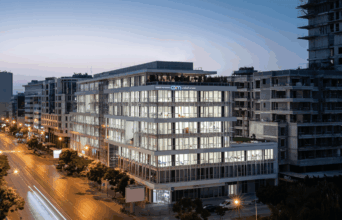
Article : Crédit du Maroc : ce que cache l’augmentation de capital à 699 MDH
Depuis son passage sous le contrôle de Holmarcom, Crédit du Maroc a changé de rythme. La banque affiche des bénéfices en hausse, prépare son plan CDM Boost 2028, et propose désormais à ses actionnaires de suivre le mouvement via une opération ouverte du 26 juin au 16 juillet. Derrière le prix fixé à 938 DH par action, le marché devra surtout juger si cette nouvelle étape confirme une trajectoire ou ouvre un pari plus large. Décryptage.
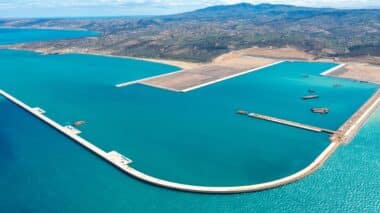
Article : Nador West Med : derrière le port, le pari industriel de l’Oriental
ROUND UP. Prévu pour entrer en service fin 2026, Nador West Med se construit déjà au-delà de ses quais : routes dédoublées, future autoroute vers Guercif, projets chinois dans l’éolien, les pneus et les alliages, ambition énergétique autour du GNL et de l’hydrogène vert. L’enjeu est désormais de transformer cette infrastructure en véritable moteur économique régional.