
In Morocco’s High Atlas, the Oukaïmeden Observatory is emerging as a global scientific hub
Behind its white domes, the Oukaïmeden Observatory has, in just a few years, become a prolific discovery engine. With more than 4,700 identified celestial objects and top-tier international partnerships, it is increasingly positioning itself as a strategic asset at the intersection of research, technology and scientific sovereignty — with ambitions that extend well beyond its current scale.
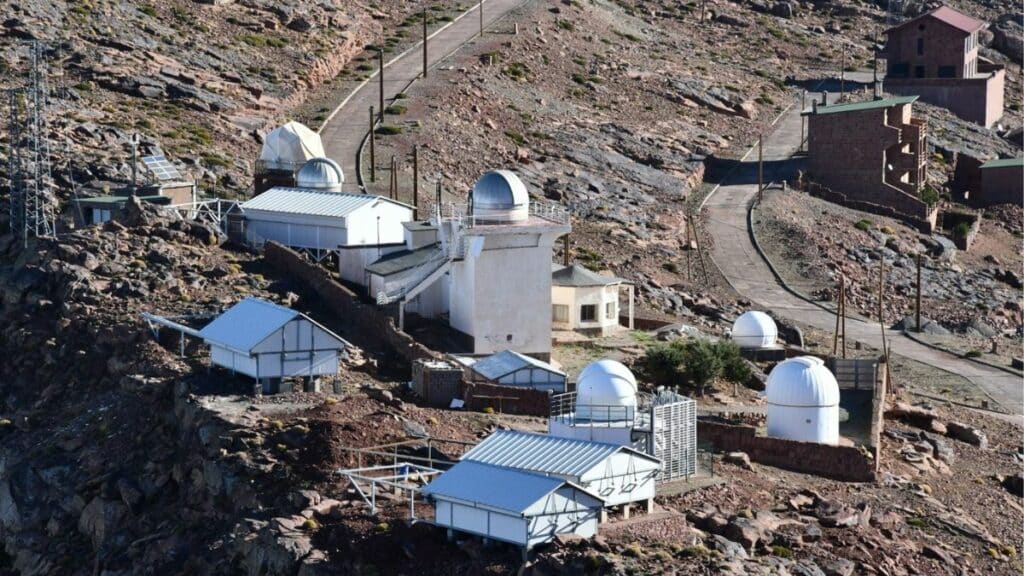
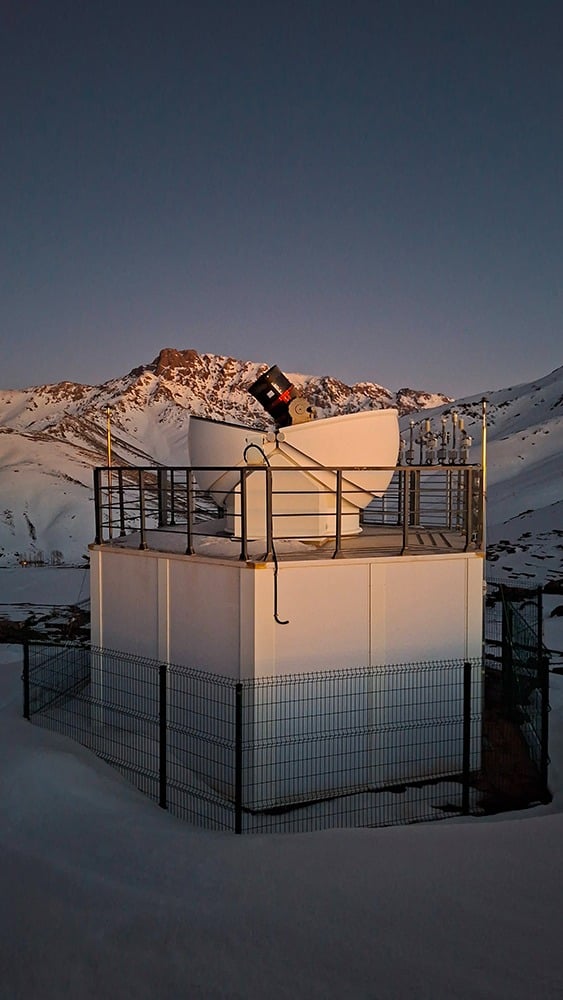
It is a sanctuary of silence and technology that astronomers around the world envy. Perched at an altitude of 2,765 meters in the heart of the High Atlas, the Oukaïmeden Observatory (OUCA) benefits from near-perfect astroclimatic conditions: pristine skies, virtually no light pollution, and exceptional atmospheric stability that allows instruments to achieve remarkable precision.
While the current infrastructure was officially inaugurated in 2007, astronomical activity at the site dates back more than four decades. Today, OUCA is no longer merely an observation post, but one of the continent’s premier astronomical research sites, fully integrated into global scientific networks.
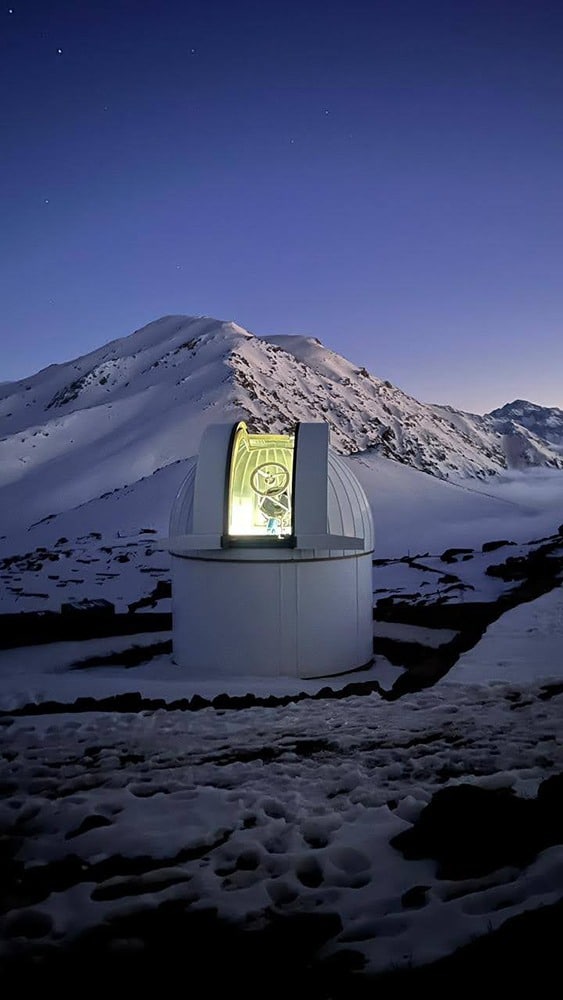
Yet behind the postcard-perfect image of domes rising above snow-covered ridges lies a strategic facility managed from Marrakech by Cadi Ayyad University. A cutting-edge research platform, the Observatory now combines telescope automation, large-scale data analysis, and top-tier international collaborations. Under the impetus of its new leadership, this flagship of Moroccan science is no longer resting on its legacy; it is preparing to take a decisive step forward toward becoming a fully autonomous center of excellence.
A world-class scientific record
OUCA’s international standing rests прежде всего on the strength of its scientific output, which commands respect across the global research community. The MOSS instrument (Morocco Oukaïmeden Sky Survey) stands at the forefront of this prolific discovery engine. Operated remotely through a tripartite collaboration between Cadi Ayyad University, France, and Switzerland, this 500 mm telescope has become a reference in the detection of small bodies in the solar system.
Since its launch in October 2011, the project has transmitted more than 1.5 million astrometric measurements to the Minor Planet Center (MPC). Its output has been remarkable: 4,762 newly designated celestial objects, averaging around 50 discoveries per month.
Thanks to MOSS, OUCA has identified 205 numbered asteroids, 13 near-Earth objects (NEOs) potentially hazardous to Earth, and four comets. This efficiency has placed the instrument 18th worldwide in 2025, after briefly entering the global top 10 in 2017.
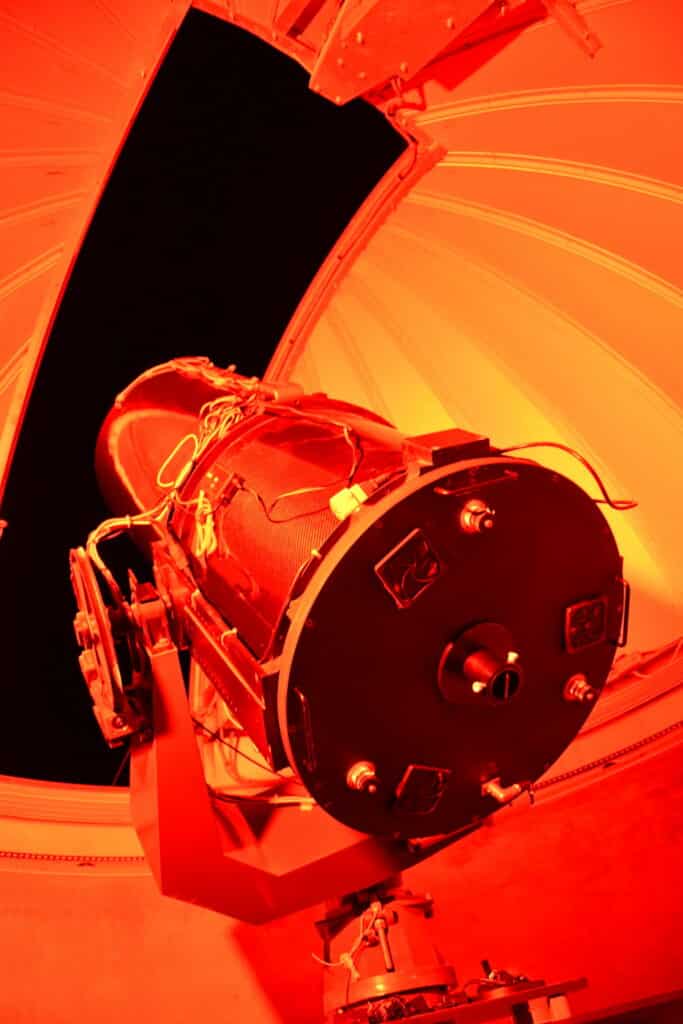
The other pillar of this excellence is the TRAPPIST-North telescope, the result of a flagship partnership with the University of Liège in Belgium. A symbol of North-South scientific cooperation, the instrument devotes half of its observing time to exoplanet research and the other half to comets and asteroids.
It gained international recognition for its role in the characterization of the TRAPPIST-1 system, now a benchmark in the search for extraterrestrial life. Today, TRAPPIST-North continues to supply data to major space observatories, including the James Webb Space Telescope (JWST).
This momentum is reflected in an unusually dense academic output for the region. Over the past five years, OUCA teams have produced more than 240 scientific publications, averaging 48 papers annually.
Of these, 142 have appeared in top-tier journals (Q1–Q2), the most prestigious in the field. With an h-index of 38 and around ten internationally co-supervised PhDs, the Observatory demonstrates that Moroccan research is no longer peripheral, but is generating strategic scientific data and training the next generation of astrophysicists.
Towards a hybrid economic model and strategic autonomy
Operating a cutting-edge facility at 2,750 meters is not only a technological challenge, but also a constant financial one. The Observatory’s director, Dr. Abdelmajid Benhida, outlined his vision in an interview with Médias24.
The Observatory is currently built on an innovative hybrid model structured around three complementary pillars: strong institutional support from Cadi Ayyad University (UCA), competitive research funding, and structured international partnerships.
“In this crucial phase of development, the University’s support remains essential,” Benhida said. For him, public funding is not merely a subsidy, but a critical foundation for long-term stability. It ensures day-to-day operations, supports heavy maintenance in a harsh mountain environment, and enables the gradual expansion of infrastructure.
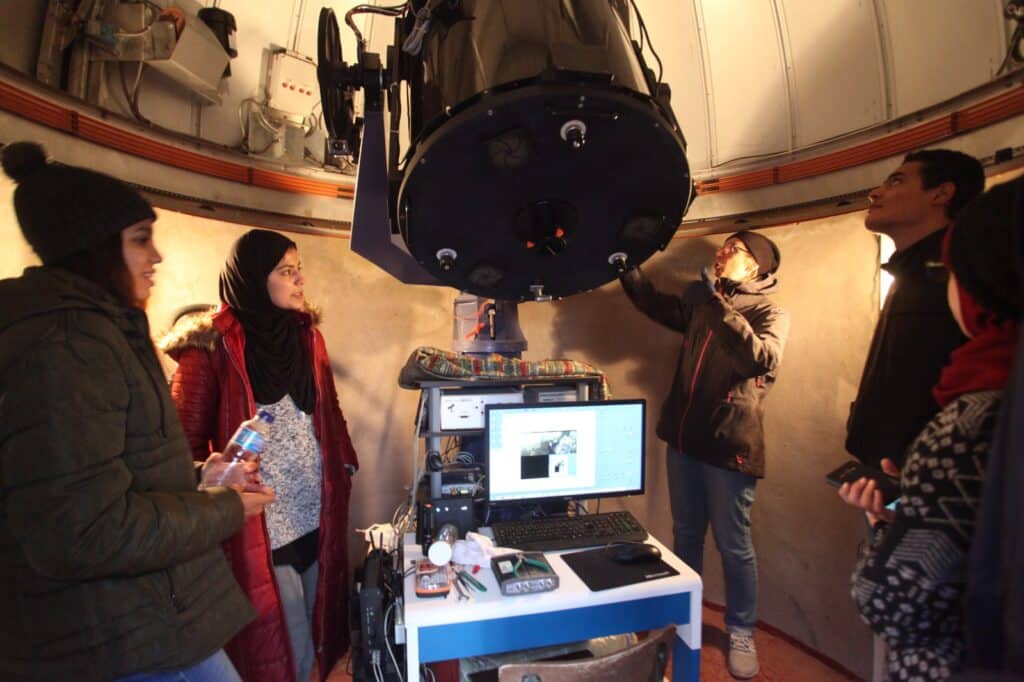
At the same time, OUCA has already embarked on a strategy to diversify its funding sources. It now relies on major European programmes such as ARES and VLIR-UOS, aimed at strengthening its medium-term financial capacity. Beyond funding, these initiatives also support institutional development, access to advanced equipment, and knowledge transfer.
Appointed in March 2026, Benhida is seeking to redefine the Observatory’s economic model, with the goal of achieving gradual financial autonomy. Over the longer term, the aim is to transform OUCA into a structure capable of generating its own resources, notably through high-value services and integrated science-and-innovation projects, which can be reinvested into research, equipment renewal and advanced training.
“The idea is to gradually move toward a more autonomous model, while maintaining strong institutional support to ensure the sustainability and international reach of our activities,” the Observatory’s director said.
Space Sentinel: the SSA's new strategic turn
One of the most significant developments—arguably the most strategic for the future—is OUCA’s major shift toward space surveillance (SSA – Space Situational Awareness). At a time when Earth’s orbits are becoming increasingly congested with satellites and debris, the Observatory has emerged as a key node in global orbital security.
This expansion is supported by a network of high-level technological partnerships. OUCA has recently partnered with Poland’s private sector through Sybilla Technologies, in an agreement covering sensor deployment, real-time data sharing, and joint research and innovation projects.
The Observatory already collaborates with South Korea’s OWL-Net for satellite tracking and hosted the Italian FlyEye project in 2025, a next-generation system dedicated to monitoring near-Earth objects.
The technological shift is also digital. Through the UK-based SpaceFlux project, OUCA is now integrating artificial intelligence to automate the detection and tracking of space debris threatening orbital infrastructure.
At the same time, expanded cooperation with Argentina (Félix Aguilar Observatory) in astrometry and with Saudi Arabia (KACST, RCMC) for lunar observations is further embedding OUCA within a global scientific network.
These developments go beyond traditional observational astronomy. By monitoring orbital corridors, the Observatory can track high-velocity objects and anticipate potential collisions.
2026-2030: the era of scaling up and transmission
OUCA’s institutional agenda for 2026 is already firmly established. The International Congress of Young Astronomers (ICAY 2026), scheduled for July 19–23, will bring together emerging talent under the skies of Marrakech. The Observatory will also host the 9th edition of the Oukaïmeden International School of Astrophysics (OISA 2026) in December, focusing on modern astrophysics in the era of the JWST.
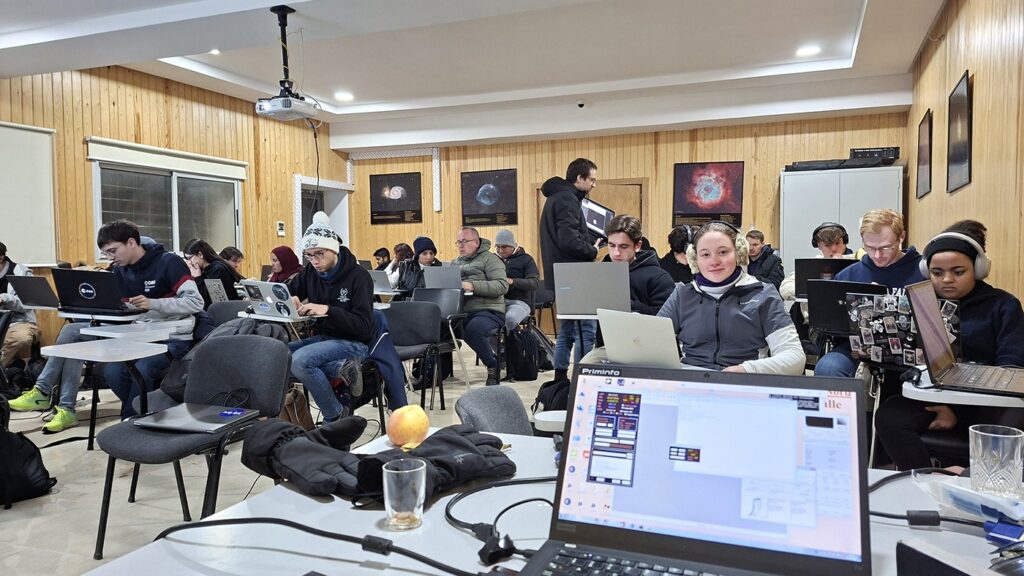
But the real transformation lies in OUCA’s evolution into a global scientific hub and remote-learning platform. From 2027 onwards, an international workshop will mark the official launch of this initiative, enabling students and researchers—particularly from across Africa—to conduct real-time observations and analyze authentic scientific data remotely through automated telescopes.
This educational ambition is anchored in a strong national dimension. OUCA is also driving the creation of a new Master’s programme in modern physics at the Faculty of Sciences in Agadir (Ibn Zohr University), expected to be accredited in 2026. The programme will cover cutting-edge fields including high-energy physics, quantum information, and astrophysics.
Despite some delays, the flagship project of a 2-meter class telescope remains central to the Observatory’s vision for 2030. “This is not an abandoned project,” Benhida stressed, “but one that depends on securing competitive funding and strong international partnerships.” His approach, described as “progressive and realistic,” prioritizes long-term institutional and scientific sustainability.
By evolving into a fully-fledged international scientific hub, the Oukaïmeden Observatory is moving beyond its original role as a celestial sentinel. It is becoming a driver of national academic development and a vital scientific and diplomatic bridge between North and South. This shift in scale aims to turn data into scientific and technological value for the Kingdom.
À découvrir

à lire aussi

Article : TVA intérieure. Pourquoi le taux d’exécution net recule à 38,5% à fin juin
À fin juin 2026, la TVA intérieure affiche un taux d’exécution net de 38,5%, contre environ 45% un an auparavant. Cette baisse ne traduit pas un affaiblissement du recouvrement brut, qui continue de progresser. Elle s’explique essentiellement par l’accélération des remboursements de TVA, dont le montant avait déjà dépassé la prévision inscrite dans la loi de finances.
Article : Administration : pourquoi les réclamations des citoyens continuent d'exploser
Institution chargée de la médiation entre les usagers et l'administration, le Médiateur du Royaume a enregistré une hausse de 25% des saisines en 2025. Son rapport annuel met en évidence les dysfonctionnements qui continuent de compliquer les relations entre l'administration et les citoyens.

Article : Dépôts à terme : est-il encore intéressant de bloquer son argent pendant un an ?
La rémunération moyenne des dépôts à terme atteint 2,60% à douze mois, contre 2,16% à six mois en mai 2026. Alors que leurs encours reculent malgré la hausse globale des dépôts bancaires, le compte sur carnet et les OPCVM monétaires offrent des solutions plus liquides.
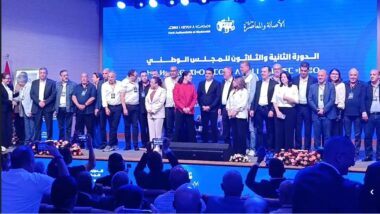
Article : Fouzi Lekjaa et Ynja Khattat rejoignent officiellement le PAM (vidéo)
La réunion du Conseil national du PAM, ce samedi matin 25 juillet 2026 à Salé, a vu la présence officielle et soulignée, de Fouzi Lekjaâ et de Yanja Khattat.
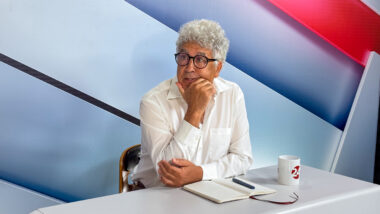
Article : Mohamed Tozy : “Les Marocains font de la politique, mais ailleurs”
EXCLUSIF. Invité du "12/13" de Médias24 à deux mois des législatives, le politologue explique pourquoi l’abstention ne signifie pas la fin du politique. Territoires, associations, ultras, élus locaux... il montre où se déplacent les mobilisations et ce que les partis ne captent plus.

Article : CAN féminine 2026. Le Maroc face à son destin
Vice-championnes d’Afrique lors des deux dernières éditions, les Lionnes de l’Atlas ont une nouvelle occasion de décrocher leur première étoile continentale. Leur entrée en lice face au Kenya, ce dimanche à Rabat (21h), conditionnera la suite de leur parcours dans un groupe particulièrement relevé.