
After the rains, is the agricultural campaign really saved? Exchange with the president of Comader
After more than seven years of drought, the rains that fell at the end of 2025 and the beginning of 2026 have rekindled hopes for a stronger agricultural season. Rachid Benali, president of Comader, spoke with Médias24 about the outlook for the season, water reserves, livestock, and price dynamics.
During a visit to the Marrakech region, Rachid Benali, president of Comader (the Moroccan Confederation of Agriculture), joined Médias24’s 12/13 news analysis program to discuss the impact of the recent rains and snowfall.
Can we really speak of a “saved” campaign? Which sectors stand to benefit the most? Are dams and aquifers being replenished in a sustainable way? And why don’t consumer prices always fall when production improves? Interview.
Médias24: After the rainfall at the turn of 2025–2026, can we truly say that this year’s agricultural campaign has been saved?
Rachid Benali: No, we cannot call it “saved” — that’s too strong a word. For a campaign to be truly saved, all crops must reach maturity. As for the main staples — cereals and oilseeds — they still require several more months of rainfall.
For now, the season is off to a good start: the first three months have gone well. But we still need rainfall in March and April to secure the harvest in May. We can say the campaign has begun positively, with a significant part already assured.
Which sectors are benefiting most from the autumn–winter rains, and which ones, by contrast, will still require additional rainfall in February and March?
All sectors have benefited, but all will still require further rainfall. A plant is a living organism — it needs continuous nourishment.
You can’t say, “you ate well today, so you can go months without eating.” It’s the same for a plant: it has been well watered, but it still needs ongoing care. For livestock, pastures are available; for arboriculture, the trees are developing well. The season has begun very positively, but it must continue.
However, what matters most is the return of water to aquifers and dams — and we can already feel it.
The rains have replenished reservoirs and dams, and snowfall has added to the recharge of rivers and, above all, aquifers. Can we already say that a strategic reserve of water resources is secured for the next two or three agricultural seasons?
For dams, yes, we can say that. But for aquifers, it’s different — we cannot know what is happening underground. Is there enough water for one or two years? Will the wells recover? Will the boreholes refill? Will the springs keep flowing?
However, in the major irrigation perimeters supplied by dams, we can say coverage is assured for at least two years. Some dams can provide even more. Take the Al Wahda dam: now above 50%, it holds 2.1 billion m³ and continues to rise — there, we are safely covered for three years.
In some regions, dams are already full. At the basin and complex level, reserves now exceed one billion cubic meters. This is a crucial safeguard for the next two years.
But speaking of agriculture as a whole is not possible, since large-scale irrigation represents only about a third of the total. What is equally crucial is PMH — small and medium hydraulics — and above all aquifers: boreholes and wells. These are often used by small and medium farmers. The signs are encouraging: coverage is assured for a time, but whether one, two, or three years, no one can say. Unlike dams, aquifers are not quantified.
For breeders, the return of pastures is a major relief. With a promising agricultural year ahead, can we hope for a sustainable stabilization of national livestock after the losses of recent years?
We don't want to predict the future. It's very difficult to say. We can only hope.
What are breeders saying today — those who have endured hardship in recent years?
Today, breeders are doing well. The situation is excellent: there is water, there is pasture. Livestock herds will be rebuilt. Perhaps not cattle, as the process is more difficult. Unlike sheep, where gestation and repopulation are faster, cattle will take longer. But for sheep, the outlook is very positive.
The decision taken last year was excellent: it helped ease the pressure. We paused, we rebuilt herds, and now we can move forward with confidence for the coming years, God willing.
Another crucial point is breeders’ finances and cash flow. In recent years, they had to rely almost entirely on imported compound feed. Today, however, they are covered for several months.
Pastures are therefore a lifeline for breeders. Turning to yields and agricultural prices: in times of drought, production falls and prices rise — as we have seen in recent years. Yet many consumers feel the reverse is not true: when production improves, prices do not necessarily decline. Is this the reality? Does it reflect a structural problem in Morocco’s agricultural markets?
This is a topic that would take hours to address. In two minutes, it’s difficult. As farmers, our mission is to produce at an attractive price — and in fact, our prices are often very low. But once products leave the farms or industrial units — Comader also includes processing — and reach the market, it is no longer in our hands: they pass through other intermediaries.
I'll give two examples.
For a time, meat was selling for less than 100 dirhams, whether beef or sheep. With the drought, prices soared — a phenomenon we understood. But today, with the repopulation, especially of sheep, and livestock restored, supply is sufficient. At the producer level, farm-gate prices for live meat are around 40–45 dirhams per kilo. In principle, that translates into net meat at 75–80 dirhams. Previously, those 75 dirhams reached the market at 85–90 dirhams. Today, however, prices are above 100 dirhams. We don’t understand it. It’s a phenomenon we ourselves cannot explain — it’s the market.
The same is true for olive oil. Last year, olive oil sold for around 80 dirhams at the farmer or small processor level, and on the market it was found at 110–120 dirhams.
Let’s turn to olive oil, a sector you know well. With a promising agricultural year ahead, can you already announce a significant drop in prices per liter — which at times exceeded 120 dirhams?
Last year, olive oil was sold for around 80 dirhams at the farmer or small processor level, while on the market it was found at 110–120 dirhams.
Today, olive oil leaves the farmer at around 35–40 dirhams at most. There is no reason to still find it at 65–70 dirhams — that is not logical. Prices should depend on quality, which varies significantly, but they ought to range between 45 and 55 dirhams, and at most 60 dirhams. That is where they should be found.
Some consumers still pay 100 dirhams for olive oil. It happens, but those are not the real prices — and they should come down.

à lire aussi
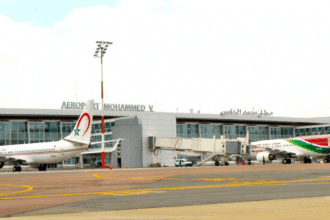
Article : Aéroport Mohammed V : l'ONDA engage une refonte architecturale à 300 MDH
L’appel d’offres porte sur les études et le suivi d’un chantier destiné à donner une même identité aux terminaux T1, T2 et domestique, tout en repensant les parcours passagers, les accès, les façades et l’expérience d’accueil.

Article : Désinformation : comment la machinerie hostile au Maroc a fabriqué “l’affaire Wassim”, jusqu'au sommet de l’État algérien
Comme lors de chaque grand rendez-vous sportif, les réseaux de propagande hostiles au Maroc redoublent d'activité. La dernière tentative en date, "l’affaire Wassim", a cherché à imputer à la communauté marocaine résidant aux États-Unis l'agression présumée d'un mineur algérien à Boston.
Article : Énergie verte : les futurs câbles Maroc-France et le gazoduc H2 prennent place dans les plans européens
Les projets énergétiques reliant le Maroc au continent européen se multiplient dans le Plan décennal de développement du réseau européen, version 2026. Portés par Xlinks, Fortescue ou encore Enagás, ils confirment le positionnement du Royaume comme futur fournisseur d'énergie verte de l'Europe.
Article : Une fusion-absorption de l'Université internationale privée Averroès par LCI Africa Holding en projet
Le Conseil de la concurrence a été saisi le 2 juillet de l’opération, qui rapprocherait l’établissement casablancais du groupe LCI Education, déjà présent au Maroc à travers HEM, Collège LaSalle International Maroc et Foncière L’AGORA pour l’Éducation.
Article : À Tétouan, les juges constitutionnels veulent rendre l’État de droit plus visible
Organisé avec la Commission de Venise, le colloque a réuni pendant deux jours des intervenants marocains et étrangers autour d’un enjeu central : l’indépendance des cours et leur capacité à dialoguer au-delà des frontières. Les travaux ont aussi été marqués par la présentation de la version révisée de la Liste des critères de l’État de droit.
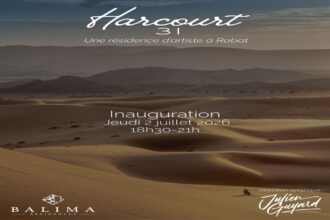
Article : Rabat : pour faire revivre son patrimoine, Balima mise sur des appartements-galeries
La marque a inauguré, le 2 juillet, la Senior Suite Balima Harcourt 31, conçue avec le photographe Julien Guyard et consacrée aux paysages du Sud marocain, dans le cadre d’un programme associant hébergement, création artistique et vente d’œuvres.