
Aviation: the Indian option for producing the first complete aircraft “made in Morocco”
Indian Ambassador Sanjay Rana has mentioned a co-production proposal with the Kingdom, as Rabat targets full aircraft assembly by 2030. The move could open a new chapter for an industry that now counts more than 155 players and generates $3 billion in exports.
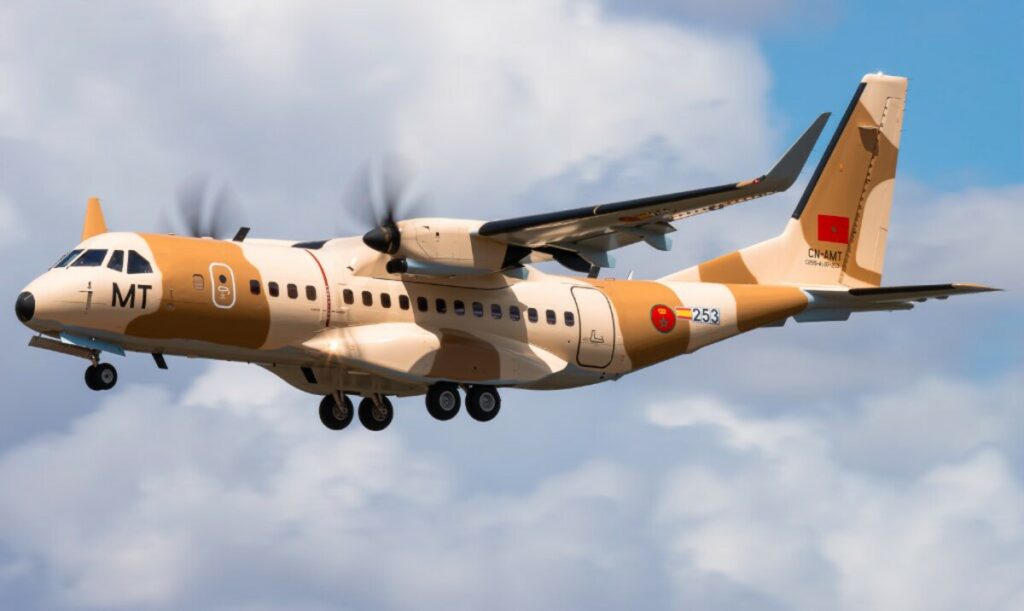
While Industry Minister Ryad Mezzour has set the goal of producing a complete aircraft by 2030, India, through its ambassador Sanjay Rana, is now proposing a strategic partnership with the Kingdom for the joint production of a complete aircraft.
“India has proposed jointly producing a complete aircraft here in Morocco,” the Indian diplomat told our colleagues at Hespress. The aim is to build an aircraft with “Moroccan hands”, both to meet domestic needs and to target export markets.
This new chapter with India is the culmination of a strategic bet launched a quarter of a century ago. Morocco’s aerospace industry has undergone a spectacular transformation over the past 25 years, growing from three pioneering companies in 2000 to a powerful ecosystem of more than 155 players today.
This expansion, driven by sustained annual growth of 15%, now generates $3 billion in exports and relies on the expertise of 27,000 highly skilled professionals and technicians, with the local integration rate reaching 40% in 2025.
Morocco’s aerospace sector has developed thanks to a combination of factors: geographical proximity to Europe, competitive costs, industrial stability and the upskilling of the local workforce. Moroccan authorities have also introduced investment incentives and specialized infrastructure designed to attract major global groups.
These advantages have also supported a technological leap. Having started with electrical wiring, Morocco has now moved into high-value segments. The country is now involved in the manufacture of critical parts for next-generation LEAP engines and landing gear systems.
The arrival of global giants such as Safran, Boeing, Airbus and, more recently, the American group Pratt & Whitney, confirms Morocco’s shift to a new industrial scale. The Kingdom is now part of a select group of countries capable of servicing and assembling highly complex engines, placing it near the top of the global industrial value chain.
The ambition to produce a complete aircraft would mark the definitive and logical transition from a subcontracting industry to a co-development model.

à lire aussi
Article : Bourse de Casablanca : les minières sauvent un semestre marqué par la correction du marché (bilan)
Après un semestre marqué par une correction du marché, quelles valeurs ont résisté ? Quels secteurs ont tiré leur épingle du jeu ? Et où les investisseurs ont-ils concentré leurs échanges ? Voici le bilan des six premiers mois de 2026 à la Bourse de Casablanca à travers les principales performances de la cote.

Article : Textile : le déficit de main-d’œuvre dans la confection pèse sur les exportations
Les exportations textiles reculent de 9,1% à fin mai 2026, une baisse que les perturbations logistiques du premier trimestre ne suffisent plus à expliquer. L’aggravation de la baisse en avril et mai montre que le problème dépasse désormais le seul facteur logistique. La cause principale est aujourd’hui le déficit de main-d’œuvre, qui pèse directement sur la production, les délais de livraison et la capacité des entreprises à honorer leurs commandes.
Article : Traitement de l'eau. Le britannique Hydro Industries s'implante au Maroc avec Hydro Services Morocco
Le britannique Hydro Industries Limited s’implante au Maroc avec la création de Hydro Services Morocco, une SAS au capital de 1 MDH dédiée aux métiers du traitement de l’eau, de l’assainissement et du dessalement.
Article : Le Maroc face au choix du Rafale : les clés d'un arbitrage géopolitique contre le tout-américain
Si la volonté d'éviter une dépendance exclusive envers les États-Unis est réelle, l'équation budgétaire et le défi du nombre face à la flotte d'Alger imposent un examen attentif des réalités du terrain.
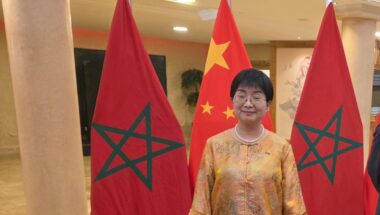
Article : Maroc-Chine : en attendant le Sahara, la relation bilatérale économique s'accélère
Dix ans après l'établissement d’un partenariat stratégique entre Rabat et Pékin au cours de la visite royale en Chine en 2016, l’ambassadrice chinoise au Maroc a célébré cet événement en déclarant que les relations économiques bilatérales ont connu une progression exceptionnelle. Si les perspectives industrielles et touristiques apparaissent plus que prometteuses, la question d'une éventuelle reconnaissance chinoise de la marocanité du Sahara au Conseil de sécurité de l'ONU demeure toujours entourée de précautions diplomatiques. Explications.

Article : IDE : le flux net progresse de 41,8% à fin mai 2026
Les investissements directs étrangers (IDE) au Maroc poursuivent leur progression à fin mai 2026. Porté par une hausse des recettes et un recul des dépenses, leur flux net atteint 23.319 MDH, en hausse de 41,8% par rapport à la même période de 2025. Dans le même temps, les investissements directs marocains à l’étranger (IDME) enregistrent également une nette progression.