
Money, currency and payments: understanding the dirham and getting organized for the 2025 CAN
During a trip, money, currency and means of payment can quickly become a headache. It is essential to understand how the local currency works, the banknotes and coins in circulation, and the exchange rates with your home currency. This guide explains how to use the Moroccan dirham (MAD), convert amounts, identify where bank cards are accepted and handle daily payments without unpleasant surprises.

In Morocco, the Moroccan dirham (MAD) is the official currency.
Even though credit cards are widely used in major cities, supporters will need cash dirhams for transportation, small purchases, souks, or snacks around the stadiums.
This guide offers practical information to help you manage your budget in Morocco — banknotes, coins, exchange options, card usage, tips, and quick conversions to compare with your original currency.
The Moroccan dirham (MAD): how does it work?
- Official currency of Morocco: the Moroccan dirham (MAD), also written as DH.
- 1 dirham = 100 centimes (also called santimat in darija).
- There are four denominations of banknotes:
20 MAD
50 MAD
100 MAD
200 MAD

- Common coins: ½, 1, 2, 5, 10 dirhams


Supporter tip: always carry small bills! Taxis and small shops often lack change.
Converting your money: quick reference
Exchange rates fluctuate, but here are practical equivalents for supporters from the main AFCON nations, as well as visitors from Europe and the United States:
| Country | Currency | 1 MAD ≈ |
|---|---|---|
| Senegal, Ivory Coast, Mali, Burkina Faso… | CFA Franc (XOF) | 61 XOF |
| Algeria | Algerian Dinar (DZD) | 14 DZD |
| Tunisia | Tunisian Dinar (TND) | 0.31 TND |
| Egypt | Egyptian Pound (EGP) | 5.1 EGP |
| South Africa | Rand (ZAR) | 1.8 ZAR |
| Eurozone | Euro (EUR) | 0.09–0.10 € → 1 € ≈ 10–11 MAD |
| United States | Dollar (USD) | 0.10 USD → 1 USD ≈ 9–10 MAD |
For a quick estimate: 100 MAD ≈ 10 € / 10 $ / 6,100 XOF
Paying in Morocco during your stay
| Situation | Recommended method |
|---|---|
| Hotels, modern restaurants, shopping centers | Credit card |
| Taxis, souks, snacks, small services | Cash (MAD) |
| Tourist purchases + markets | Cash + common negotiation |
In major cities, tourist areas and modern establishments (mid‑range hotels, restaurants, large stores and “tourist” shops), credit cards — debit or credit — are generally accepted, especially Visa and MasterCard.
Many ATMs and bank branches are available and accessible in most major cities and tourist areas, making it easy to withdraw dirhams. The same goes for the numerous exchange offices, which are open at least six days a week, including Saturdays.
Recommended practice: inform your bank of your trip to Morocco and activate the tourist allocation.
Also, be aware of fees and conversion rates: card withdrawals or payments may incur charges — from your bank and/or the local bank — and the rates can sometimes be unfavorable.
Always check, at the time of payment or withdrawal, if the amount is being converted into dirhams (MAD) rather than in your original currency — this type of "automatic conversion" can be disadvantageous.
However, outside major cities — in rural areas, small villages, traditional markets, souks, small shops and street vendors — cards are often unnecessary or simply not accepted. In these cases, cash (dirhams) is essential.
Good money habits for supporters
It is advisable to always carry some cash — even if you plan to use a card — for small purchases, snacks, souvenirs, taxis and tips.
If you withdraw dirhams from an ATM, choose machines located inside a bank or in a secure location.
When exchanging money (euros, dollars…) into dirhams, do so at licensed exchange offices or banks rather than with "street changers," to avoid scams and ensure a fair rate.
If you buy in a souk or a small shop, use small bills (20, 50, 100 MAD notes).
Tipping is common, especially in restaurants, cafes, taxis and services (guides, porters, etc.) — and it is given in cash.
Even if you pay for everything by card, always keep some cash on hand for tips or small, unexpected expenses.
Recommended strategy during a stay like the AFCON:
- Exchange or withdraw dirhams upon arrival at the airport to be operational from the start (taxi, transportation, immediate needs).
- Check your bank's fees for foreign transactions (withdrawals, payments) and inform them of your trip to avoid any card blocks.
- Keep the exchange receipts — they may be useful before returning home.
- Compare the rate before accepting a card conversion.
- Do not rely on card payments in taxis.
- Check for any taxes — sometimes applied in hotels.
- Use your credit card for larger expenses, hotels, modern restaurants, souvenirs in tourist shops.
- Use cash (dirhams) for taxis, markets, souks, tips, transportation, or modest meals.
à lire aussi
Article : Probité : cinq projets primés à Rabat lors du premier Nazahathon
Organisé du 25 juin au 1er juillet par l’INPPLC, le concours a retenu des solutions numériques issues de 25 finalistes, autour de l’alerte, des données et de la lutte contre la corruption.

Article : Football : en pleine explosion au Mondial, Ismael Saibari signe au Bayern Munich
Arrivé du PSV Eindhoven dans une opération évaluée jusqu’à 55 millions d’euros, l’international marocain devient le deuxième joueur national le plus cher de l’histoire.
Article : Énergie : la Banque mondiale approuve 265 millions de dollars pour la STEP d’Ifahsa
Située près de Chefchaouen, l’infrastructure de 300 MW doit faciliter l’intégration du solaire et de l’éolien, tout en mobilisant environ un milliard de dollars d’investissements privés.
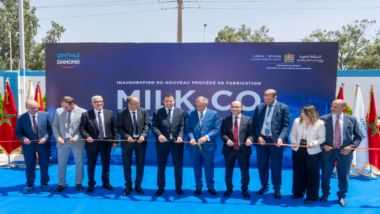
Article : Filière laitière : pour valoriser le lait local, Centrale Danone lance le procédé industriel “Milk-Co” à Fkih Ben Salah
Doté d’un investissement de 60,2 MDH, le projet permettra d’extraire du lait collecté au Maroc des composants utilisés dans la fabrication de yaourts, de fromages et de boissons protéinées.
Article : Sahara : à l’ONU, le Maroc met l’accent sur les garanties de mise en œuvre du plan d’autonomie
Lors d’un séminaire international à New York, Omar Hilale et plusieurs experts ont examiné les modèles de Rapa Nui, de la Polynésie française, des îles Åland et du Haut-Badakhchan, dans le contexte de la résolution 2797.
Article : Fekhar Law Firm certifié ISO 27001 pour la sécurité de l'information
Le cabinet d'avocats d'affaires fondé par Me Mohamed Fekhar vient d'obtenir la certification ISO/IEC 27001:2022, référence internationale en matière de management de la sécurité de l'information, à l'issue d'un processus engagé depuis dix-huit mois.