
Fuels: why international price drops rarely reach the pump
DATA. Figures from the Competition Council show that international fuel price drops are not fully reflected at the pump. Quarter-by-quarter analysis shows that increases tend to pass through faster than decreases, especially for diesel.
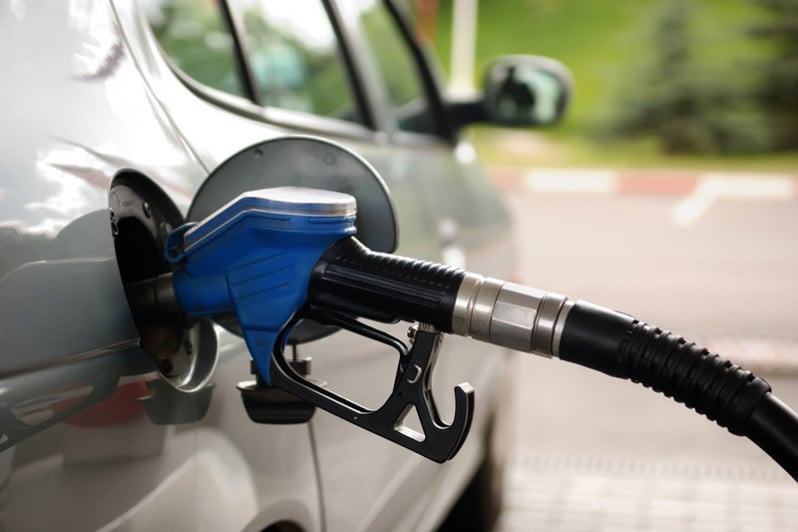
Each time the Competition Council releases its quarterly report on the hydrocarbon market, the debate over how the price swings are transmitted to the domestic market resurfaces.
How do domestic prices actually mirror these fluctuations? Is the degree of pass‑through the same when international prices fall as when they rise? And what pattern does this pass‑through show, quarter by quarter or semester by semester? These are the questions that resurface with each new publication.
Data from the Competition Council's report for Q2-2025, indicate that pump prices respond more strongly to international rises than to falls.
Diesel illustrates the asymmetry: purchase costs fell by 0.98 DH/l, yet pump prices dropped by just 0.47 DH/l. Gasoline shows the same pattern, with selling prices down 0.32 DH/l against a 0.61 DH/l fall in costs.
In Q2‑2025, gross margins reached 1.17 DH/l for diesel and 1.83 DH/l for gasoline, virtually identical to those of Q2‑2024 (1.21 and 1.79 DH/l).
Over the past year, diesel and gasoline prices have significantly decreased, a trend confirmed by purchase costs, while margins have remained almost unchanged.
This correlation-based analysis tells part of the story, but not the whole. It shows parallel movements without measuring the actual degree of transmission. To know how many dirhams at the pump shift when international costs move by one dirham, a simpler and more meaningful measure is needed: elasticity in dirhams.
Médias24 carried out a similar exercise until late 2024. This time, we extend the same logic over a broader period, covering four consecutive quarters, from Q3-2024 to Q2-2025, drawing on the fortnightly data published in the Council's reports.
Highly Irregular Price Transmission
Quarterly reasoning reveals an unstable and clearly asymmetrical dynamic. In Q3‑2024, diesel recorded a rise coefficient of 1.50, meaning international increases were reflected more than proportionally. By contrast, decreases only passed through at 0.61.
Gasoline, over the same period, shows the opposite pattern. Price increases are almost imperceptible, with a coefficient of 0.07, while decreases reach 0.61.
For Q4-2024, the increases show a negative coefficient for both fuels, -0.14 for diesel and -0.30 for gasoline. Internal prices continue to decrease despite a slight international recovery. Conversely, the decreases are very well transmitted, 0.90 for diesel and 1.13 for gasoline.
In the first quarter of 2025, diesel prices show rare neutrality. Both increases and decreases are passed through at the same rate, 0.36. For gasoline, however, the asymmetry remains: increases are transmitted at 0.60, while decreases register only 0.29. In practice, every dirham added to the CIF raises the pump price by an average of 60 cents, while a dirham cut in CIF reduces it by just 29 cents.
In Q2-2025, diesel reveals a stark asymmetry. A one‑dirham rise in CIF translates into about 0.92 dirham at the pump, while a one‑dirham drop reduces prices by only 0.11 dirham. The remainder is absorbed along the distribution chain. A distortion highlighted in the Competition Council’s report.
For gasoline, the quarter remains unusual. Even when the CIF increases slightly, pump prices continue to fall. However, as soon as the CIF declines, the pass‑through is strikingly strong.
Over the entire period analyzed, the link between CIF and pump prices proves anything but linear. It is shaped by margin sequences, delayed corrections, and internal adjustments — and it is far from symmetrical.
Diesel almost fully transmits increases as soon as the global market rebounds, yet a significant share of decreases is routinely retained within the chain. Gasoline, meanwhile, alternates: some quarters favor consumers, while others enable distributors to absorb international fluctuations.
Furthermore, the report provides insights into market structure. Nine companies control nearly 81% of the imported diesel and gasoline volumes. By the end of June 2025, total storage capacity stood at 1.57 million tons, of which about 1.27 million tons, nearly 81%, were held by these same operators. Diesel alone accounts for 85% of the storage capacity.
-oOo-
As for methodology, it rests on a few straightforward steps. For each fortnight, the variation in the CIF price of fuel, in dirhams per liter, is calculated against the previous fortnight, alongside the corresponding change in pump price. Each quarter comprises six fortnights, yielding six pairs of variations. These are then split into two sequences: fortnights where CIF variations are positive (increases) and those where they are negative (decreases).
If the market fully transmits international variations, the coefficient hovers around 1: a one‑dirham rise in CIF translates into a one‑dirham rise at the pump, and the same applies to decreases. When the coefficient exceeds 1, the pump variation is stronger than that of CIF; when it falls below 1, transmission is only partial. A negative coefficient means the pump moves in the opposite direction of CIF, often reflecting delayed market corrections.
It should be noted, as the Competition Council’s report recalls, that the CIF quotations used in this analysis exclude TIC and VAT and serve solely as a reference. They do not necessarily mirror the actual purchase costs of each operator. In practice, these costs also depend on contract structures for international refined product purchases, whether spot deals or forward contracts. The data underpinning these indicators were provided by the Ministry responsible for Energy.

à lire aussi

Article : Maroc-Canada : Ouahbi assume le statut de “prétendant”, Marsch refuse de réduire le match au 3-0
Après la qualification marocaine pour les quarts, les deux sélectionneurs ont livré deux lectures opposées du huitième de finale : côté marocain, la maîtrise retrouvée après la pause et l’ambition d’aller plus loin ; côté canadien, le sentiment d’avoir dominé longtemps avant de céder sur les détails.

Article : Coupe du monde 2026. Le Maroc en quart pour la deuxième fois de son histoire (3-0)
Après un premier acte tendu et angoissant, l’équipe nationale s’est difficilement sortie du piège tendu par les Canadiens grâce à un doublé d’Azzedine Ounahi et une réalisation signée Soufiane Rahimi, ce samedi 4 juillet à Houston. Le Maroc affrontera en quart, jeudi 9 juillet, le vainqueur du huitième opposant, la France au Paraguay.

Article : Croisières : Celestyal ajoute Casablanca et Tanger à ses itinéraires d’hiver
Le programme “Mediterranean Odyssey” prévoit deux départs de Barcelone, les 5 et 19 décembre 2026, pour un circuit de 14 nuits à bord du Discovery, entre Malaga, Gibraltar, Cadix, Lisbonne, Valence, Palma de Majorque et Sète.

Article : Maroc-Allemagne : avant son 30e anniversaire, l’AHK renouvelle ses instances
À Casablanca, l’assemblée générale du 29 juin a confirmé Mehdi El Boury à la présidence de la Chambre. La direction générale passe, depuis le 1er juillet, de Katharina Felgenhauer à Silke Kunstreich, tandis que l’ancien président Mazen Sowan est nommé président d’honneur.

Article : Jeunesse : coup d’envoi des colonies de vacances 2026 à Bouznika
Organisée sous le thème “Les colonies éducatives, une nouvelle vision pour construire la vie”, l’édition 2026 du programme national de camping doit bénéficier à 210.000 enfants et jeunes, avec un dispositif élargi aux séjours fixes, de proximité, thématiques et itinérants.

Article : Maroc-Canada : Ouahbi reconduit son onze-type, Halhal remplace Riad en défense
À Houston, les Lions de l’Atlas s’appuieront sur leurs cadres pour tenter de poursuivre leur parcours face au pays coorganisateur.