
Building an EU-Africa Partnership of Equals
CAPE TOWN – This was supposed to be the year Europe and Africa redefined their relationship. In March, the European Commission unveiled its vision for a “comprehensive strategy with Africa,” intended to kick-start a six-month consultation process, which would culminate at the European Union-African Union summit in October in an agreement on a new blueprint for relations – one that would give Africa significantly more agency. Then COVID-19 arrived.
Even without the pandemic, the road to a stronger, more equal EU-Africa partnership would have been difficult. When the year began, tensions were high in many parts of the world, raising serious geopolitical and security risks. Moreover, the strategic competition between the United States and China had escalated into a trade war. Multilateralism was faltering.
As challenging as these conditions were, they also encouraged progress, by highlighting how high the stakes had become. Africa’s resolve was evident: a series of AU summits and meetings had indicated that the continent was committed finally to implement the African Continental Free Trade Area (AfCFTA), to reform regional bodies, and to move onto a more ambitious development path. Such initiatives implied an overhaul of the tenets of any partnership with the continent.
The COVID-19 crisis threw a wrench into plans to engineer such an overhaul with Europe. But it also underscored the need for one – not least because the EU is Africa’s main trade and investment partner.
The pandemic has demonstrated the practical implications of inequality; revealed the excessive dependence of critical value chains on certain economies, particularly China; and exposed the vulnerabilities of the international finance system. It has also shown the limits of current modes of global cooperation, even in the face of shared crises.
As a result, the desire to “return to normal” has increasingly given way to calls to “build back better.” Progress on the European Green Deal reflects policymakers’ determination to take advantage of the current upheaval to advance real change. Africa should follow suit – beginning by accelerating the implementation of the AfCFTA.
An integrated continental market could have cushioned the blow of declining international trade during the COVID-19 crisis, saving jobs and livelihoods. Instead, Africa is struggling to revive its economies, despite having been significantly less affected by the virus than many other parts of the world. The continent’s leaders must ensure that, when the next crisis strikes, Africa is ready.
Given the likelihood of another health crisis – experts warn that pandemic risks are rising – this means, among other things, ensuring stable supplies of critical medical equipment. Early restrictions on medical-supply exports and more recent “vaccine nationalism” on the part of a handful of countries show just how quickly countries can resort to protectionism. It is thus in Africa’s interest to promote production of strategic supplies and create robust value chains for pharmaceuticals and medical equipment on the continent. The AfCFTA would facilitate these efforts.
But the AfCFTA’s implementation will need to go hand in hand with broader international engagement, especially with the EU. During the COVID-19 crisis, Africa has needed large-scale debt relief and increased access to liquidity, so that countries could implement economic-support measures on par with the advanced economies. It hasn’t gotten them – at least not to the necessary extent.
Of course, it is far from ideal for Africans to assume that others will rescue them. But this is not a choice; it is a systemic problem. As it stands, some African countries – especially those with very limited monetary-policy space – need external support, particularly from the International Monetary Fund, to be able to respond to exogenous shocks. The EU can and should play a key role here.
Such cooperation must extend beyond short-term imperatives to address medium- to long-term structural challenges. For example, while debt relief is important, and the sustained push for it by several G20 countries is welcome, it will not be enough to reinvigorate African economies. Rethinking financing approaches for infrastructure investment, to support the implementation of the AfCFTA, would have a greater long-term impact.
Building a stronger, more strategic partnership with Africa will also require EU countries to abandon their fixation on the migration “threat,” and recognize the continent’s strategic importance. A candid debate about the expansion of legal pathways to ensure mobility, including circular migration, would help.
The idea of returning to “normal” after the COVID-19 crisis may still tempt many people. But, when it comes to the EU-Africa relationship, it is simply not an option. The partnership must be rethought and reshaped. To that end, both sides must abandon the unbalanced, piecemeal approach of the past, and work toward creating an effective joint-governance mechanism.
At the upcoming “mini-summit,” EU and AU leaders have an ideal opportunity to catalyze this process. By the time the full summit takes place next year, they should be able to put forward a clear vision of a partnership fit for the twenty-first century.
à lire aussi
Article : Le Nouvel an de l'hégire (1er Moharram) sera célébré ce mercredi 17 juin au Maroc
Le 1er Moharram de la nouvelle année de l’Hégire 1448 correspondra au mercredi 17 juin 2026, a annoncé le ministère des Habous et des affaires islamiques.

Article : Adouls : la Cour constitutionnelle valide l’essentiel de la réforme, mais écarte plusieurs dispositions
Saisie par 93 députés avant la promulgation du texte, la Cour a déclaré non conformes des articles touchant aux incompatibilités professionnelles, aux personnes en situation de handicap, au témoignage collectif dit “lafif” et à l’organisation des instances représentatives. Le texte devra donc être corrigé sur ces points, sans remettre en cause le cœur de la nouvelle loi 16.22.
Article : En commission, les conseillers votent la nationalisation de la Samir et le plafonnement des hydrocarbures
Deux propositions de loi portant sur les hydrocarbures et la Samir ont été récemment adoptées en commission à la Chambre des conseillers. Un vote "surprise" rendu possible par un rapport de forces numérique défavorable à la majorité, lors d’une séance où l’opposition était majoritaire en nombre. Si ces textes ont franchi l’étape de la commission, leurs promoteurs sont conscients qu’ils ont peu de chances d’être adoptés en plénière.

Article : Retail : la guerre silencieuse pour conquérir le panier des Marocains
Pendant longtemps, les courses du quotidien se sont surtout jouées entre l’épicier du quartier, le grossiste et quelques grandes surfaces. Ce modèle commence à se fissurer. Entre fusion capitalistique, rachats d’enseignes, master-franchises, centrales d’achat, logistique commune et formats de proximité, les grands opérateurs installent peu à peu des réseaux capables d’accompagner le consommateur du café du matin aux achats du week-end. Non sans bousculer les équilibres.

Article : Crédit du Maroc : ce que cache l’augmentation de capital à 699 MDH
Depuis son passage sous le contrôle de Holmarcom, Crédit du Maroc a changé de rythme. La banque affiche des bénéfices en hausse, prépare son plan CDM Boost 2028, et propose désormais à ses actionnaires de suivre le mouvement via une opération ouverte du 26 juin au 16 juillet. Derrière le prix fixé à 938 DH par action, le marché devra surtout juger si cette nouvelle étape confirme une trajectoire ou ouvre un pari plus large. Décryptage.
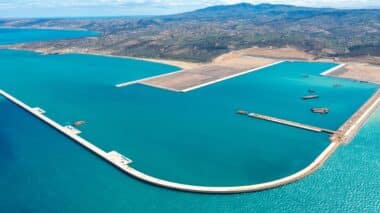
Article : Nador West Med : derrière le port, le pari industriel de l’Oriental
ROUND UP. Prévu pour entrer en service fin 2026, Nador West Med se construit déjà au-delà de ses quais : routes dédoublées, future autoroute vers Guercif, projets chinois dans l’éolien, les pneus et les alliages, ambition énergétique autour du GNL et de l’hydrogène vert. L’enjeu est désormais de transformer cette infrastructure en véritable moteur économique régional.