

The COVID City
LONDON – No city has escaped the deadly spread of COVID-19. But the virus has had a profoundly uneven impact on different groups of people, even within the same city. When New York City was the global epicenter of the pandemic, downtown Manhattan had an infection rate of roughly 925 per 100,000, compared to 4,125 per 100,000 in Queens. The reason for this gap is straightforward: New York’s wealthiest residents could access a wide range of health services and work remotely in spacious multi-story buildings.
As in every big city, one’s post code profoundly shapes one’s destiny. Manhattan and Queens are less than 25 minutes apart by subway, but the difference between them in annual median income is a staggering $78,000, and the variation in life expectancy between the city’s boroughs can be as high as ten years. Similar inequalities in income, health, education, and virtually every other metric of wellbeing persist in most metropolises around the world. COVID-19 will widen these disparities further still.
Around the world, it is not so much densely populated cities as overcrowded, marginalized neighborhoods that are struggling to contain the spread of COVID-19. Socioeconomic factors, not physical geography, are a key determinant of contagion risk, particularly in the built-up areas of developing countries. For example, it is estimated that over half of Mumbai’s seven million slum-dwellers already have COVID-19. And in South Africa, where five million households do not have a refrigerator, barely 46% have access to a flush toilet in their homes and one-third share toilets with other families – it is not surprising that new infections soared despite drastic lockdown measures.
The COVID-19 pandemic is especially harmful for urbanites in the informal economy, where most jobs are low-paid and cannot be performed remotely. Whereas 47% of college graduates could work remotely in the United States in July, only 4% of those without a high school diploma were able to do so. While this dynamic certainly hurts the urban poor in cities like New York, it is even more debilitating for those in, say, Dhaka, where over 80% of workers depend on the informal sector – the development organization BRAC reports that 62% of all daily wage income essentially disappeared in June.
As we show in our new book Terra Incognita, COVID-19 is exacerbating multiple forms of inequality within and between countries and cities, and raising fundamental questions about the future of urban living. Major cities are bearing the brunt of the pandemic’s human and economic costs – and the worst is yet to come – fueling concerns about whether they will survive as the central nodes of the global economy.
But while the pandemic has severely affected many superstar cities, some of the industries driving their economies are remarkably resilient, which may help to explain why global stock markets have bounced back. It is already clear that the biggest winner in the current crisis will be Big Tech. On the same day that US economic growth was reported to have fallen by 32.9% (July 31), Amazon reported quarterly profits of $5.2 billion, with sales up 40% from the previous year. Similarly, Google, Apple, and Facebook have all performed far better than the economy as a whole during the pandemic.
With Citibank estimating that 80% of jobs in financial services can be performed remotely, one lasting effect of COVID-19 could well be the elimination of commuting for many, if not most, knowledge-economy workers. Moreover, a recent Gallup poll found that three out of five US workers doing jobs from home during the pandemic would like to continue to work remotely as much as possible. And a Bloomberg survey finds that 97% of financial analysts, 94% of fund managers, and 80% of traders plan to work from home in the future at least some of the time.
Even if a vaccine is developed and distributed as early as 2021, COVID-19 will be tremendously disruptive to cities. Nicholas Bloom of Stanford University predicts that if cities lose the office space previously used by knowledge workers, urban expenditures overall could drop by one-third. The dramatic decline in property taxes and other revenue streams will seriously compromise municipal governments’ ability to provide basic services. The exodus of high-value workers will have dangerous ripple effects on city residents – from waiters and actors to grocers and retailers. These people and services give cities much of their character, and their loss would accelerate the downward spiral.
Still, while many major cities are down, they are far from out. The death of the superstar city has been predicted before, yet urban areas have always demonstrated an extraordinary capacity to bounce back, including from pandemics and plagues. Even in the most adverse conditions, large, medium, and smaller cities remain the most desirable places to live, work, and play, and urban dwellers are healthier and wealthier than their rural counterparts, on average. This is unlikely to change, despite the acceleration of remote working.
Cities will continue to be sites for innovation, experimentation, and invention. With many countries now facing the second wave of COVID-19 (or still caught in the first), mayors are rethinking their strategies to improve affordability, promote cleanliness, ensure stable supply chains, produce energy, and reduce congestion. Precisely because cities face tremendous financial shortfalls and growing liabilities, they will need to draw on their exceptional creativity to do more with less. Rather than being an existential threat to cities, COVID-19 may lead to a more advanced and inclusive urbanism in some parts of the world.
One way or another, our future lies in cities. This is why the World Economic Forum has focused its Great Reset initiative on urban hubs, and why the United Nations Secretary-General, António Guterres, has put resilient and inclusive cities at the center of achieving the Sustainable Development Goals. For city leaders, the task is to start investing in micro-mobility and pedestrianization, while testing new models of urban design, including retrofitting buildings and public spaces with healthier renewable alternatives. The pandemic has shown us that ensuring a healthy population requires reshaping society. Cities are where that process will start.
© Project Syndicate 1995–2020
à lire aussi
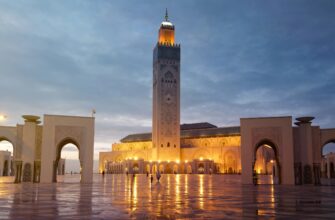
Article : Le Nouvel an de l'hégire (1er Moharram) sera célébré ce mercredi 17 juin au Maroc
Le 1er Moharram de la nouvelle année de l’Hégire 1448 correspondra au mercredi 17 juin 2026, a annoncé le ministère des Habous et des affaires islamiques.
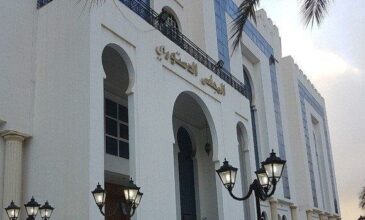
Article : Adouls : la Cour constitutionnelle valide l’essentiel de la réforme, mais écarte plusieurs dispositions
Saisie par 93 députés avant la promulgation du texte, la Cour a déclaré non conformes des articles touchant aux incompatibilités professionnelles, aux personnes en situation de handicap, au témoignage collectif dit “lafif” et à l’organisation des instances représentatives. Le texte devra donc être corrigé sur ces points, sans remettre en cause le cœur de la nouvelle loi 16.22.

Article : En commission, les conseillers votent la nationalisation de la Samir et le plafonnement des hydrocarbures
Deux propositions de loi portant sur les hydrocarbures et la Samir ont été récemment adoptées en commission à la Chambre des conseillers. Un vote "surprise" rendu possible par un rapport de forces numérique défavorable à la majorité, lors d’une séance où l’opposition était majoritaire en nombre. Si ces textes ont franchi l’étape de la commission, leurs promoteurs sont conscients qu’ils ont peu de chances d’être adoptés en plénière.
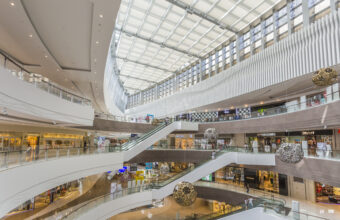
Article : Retail : la guerre silencieuse pour conquérir le panier des Marocains
Pendant longtemps, les courses du quotidien se sont surtout jouées entre l’épicier du quartier, le grossiste et quelques grandes surfaces. Ce modèle commence à se fissurer. Entre fusion capitalistique, rachats d’enseignes, master-franchises, centrales d’achat, logistique commune et formats de proximité, les grands opérateurs installent peu à peu des réseaux capables d’accompagner le consommateur du café du matin aux achats du week-end. Non sans bousculer les équilibres.
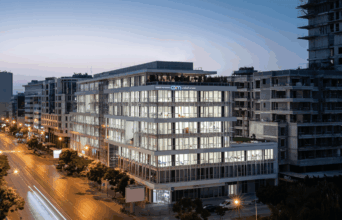
Article : Crédit du Maroc : ce que cache l’augmentation de capital à 699 MDH
Depuis son passage sous le contrôle de Holmarcom, Crédit du Maroc a changé de rythme. La banque affiche des bénéfices en hausse, prépare son plan CDM Boost 2028, et propose désormais à ses actionnaires de suivre le mouvement via une opération ouverte du 26 juin au 16 juillet. Derrière le prix fixé à 938 DH par action, le marché devra surtout juger si cette nouvelle étape confirme une trajectoire ou ouvre un pari plus large. Décryptage.

Article : Nador West Med : derrière le port, le pari industriel de l’Oriental
ROUND UP. Prévu pour entrer en service fin 2026, Nador West Med se construit déjà au-delà de ses quais : routes dédoublées, future autoroute vers Guercif, projets chinois dans l’éolien, les pneus et les alliages, ambition énergétique autour du GNL et de l’hydrogène vert. L’enjeu est désormais de transformer cette infrastructure en véritable moteur économique régional.