
Investing in a Feminist Peace
NEW YORK – During the COVID-19 pandemic, public life in much of the world has largely ground to a halt. For the two billion people living in conflict-affected countries, however, there has been no lull in violence and upheaval. Some of the world’s conflicts have even escalated or been reignited during the crisis, dealing devastating new blows to infrastructure and health-care systems that were only beginning to be rebuilt. Globally, we continue to invest far more in the tools of war than in the foundations of peace.
Of course, some are working for peace. On March 23, at the outset of the pandemic, United Nations Secretary-General António Guterres called for a global ceasefire, in order to enable countries to focus on the COVID-19 crisis and allow humanitarian organizations to reach vulnerable populations. More than 100 women’s organizations from Iraq, Libya, Palestine, Syria, and Yemen quickly joined the appeal with a joint statement advocating a broad COVID-19 truce, which could form the basis for a lasting peace.
It should come as no surprise that women were among the first to support the call for a ceasefire. Last week, governments and civil society came together to mark 20 years since UN Security Council Resolution 1325 first recognized women’s pivotal roles on the frontlines of peace-building efforts.
It is women – including young women – who do much of the painstaking, long-term work that underpin high-profile formal agreements, which are still often reached in talks that exclude them. For example, in Syria, women have negotiated ceasefires to allow the passage of humanitarian aid, worked in field hospitals and schools, distributed food and medicine, and documented human-rights violations. In South Sudan, women have mediated and resolved tribal disputes to prevent conflicts from escalating to violence.
Women also spearhead the critical work of campaigning for peace, including through education programs, which teach young people that conflict is never inevitable. Feminist organizations have long called for nuclear disarmament, arms control, and the reallocation of funds from the military to social investments.
These appeals are essential. But they have gone unanswered. So has the UN’s call for a COVID-19 ceasefire: according to the Norwegian Refugee Council, in the two months following Guterres’s appeal, armed conflict in 19 countries displaced at least 661,000 people. Unless we listen to women, and shift our investments from war toward peace, the devastation will continue.
Last year, global military expenditure reached $1.9 trillion, following the largest annual increase in a decade. In the last quarter-century – since the landmark Beijing Declaration and Platform for Action called on governments to “recognize and address the dangers to society of armed conflict and the negative effect of excessive military expenditures” – defense spending has doubled.
More weapons and soldiers mean fewer resources for the 55% of the global population – including nearly two-thirds of the world’s children – who lack any social protection, leaving them exposed to the pandemic’s brutal social and economic consequences. Military might will not help the 83-132 million people added by COVID-19 to the global tally of the under-nourished in 2020.
Liberian Peacemaker and Nobel Peace Prize laureate Leymah Gbowee has it right: “Peace is not the absence of war,” she has said, but rather “the full expression of human dignity.” It “is an environment in which human needs can be met. It means education for our children, health systems that function, a fair and unbiased justice system, food on the table in every home, an empowered, recognized, appreciated, and fully compensated community of women, and a lot more.”
We should be spending our money not on tools of destruction, but on a kind of “feminist peace” that upholds basic economic and social rights for all. This means guaranteeing broad social protections and delivering vital services, such as health care, childcare, and education. The provision of such services has been proven to reduce conflict-fueling inequality.
The pandemic has highlighted the critical importance of other services as well. For example, shelters for survivors of gender-based violence have faced surging demand during COVID-19 lockdowns, and need more funding to meet it. In addition, governments should be ensuring adequate supplies of medical and personal protective equipment, which have often run out during the pandemic, even in the world’s richest countries.
A feminist peace also means that everyone’s voice is heard, with all groups included fully and meaningfully in the decisions that affect their lives. Here, women’s organizations have a vital role to play, helping women and other marginalized groups gain access to decision-making arenas and giving them the resources and confidence to participate.
But, again, more funding is needed. Bilateral aid to women’s organizations in fragile or conflict-affected countries averaged $96 million per year in 2017-18 – a mere 0.005% of global military expenditure.
For all the devastation it has caused, the COVID-19 crisis also represents a generational opportunity to build more inclusive economies and societies, free of the scourge of violent conflict. A concerted effort to demilitarize our world and build a feminist peace – beginning with a global ceasefire, and followed by a comprehensive reappraisal of how we allocate our resources – must be central to this vision.
à lire aussi
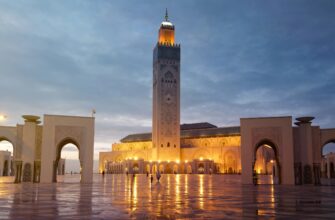
Article : Le Nouvel an de l'hégire (1er Moharram) sera célébré ce mercredi 17 juin au Maroc
Le 1er Moharram de la nouvelle année de l’Hégire 1448 correspondra au mercredi 17 juin 2026, a annoncé le ministère des Habous et des affaires islamiques.
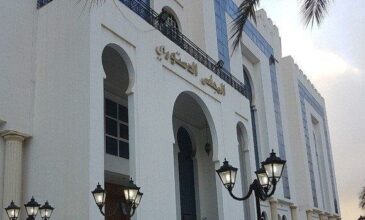
Article : Adouls : la Cour constitutionnelle valide l’essentiel de la réforme, mais écarte plusieurs dispositions
Saisie par 93 députés avant la promulgation du texte, la Cour a déclaré non conformes des articles touchant aux incompatibilités professionnelles, aux personnes en situation de handicap, au témoignage collectif dit “lafif” et à l’organisation des instances représentatives. Le texte devra donc être corrigé sur ces points, sans remettre en cause le cœur de la nouvelle loi 16.22.
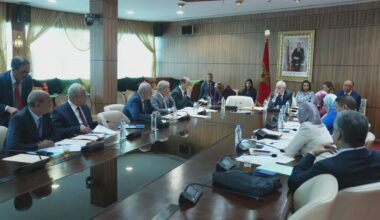
Article : En commission, les conseillers votent la nationalisation de la Samir et le plafonnement des hydrocarbures
Deux propositions de loi portant sur les hydrocarbures et la Samir ont été récemment adoptées en commission à la Chambre des conseillers. Un vote "surprise" rendu possible par un rapport de forces numérique défavorable à la majorité, lors d’une séance où l’opposition était majoritaire en nombre. Si ces textes ont franchi l’étape de la commission, leurs promoteurs sont conscients qu’ils ont peu de chances d’être adoptés en plénière.

Article : Retail : la guerre silencieuse pour conquérir le panier des Marocains
Pendant longtemps, les courses du quotidien se sont surtout jouées entre l’épicier du quartier, le grossiste et quelques grandes surfaces. Ce modèle commence à se fissurer. Entre fusion capitalistique, rachats d’enseignes, master-franchises, centrales d’achat, logistique commune et formats de proximité, les grands opérateurs installent peu à peu des réseaux capables d’accompagner le consommateur du café du matin aux achats du week-end. Non sans bousculer les équilibres.
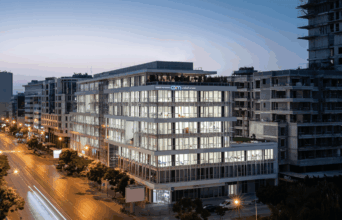
Article : Crédit du Maroc : ce que cache l’augmentation de capital à 699 MDH
Depuis son passage sous le contrôle de Holmarcom, Crédit du Maroc a changé de rythme. La banque affiche des bénéfices en hausse, prépare son plan CDM Boost 2028, et propose désormais à ses actionnaires de suivre le mouvement via une opération ouverte du 26 juin au 16 juillet. Derrière le prix fixé à 938 DH par action, le marché devra surtout juger si cette nouvelle étape confirme une trajectoire ou ouvre un pari plus large. Décryptage.
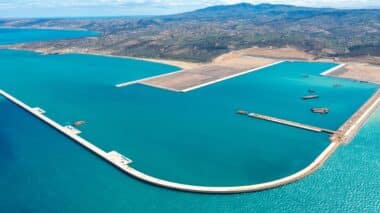
Article : Nador West Med : derrière le port, le pari industriel de l’Oriental
ROUND UP. Prévu pour entrer en service fin 2026, Nador West Med se construit déjà au-delà de ses quais : routes dédoublées, future autoroute vers Guercif, projets chinois dans l’éolien, les pneus et les alliages, ambition énergétique autour du GNL et de l’hydrogène vert. L’enjeu est désormais de transformer cette infrastructure en véritable moteur économique régional.