
DOCUMENT. Drones, operational integration, sites: the strategic leap of the Morocco-USA military alliance
An American report reveals new details of the 2026–2036 Moroccan-American military roadmap, highlighting Morocco's emergence as a strategic pivot between the Strait of Gibraltar and the Sahel.
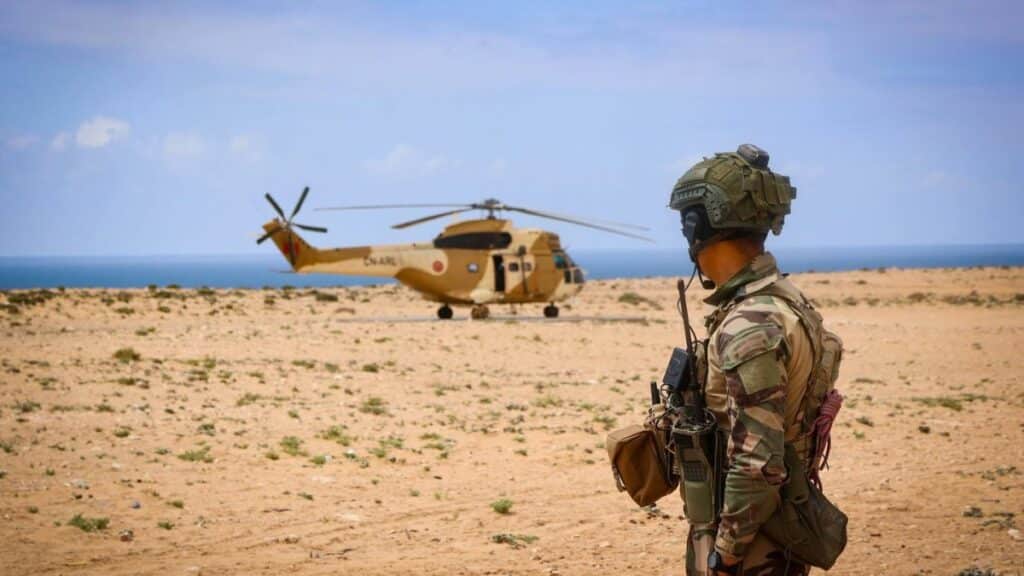
The Moroccan–American military partnership is poised for a qualitative and quantitative leap — quietly prepared and one that will open vast new opportunities for Morocco.
Until now, military cooperation between the two countries had been guided by the 2020–2030 roadmap. However, four years before its expiry, that framework is being superseded by a new decade-long plan — the 2026–2036 roadmap — signed in April 2026 in Washington. While only broad outlines have been made public, the new roadmap is significantly more ambitious, aiming for deeper operational integration between the two armed forces.
An official American report obtained by Médias24 outlines the main features of the new roadmap. It reveals that Morocco is set to occupy a prominent position within the network of alliances built by the United States.
The Legal Context
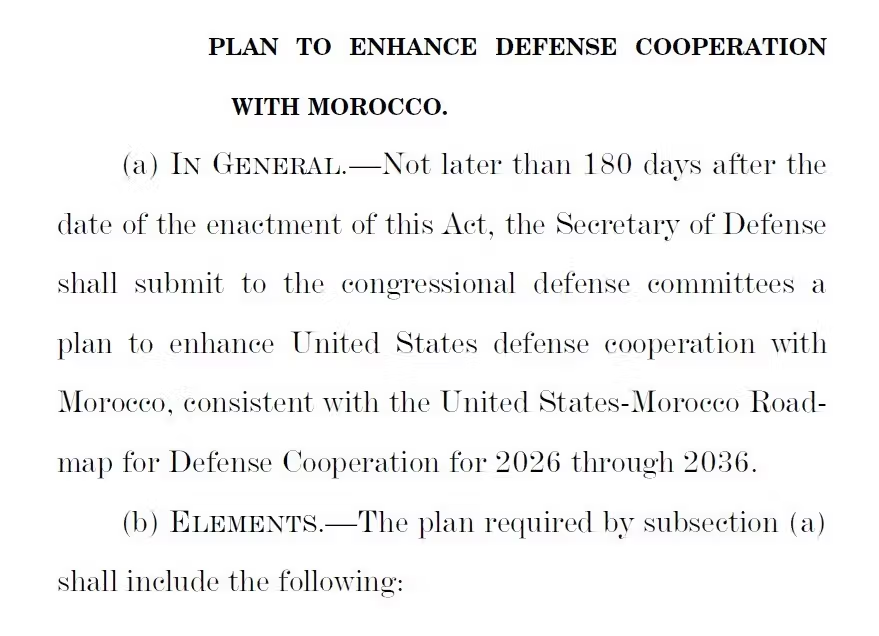
As part of the debate and adoption of the 2027 U.S. budget, Washington incorporated into the Army bill the cooperation program with Morocco for the 2026–2036 period. The budget must be finalized within six months at the latest.
The text imposes two obligations on the Secretary of Defense:
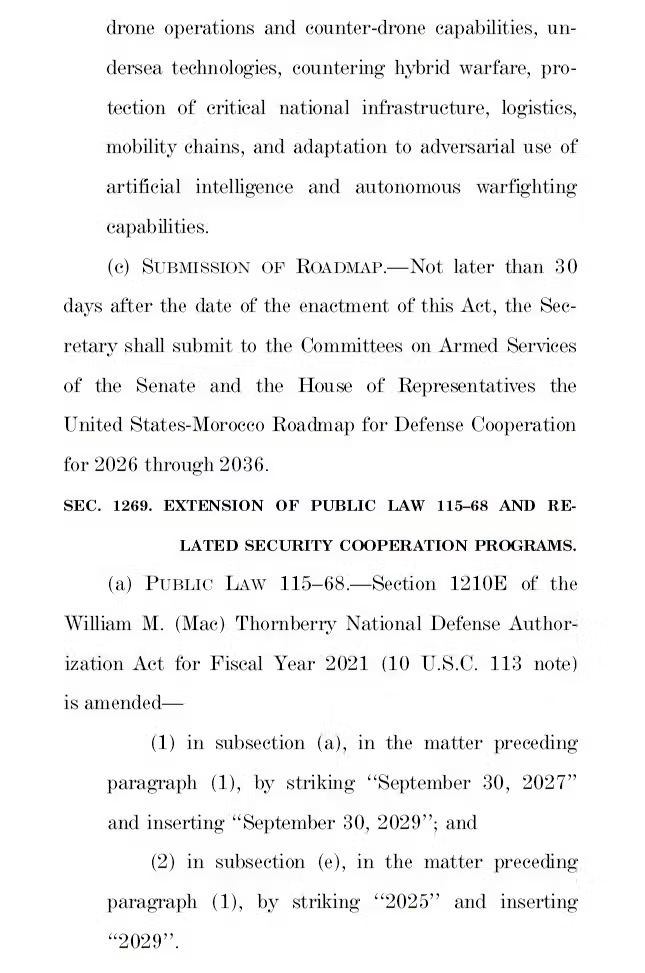
- Within 30 days: submit to Congress the 2026–2036 U.S.–Morocco military roadmap.
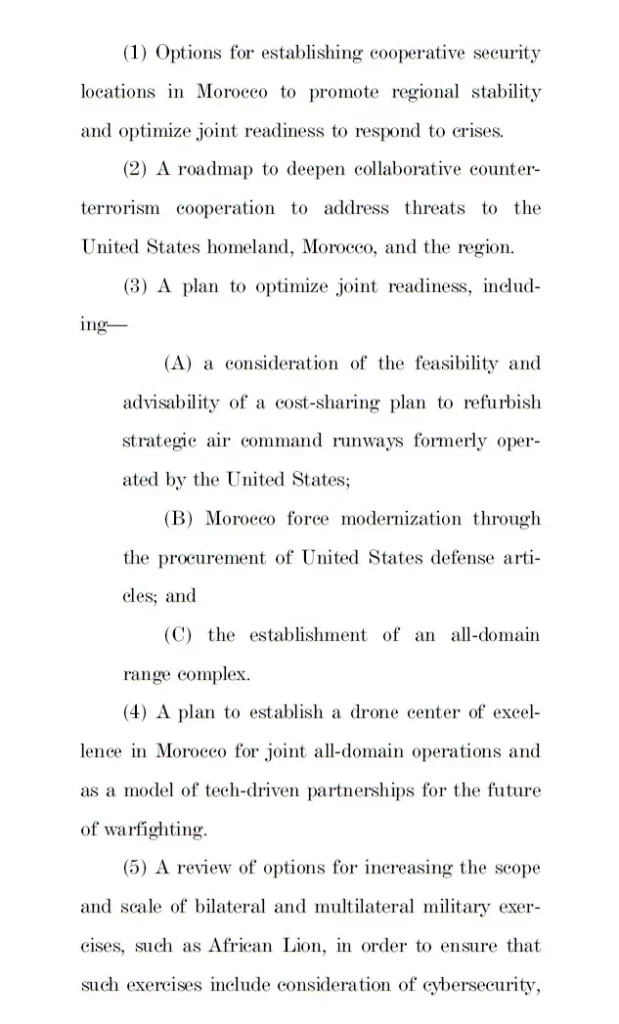
- Within 180 days: submit a detailed operational plan structured around five axes:
→ Options for establishing Cooperative Security Locations (CSLs) in Morocco. It should be noted that these are not military bases. In American military doctrine, they correspond to sites of light presence. Drawing on existing examples within the U.S. network, a CSL typically consists of a runway and hangars, fuel, ammunition, and equipment stocks, as well as bilateral agreements enabling very rapid access—within a few hours. Generally, few or no American personnel are permanently stationed there.
→ Counterterrorism: a roadmap to deepen cooperation against regional threats and within U.S. territory.
→ Joint operational readiness: renovation of former U.S. air bases, modernization of the Royal Armed Forces through American equipment, and establishment of a multi‑environment training complex.
→ Drone Center of Excellence: the regional hub for multi‑environment operations and an exportable model of technological partnership. "Multi-environment" (All‑domain) refers to the simultaneous conduct of operations across all combat spaces — air, sea, land, space, and cyberspace.
The Moroccan drone center will not merely be a training base but a multi‑environment swarm coordination laboratory integrating AI, anti‑drone countermeasures, and future warfare doctrine. Morocco is strategically positioned for this role thanks to its dual Atlantic–Mediterranean frontage, its proximity to the Sahel, and its vast available spaces.
Morocco will thus coordinate air-sea-land drone swarms in real-time, develop anti-drone countermeasures (a major issue in the Sahel), integrate artificial intelligence into tactical decision-making, and serve as a doctrine laboratory for future wars.
→ Expanded exercises: xpansion of African Lion to include cyber, submarine, drone, hybrid warfare, artificial intelligence, and autonomous systems.
An Advanced Status
Since 2004, Morocco has held the status of major non‑NATO ally — a designation granted to about twenty countries worldwide — and, like a select few, has benefited from a bilateral military cooperation roadmap.
Most importantly, this military cooperation, in its new form (2026–2036 roadmap), will be enshrined in the National Defense Authorization Act (NDAA) — the annual law that sets the budget and defense priorities of the United States.
Three Technical Pillars
The roadmap emphasizes interoperability, real-time data sharing, and joint operation planning. Here are the three pillars:
→ The Link-16 system
It is the most concrete and unprecedented element: Morocco becomes the first African partner to reach this level of integration. As the backbone of NATO interoperability, Link‑16 enables all connected platforms — ships, aircraft, ground stations, and command centers — to share a common operational picture in real time, including the positions of friendly and detected units, target trajectories, threat data, and encrypted voice and text communications.
Integration was tested on February 3, 2026, at the final planning meeting of African Lion in Agadir, where secure Link‑16 communications were established between Moroccan and American terminals.
→ Industrial Co-Production
The agreement formally institutionalizes co-production, building on a solid foundation: Moroccan Law 10-20 of June 2021 on the defense industry, the creation of dedicated industrial acceleration zones, Morocco's inclusion in the F-16 Block 72 supply chain, and the establishment of the Aero Maintenance Hub Morocco in Benslimane, a joint venture involving Lockheed Martin, SABCA, and Sabena Aerospace, operational by the end of 2026. Lockheed Martin also confirmed in April 2025 its intention to establish in Morocco a hub for manufacturing military aeronautical components.
→ Cybersecurity
The shared protocols, detection architectures, and incident response systems will be American. For critical infrastructure such as Tanger Med, whose management systems generate vast data flows on global trade, this dimension carries major strategic significance.
Strait
The new Moroccan–American military roadmap should be understood in light of two key factors: the United States’ rivalry with China and Russia, and the strategic imperative of securing the Strait of Gibraltar.
Washington is likely engaging in a preventive consolidation of control over the Strait of Gibraltar, a critical maritime node in the global economy, amid systemic Sino-American competition. Morocco, which holds around 70% of the world’s phosphate reserves and hosts Tanger Med — the leading port in Africa and strategically located on the strait — is a key piece of this equation.
Here are facsimiles of the American document:

à lire aussi
Article : Maroc-France : exercice conjoint de lutte contre les pollutions maritimes
Du 16 au 19 juin 2026, la Marine royale marocaine a mené, en collaboration avec l’équipage du bâtiment de soutien et d’assistance métropolitain (BSAM) Rhône de la Marine nationale française, un exercice conjoint d’interaction antipollution au large de Casablanca.
Article : Chatbot Médias24 : la DGI publie son rapport d’activité 2025, marqué par des recettes record
La Direction Générale des Impôts (DGI) a publié son Rapport d’activité annuel. Porté par des recettes brutes record de 295 milliards de DH, l'essor du télépaiement et l'accélération de la transformation numérique, le document est désormais consultable. Échangez avec le Chatbot Médias24 pour découvrir tous les détails.

Article : Épisode 8. Les chercheurs n’étaient pas attendus : ce que le questionnaire m’a appris sur le supportérisme marocain
Durant les épisodes précédents, nous avons exploré les motivations des supporters, leur rôle dans cette aventure mondiale, les relations construites avec les joueurs ainsi que les formes inédites de mobilisation qui ont accompagné cette finale historique. Pourtant, au milieu de ce déplacement, une autre histoire s’est discrètement écrite. Elle ne concerne ni le football ni le voyage lui-même, mais la recherche. Car si les supporters étaient prêts à traverser plusieurs continents pour accompagner l’équipe nationale, ils n’étaient pas nécessairement habitués à être interrogés sur leurs pratiques, leurs motivations ou leurs trajectoires. Ce constat allait progressivement transformer ma manière d’enquêter et m’apprendre autant sur le terrain que sur les supporters eux-mêmes.

Article : Énergie nucléaire : le Maroc élu à l’unanimité commissaire de la Commission africaine de l’AFCONE
Le Maroc a été élu à l’unanimité commissaire de la Commission africaine de l’énergie nucléaire lors de la 7ᵉ Conférence des États parties au Traité de Pelindaba, tenue à Addis-Abeba, renforçant son positionnement en faveur de la sécurité nucléaire et des applications pacifiques de cette technologie.

Article : Tourisme: le plaidoyer de Othman Cherif Alami pour doubler les nuitées à Casablanca
Doubler la fréquentation hôtelière, faire émerger Casablanca comme une destination européenne de courts séjours et bâtir une véritable industrie du tourisme d'affaires est l'ambition portée par le CRT de Casablanca-Settat. Pour y arriver, son président estime que les segments city break et MICE, identifiés par la quatrième édition du Forum interactif du tourisme qui se tiendra le 1ᵉʳ juillet, permettront de faire passer le nombre de nuitées de 6 à 12 millions d'ici 2035.
Article : Tanger Med Port Authority s’apprête à prendre le contrôle conjoint de Portnet aux côtés de l’ANP
La société Tanger Med Port Authority SA (TMPA) prévoit d’acquérir 44,07% du capital de Portnet SA, gestionnaire du guichet unique national des procédures du commerce extérieur.