
Syria-Morocco: Assaad el-Chibani expected in Rabat for a visit with major diplomatic significance
Scheduled for Thursday, May 14, the Syrian foreign minister’s trip is expected to include talks with Nasser Bourita, one year after Morocco decided to reopen its embassy in Damascus. It also comes in a new context, marked by the closure of the Polisario office by Syria’s post-Assad authorities.
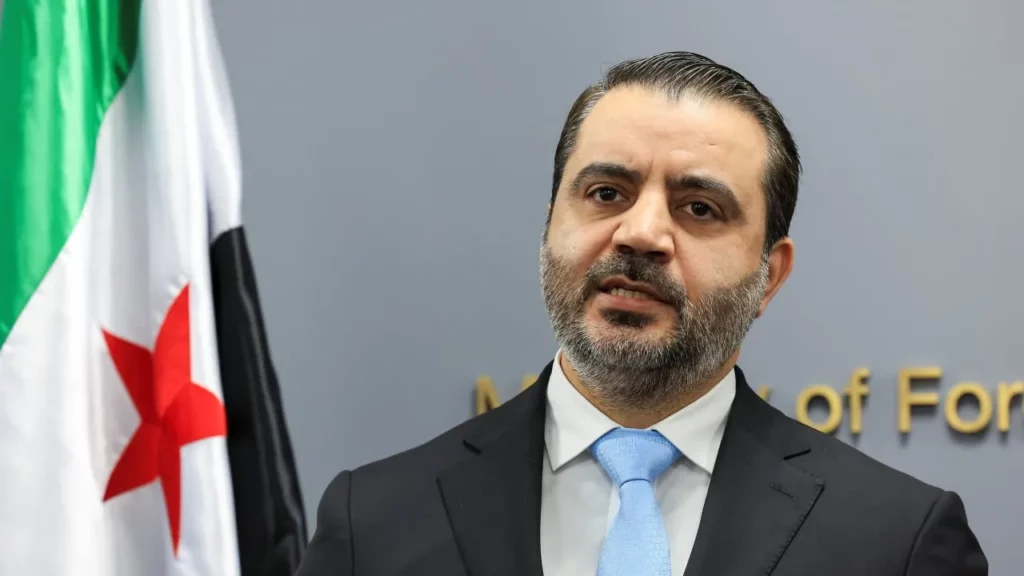
The Syrian Minister of Foreign Affairs and Expatriates, Assaad el-Chibani, is expected in Rabat on Thursday, May 14, 2026, Médias24 has learned.
It is expected to be his first official visit to Morocco, sixteen months after his appointment following the fall of President Bashar al-Assad’s regime in December 2024. On this occasion, Syria’s top diplomat is due to hold talks with his Moroccan counterpart, Nasser Bourita.
A relationship revived after the fall of Bashar al-Assad
Assaad el-Chibani and Nasser Bourita had already held talks on May 17, 2025, in Baghdad, on the sidelines of the 34th Arab Summit held in the Iraqi capital. On the same day, King Mohammed VI, in a speech read out by Nasser Bourita, officially announced Morocco’s decision to reopen its embassy in Damascus, which had been closed since July 2012.
A staunch supporter of the Syrian people during the civil war (March 2011-December 2024), and a prominent member of the International Conference of Friends of Syria, whose fourth meeting it hosted in Marrakech in December 2012, the Kingdom saw its diplomatic mission attacked by pro-regime demonstrators in November 2011. In the week leading up to the International Conference of Friends of Syria in Marrakech, the honorary consul of Morocco in Aleppo was assassinated, likely by henchmen of Bashar al-Assad.
"Regarding our sister Syria, the Kingdom of Morocco reaffirms its unchanging historical position, which we had previously expressed in the letter addressed to our brother, His Excellency President Ahmed Acharaa: we assure him of our support for the brotherly Syrian people in their quest for freedom, security and stability, as well as our commitment to preserving Syria’s national sovereignty and territorial integrity," King Mohammed VI recalled in his speech to the 34th Arab Summit.
He expressed the hope that the reopening of the Moroccan embassy "will open up broader prospects in the historic relations between our two countries and our two peoples."
Syria’s heavy legacy on the Sahara issue
For its part, the current Syrian government, led since January 2025 by Ahmed al-Charaa as President of the Syrian Arab Republic, closed the Polisario office in Damascus a few days after the embassy reopened. It should be recalled that, with the exception of Algeria, Syria under Bashar al-Assad and, before him, under his father Hafez al-Assad (March 1971-June 2000), was the Arab country that most actively supported the separatist movement.
The latter would later repay that support in kind. In April 2025, a wide-ranging investigation by the American newspaper The Washington Post thus confirmed the involvement of Brahim Ghali’s group in the Syrian civil war alongside Bashar al-Assad’s regime. This was one of the main reasons cited in the United States to justify Congressman Joe Wilson’s initiative, as well as that of Senators Ted Cruz, Tom Cotton and Rick Scott, to classify the Polisario as a terrorist organization.
As early as April 1980, Hafez al-Assad recognized the so-called "Sahrawi Arab Democratic Republic" (SADR). Bashar al-Assad briefly backtracked on that decision in the early 2000s.
During a visit to Damascus in October 2001, Prime Minister Abderrahmane Youssoufi raised the issue with him, relying on the pan-Arab and socialist ties between his party, the Socialist Union of Popular Forces (USFP), and the Baath Party, from which the Syrian president came. But by the time of the civil war, the Polisario once again had a foothold in Syria.
Following the fall of Bashar al-Assad, many Syrian voices, including the Syrian National Salvation Front, called on Ahmed al-Charaa to formally recognize Morocco’s sovereignty over its Sahara.

à lire aussi
Article : Maroc-Canada : Ouahbi assume le statut de “prétendant”, Marsch refuse de réduire le match au 3-0
Après la qualification marocaine pour les quarts, les deux sélectionneurs ont livré deux lectures opposées du huitième de finale : côté marocain, la maîtrise retrouvée après la pause et l’ambition d’aller plus loin ; côté canadien, le sentiment d’avoir dominé longtemps avant de céder sur les détails.
Article : Coupe du monde 2026. Le Maroc en quart pour la deuxième fois de son histoire (3-0)
Après un premier acte tendu et angoissant, l’équipe nationale s’est difficilement sortie du piège tendu par les Canadiens grâce à un doublé d’Azzedine Ounahi et une réalisation signée Soufiane Rahimi, ce samedi 4 juillet à Houston. Le Maroc affrontera en quart, jeudi 9 juillet, le vainqueur du huitième opposant, la France au Paraguay.
Article : Croisières : Celestyal ajoute Casablanca et Tanger à ses itinéraires d’hiver
Le programme “Mediterranean Odyssey” prévoit deux départs de Barcelone, les 5 et 19 décembre 2026, pour un circuit de 14 nuits à bord du Discovery, entre Malaga, Gibraltar, Cadix, Lisbonne, Valence, Palma de Majorque et Sète.
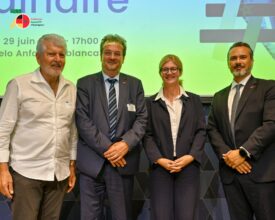
Article : Maroc-Allemagne : avant son 30e anniversaire, l’AHK renouvelle ses instances
À Casablanca, l’assemblée générale du 29 juin a confirmé Mehdi El Boury à la présidence de la Chambre. La direction générale passe, depuis le 1er juillet, de Katharina Felgenhauer à Silke Kunstreich, tandis que l’ancien président Mazen Sowan est nommé président d’honneur.
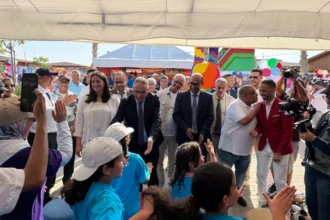
Article : Jeunesse : coup d’envoi des colonies de vacances 2026 à Bouznika
Organisée sous le thème “Les colonies éducatives, une nouvelle vision pour construire la vie”, l’édition 2026 du programme national de camping doit bénéficier à 210.000 enfants et jeunes, avec un dispositif élargi aux séjours fixes, de proximité, thématiques et itinérants.
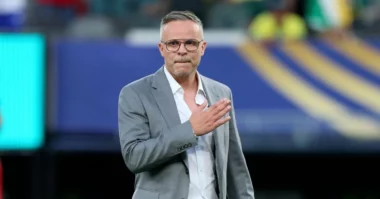
Article : Maroc-Canada : Ouahbi reconduit son onze-type, Halhal remplace Riad en défense
À Houston, les Lions de l’Atlas s’appuieront sur leurs cadres pour tenter de poursuivre leur parcours face au pays coorganisateur.