
Addoha, Alliances, RDS. Three real estate groups, three very different market trajectories
Addoha, Alliances and RDS posted sharply improved 2025 results, helped by the recovery in the real estate cycle. Behind that shared momentum, however, their profiles diverge markedly in terms of growth, profitability and valuation.

The three main listed real estate developers on the Casablanca Stock Exchange, Addoha, Alliances and RDS, reported solid results for 2025. Revenues are up, profitability as well, with a clear improvement compared to 2024. However, the pace varies across the three groups.
Overall, the listed real estate sector generated 5.6 billion MAD in revenue, up 8.1% year-on-year, with profit reaching 860 million MAD, a sharp increase of 62.6%.
In detail, Alliances generated 2.4 billion MAD in revenue and 402 million MAD in net income (group share). Addoha posted 2.7 billion MAD in revenue with net income of 454 million MAD. RDS, for its part, reported 469 million MAD in revenue and net profit of 4 million MAD.
On the market, the three stocks are following diverging trajectories. Since the start of the year, Addoha is down 1%, RDS is up nearly 1%, while Alliances has fallen by around 14%. Valuations also reflect these gaps, with P/E ratios of 47.7x for Addoha, 39.6x for RDS and 25x for Alliances.
"Each stock needs to be assessed on its own merits. In reality, this is not a single homogeneous sector, but three very different trajectories," a market source says.
"Today, the real estate market is recovering, but each developer is following a different strategy. We are clearly at the start of a new cycle, driven by a more favourable macro environment and, above all, by the return of public support schemes, notably the Daam Sakane and Villes sans bidonvilles programmes, which are boosting demand and restoring visibility for operators," an analyst says.
"But behind this shared momentum, business models diverge. RDS benefits directly from the rehousing drive, Addoha remains highly exposed to public programmes and the affordable housing segment, while Alliances has made a more pronounced shift towards higher value-added products."
"And this is how the sector should be read today: the same cycle, but not the same drivers, margins or market expectations."
Alliances Group
For Alliances, "the group is clearly seen as having made the most progress in its repositioning. It has refocused on higher-value segments, with a clear move upmarket towards premium products, and this is starting to be reflected in margins," the analyst says.
"The outlook remains strong, with annual growth of around 20% over the coming years, but what really sets the group apart is its profitability profile. 'We are seeing the highest margins in the sector, driven by high-end and upper mid-market segments'," the same source adds.
Another key factor in assessing the group’s trajectory is its investment cycle. "The end of major investment phases, particularly in hospitality, should coincide with a clear return to value creation, with ROCE expected at around 15.8% by 2030."
In this context, market perception remains misaligned, according to several analysts. "The current discount is no longer really justified given the group’s profile and operational efficiency. There is significant re-rating potential."
The positioning is now fairly clear: a player less dependent on public programmes, more focused on margins, and likely to gradually regain a central position in the sector as the cycle strengthens.
Résidences Dar Essaada Group
For RDS, the picture is different. "It is clearly the biggest beneficiary of the Villes sans bidonvilles programme today," the analyst says.
"After several years of slowdown, the group is now posting the strongest growth in the sector. We are looking at a CAGR of over 50% in revenue by 2030, mainly driven by agreements signed with the State."
However, this momentum has a downside. "RDS is almost entirely positioned in the social and affordable housing segment. That drives volumes, but also results in the lowest margins in the sector."
The figures confirm this, "with gross margins expected at around 22% over the coming years, and overall profitability remaining limited. ROCE is set to improve, but will remain constrained at around 7% by 2030. This is well below the levels of players positioned in higher-end segments."
"The market appears to have already priced in much of the upside. The rehousing-related newsflow is largely reflected in valuations. The stock is broadly fairly valued."
Addoha Group
For Addoha, views are more mixed, even clearly cautious. "It is a pure player that has positioned itself across all segments, but the market may now be overpaying for this investment case," the analyst says.
On paper, the trajectory remains solid. "We are looking at growth of around 19% over the coming years, driven both by the affordable housing segment in Morocco and expansion in West Africa."
However, several limitations are emerging. First, margins. The group remains highly exposed to affordable housing and public programmes, which structurally weigh on profitability, with gross margins expected at around 26% over the period.
Second, the structure of the model itself. "Working capital requirements remain the most demanding in the sector. The operating cycle is long, and despite initial destocking, it continues to weigh on cash generation," the analyst explains. "ROCE will not exceed 8% by 2030, which is insufficient given current valuation levels."
This is where the main point of tension lies. "The market is currently assigning a significant premium to the stock — around 50% compared to peers. In our view, this is not justified."
Ultimately, Addoha remains a key player in the sector, but with a growing disconnect between operational performance and market valuation — a point investors are beginning to scrutinise more closely.

à lire aussi

Article : Coupe du monde 2026. Qualification héroïque du Maroc face aux Pays-Bas (1-1, 3 t.a.b. à 2)
Menés à un quart d’heure du terme, les Lions de l’Atlas ont trouvé les ressources mentales nécessaires pour égaliser grâce à Issa Diop, puis éliminer les Oranjes lors de la séance des tirs au but, dans la nuit du lundi 29 au mardi 30 juin, à Monterrey, au Mexique. Yassine Bounou et Ismaïl Saibari ont propulsé le Maroc en huitièmes de finale face au Canada, samedi 4 juillet à Houston.

Article : Coupe du monde 2026. Centième sélection pour Achraf Hakimi face aux Pays-Bas
Le capitaine des Lions de l’Atlas portera le maillot du Maroc pour la 100e fois de sa carrière, dans la nuit du lundi 29 au mardi 30 juin, face aux Pays-Bas, en seizième de finale de la Coupe du monde 2026. Titularisé par Mohamed Ouahbi, Hakimi n’est plus qu’à 15 sélections d’égaler le record de Noureddine Naybet.

Article : GMT, interdiction du démarchage, IA : la triple peine de l’offshoring marocain
Longtemps porté par les donneurs d’ordre européens et les centres d’appels, le secteur de l’offshoring au Maroc doit désormais composer avec des horaires à réorganiser, des appels commerciaux de plus en plus encadrés en France et des tâches que les logiciels commencent déjà à automatiser. Les grands opérateurs invoquent l’adaptation et la montée en gamme, tandis que les syndicats redoutent moins d’embauches et davantage de postes supprimés.
Article : Maroc-Pays-Bas : les cafés pourront rester ouverts pour diffuser le match
Selon Ahmed Bifergane, coordinateur de la Fédération nationale des propriétaires de cafés et restaurants, aucune interdiction n’a été émise par les autorités pour la nuit du lundi 29 au mardi 30 juin.

Article : Défense : les F-16 marocains concernés par un nouveau contrat américain sur les missiles AMRAAM
Attribuée à Raytheon pour 398,6 millions de dollars, l’enveloppe porte sur des travaux liés au système D4/C9, avec une échéance fixée à décembre 2027. Le Maroc figure parmi les pays partenaires du dispositif FMS, aux côtés notamment des Émirats arabes unis, de l’Arabie saoudite, du Japon, d’Israël et du Royaume-Uni.
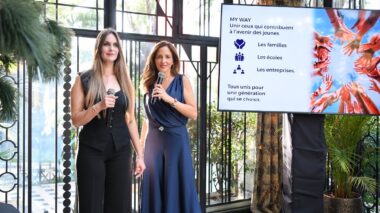
Article : My Education lance “MY WAY”, un programme dédié aux compétences du XXIe siècle
Destiné aux jeunes de 9 à 16 ans, le dispositif combine des activités régulières, des bootcamps, des stages immersifs et des interventions en milieu scolaire.