
Driss El Azami: “We are working to come first” as the PJD sets out its ambitions and hints at surprises
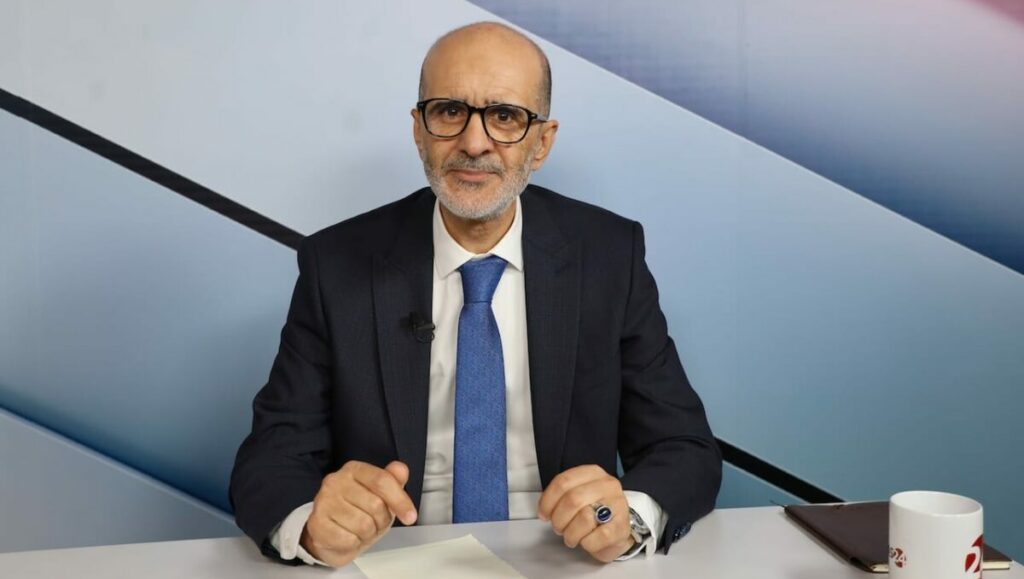
Five months ahead of the September 2026 parliamentary elections, Driss El Azami El Idrissi, the PJD’s first vice-secretary general, appeared on Médias24’s “12/13”. Mixing assessment, measured self-criticism and electoral ambition, he defended the trajectory of a party seeking to reclaim its place in the political landscape.
The PJD has faced one of the deepest crises in its history since 2021. Two consecutive electoral victories in 2011 and 2016, in power for ten years, followed by a brutal collapse where the party went from 125 to 13 seats. An unprecedented outcome in Moroccan political history, leaving the party depleted, its activists stunned, and its credibility damaged.
Five months before the September 2026 legislative elections, the PJD is trying to rebuild itself and is displaying ambitions many would consider ambitious. Driss El Azami El Idrissi, the party's first vice-secretary general, was a guest on "12/13" on Médias24. Between measured self-criticism, sharp criticism of the government's track record, and openly stated electoral ambitions, he defends the trajectory of a party that aims to make 2026 its comeback.
Directly questioned about the PJD's collapse – from 125 seats in 2016 to 13 in 2021 –, Driss El Azami El Idrissi does not evade the issue but puts it into perspective. "We take a share of responsibility, and we do not hide behind anything. But this result has never existed in Moroccan political history. I even asked AI: no party in the world has gone from 125 to 13 seats."
For him, the explanation is twofold: part of the blame lies with the party itself, and part with external forces. "What happened, what was done to bring the PJD down from 125 to 13, those who did it should be asked. In the media, the PJD and its ten years in government have been demonized."
Regarding the absence of a thorough internal assessment after the election, he explains the choice at the time: "The morale of party members was at its lowest. Sitting down to say, 'you did this, you did that'... we preferred to look ahead."
Electoral preparation: all constituencies covered
El Azami clearly distinguishes between the two governments led by the PJD. The first, under Abdelilah Benkirane, was marked according to him by internal cohesion and major structural reforms. "The reform of the Compensation Fund and the liberalization of fuel prices are reforms that previous governments had always postponed. They helped strengthen our macroeconomic framework and send a signal to international investors." El Otmani's mandate already showed cracks in the party.
How is the party now preparing for the future? The PJD's first vice-secretary general explains that, organizationally, the party is already fully mobilised. "Since early April, we have been holding provincial general assemblies of our members, constituency by constituency. Out of the 92 local constituencies and 12 regional constituencies, we have already held 64. The candidates are proposed by the activists themselves."
El Azami confirms that the PJD will be present in all local and regional constituencies.
Renewal of leadership: a cautious response
Pressed on the question of renewing the party's figures – the same circle of leaders returning from one term to the next –, El Azami refuses to reveal names before the validation bodies meet. "I must respect the general assemblies and the validation body. We do not have a 'moul chkara' designating individuals. It is the members who choose, debate, and put forward proposals."
He promises surprises nonetheless. "There will be new faces. You will be surprised. But I cannot reveal them until the validation body has made its decision."
Asked about the PJD's program, his answers can be summarized as follows: do better and differently than Aziz Akhannouch. El Azami delivers a detailed critique of the economic policy of the Akhannouch government. On the Investment Charter, he is scathing. "The Investment Charter was presented as a major breakthrough. We say it blocked private investment. Out of 500 billion dirhams of announced investment at the commission level, not a single dirham of support has been disbursed," he asserts.
He also points out conflicts of interest, stating that economic operators "complain that the same players continue to win public contracts."
Ambitions and alliances: aiming for the top spot
Regarding the current daylight saving time controversy, El Azami fully stands by the party's position. "We issued an official statement calling for the abolition of daylight saving time and a return to standard time. Yes, this measure was taken under our government. We acknowledge it. But a responsible party must meet the citizens' expectations. Just yesterday, the Minister of Economy admitted that this time was not suitable, especially in cold weather."
On the ambitions for the upcoming election, El Azami does not hide the objective: "We are sincerely working to be first. And if a party is not working to be first, it should step aside." Asked about the possibility of regaining the 125 seats, he responds: "Inshallah."
Regarding post-electoral alliances, he mentions natural affinities – with Istiqlal, the Popular Movement, the PPS – but refuses to commit before knowing the results. "It is the National Council that will decide, not the general secretariat. We will go with a proposal, and the National Council will decide."

à lire aussi

Article : Coupe du monde 2026. Qualification héroïque du Maroc face aux Pays-Bas (1-1, 3 t.a.b. à 2)
Menés à un quart d’heure du terme, les Lions de l’Atlas ont trouvé les ressources mentales nécessaires pour égaliser grâce à Issa Diop, puis éliminer les Oranjes lors de la séance des tirs au but, dans la nuit du lundi 29 au mardi 30 juin, à Monterrey, au Mexique. Yassine Bounou et Ismaïl Saibari ont propulsé le Maroc en huitièmes de finale face au Canada, samedi 4 juillet à Houston.
Article : Coupe du monde 2026. Centième sélection pour Achraf Hakimi face aux Pays-Bas
Le capitaine des Lions de l’Atlas portera le maillot du Maroc pour la 100e fois de sa carrière, dans la nuit du lundi 29 au mardi 30 juin, face aux Pays-Bas, en seizième de finale de la Coupe du monde 2026. Titularisé par Mohamed Ouahbi, Hakimi n’est plus qu’à 15 sélections d’égaler le record de Noureddine Naybet.

Article : GMT, interdiction du démarchage, IA : la triple peine de l’offshoring marocain
Longtemps porté par les donneurs d’ordre européens et les centres d’appels, le secteur de l’offshoring au Maroc doit désormais composer avec des horaires à réorganiser, des appels commerciaux de plus en plus encadrés en France et des tâches que les logiciels commencent déjà à automatiser. Les grands opérateurs invoquent l’adaptation et la montée en gamme, tandis que les syndicats redoutent moins d’embauches et davantage de postes supprimés.
Article : Maroc-Pays-Bas : les cafés pourront rester ouverts pour diffuser le match
Selon Ahmed Bifergane, coordinateur de la Fédération nationale des propriétaires de cafés et restaurants, aucune interdiction n’a été émise par les autorités pour la nuit du lundi 29 au mardi 30 juin.

Article : Défense : les F-16 marocains concernés par un nouveau contrat américain sur les missiles AMRAAM
Attribuée à Raytheon pour 398,6 millions de dollars, l’enveloppe porte sur des travaux liés au système D4/C9, avec une échéance fixée à décembre 2027. Le Maroc figure parmi les pays partenaires du dispositif FMS, aux côtés notamment des Émirats arabes unis, de l’Arabie saoudite, du Japon, d’Israël et du Royaume-Uni.
Article : My Education lance “MY WAY”, un programme dédié aux compétences du XXIe siècle
Destiné aux jeunes de 9 à 16 ans, le dispositif combine des activités régulières, des bootcamps, des stages immersifs et des interventions en milieu scolaire.