
Agricultural Investment Code of 1969: Major Modernization Project Launched
The Ministry of Agriculture is considering revising the Agricultural Investment Code, in force since 1969, to reflect the evolving realities of the sector—economic and climatic in particular—as well as the mounting pressures on the country’s natural resources in recent years.

The Ministry of Agriculture has launched a call for tenders for a study to overhaul the Agricultural Investment Code (CIA), with an estimated budget of 5.64 million dirhams. Originally comprising 49 texts (17 dahirs, 19 decrees, 13 orders), the CIA was first published in the Official Bulletin on July 25, 1969. This legal framework covers the core aspects of agricultural activity and state intervention in the sector, and has held considerable importance over the past half‑century.
Its revision comes at a time of profound change in the agricultural sector on multiple fronts, while the CIA has remained in force since 1969.
An in‑depth study is intended to provide the ministry with guidance for reforming the CIA. Since its promulgation, Moroccan agriculture has undergone significant economic and institutional transformations, marked by the rise of a more structured and dynamic private sector. The study aims to address both current and future needs of the agricultural sector, particularly in line with the New Development Model (NMD).
Often referred to as "the charter of agricultural development," the CIA applies to all agricultural land, with particular focus on areas designated by the state for their agricultural potential. It spans a wide range of domains—from water management and land reform to the intensification of farming systems, investment incentives, and beyond.
The study aims to evaluate the legal framework of the Agricultural Investment Code, assess its alignment with the transformations Moroccan agriculture has undergone over the past fifty years, and devise a reform strategy to meet current policy objectives and economic development challenges. It will also propose coherent legal frameworks by domain of intervention, drawing on international benchmarks and best practices.
The contractor will carry out three main missions over eight months. The first involves assessing the current application of the CIA, compiling an inventory of existing agricultural legislation, diagnosing its implementation, and identifying areas in need of revision.
The second mission entails identifying inconsistencies, gaps, and constraints within the CIA, formulating recommendations in consultation with relevant stakeholders, and presenting them for validation in order to build consensus around the reform strategy.
The third mission involves defining a roadmap for implementing the reform strategy, focusing on the transition from the current CIA framework to the proposed reforms, and detailing the timeline, consistency, and strategic orientations of the reform process.
Preference will be given to bids from competitors based in Morocco during the financial evaluation. For non‑Moroccan competitors, financial offers will be subject to a 15% increase. These provisions do not apply to consortia in which one or more members are based in Morocco, provided their share in the consortium is equal to or greater than 30%.

à lire aussi

Article : EXCLUSIF : les grands chantiers d'Amine Benabdallah à la tête de la Cour constitutionnelle
Récemment nommé par le Roi Mohammed VI à la présidence de la Cour constitutionnelle, Mohamed Amine Benabdallah, éminent universitaire et spécialiste du droit public, livre à Médias24 sa première grande interview dans ses nouvelles fonctions. Contrôle de constitutionnalité, exception d'inconstitutionnalité, intelligence artificielle, démocratie, élections et grands défis institutionnels du Royaume : le nouveau président revient sur toutes les missions de cette institution-clé et partage sa vision de l'évolution constitutionnelle du Maroc. Entretien exclusif.
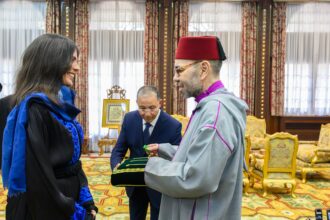
Article : Le Roi Mohammed VI décore Nawal Sfendla du Wissam Al Moukafaa Al Watania de l’ordre d’Officier
Le Souverain a reçu, lundi au palais royal de Rabat et a décoré Mme Nawal Sfendla du Wissam Al Moukafaa Al Watania de l’ordre d’Officier.

Article : Retraites : la CIMR examinée le 15 juin, mais la réforme attendra sans doute un autre gouvernement
Après la CNSS, la CMR et le RCAR, la commission technique arrive au bout du diagnostic des régimes. Mais entre le calendrier électoral, les désaccords avec les syndicats et les arbitrages encore flous, le chantier ouvert depuis 2003 semble une nouvelle fois rattrapé par le temps politique. Round up.

Article : Mondial 2026 : beIN Sports promet plus de 17 heures de direct par jour
Le diffuseur proposera en direct les 104 matchs de la compétition dans la région MENA, dont le Maroc, du 11 juin au 19 juillet. Six chaînes MAX, une couverture en arabe, français et anglais, ainsi que 18 reporters déployés en Amérique du Nord doivent accompagner cette édition élargie à 48 équipes.

Article : CMT : Tighza, la mine presque centenaire qui vaut encore de l’or
Depuis le début de 2026, l’action de la Compagnie minière de Touissit a presque triplé, portée par la bonne tenue du plomb, du zinc et de l’argent. À Mrirt, le site de Tighza continue d’extraire, d’explorer et de s’étendre, avec 357.470 tonnes de minerai produites en 2025 et un cinquième puits appelé à renforcer les volumes. CMT regarde désormais au-delà de son actif historique, avec des projets dans le cuivre, le graphite et l’antimoine.
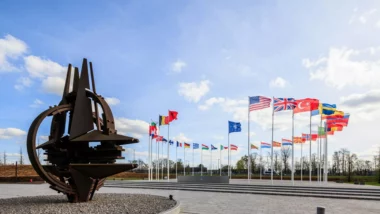
Article : L'image comme arme : coordination visuelle et mèmes dans la guerre narrative autour de l'OTAN (4/4)
Ce quatrième et dernier volet de la série consacrée à 62 jours de surveillance du débat anglophone sur Twitter/X autour de l'OTAN et de la crise iranienne est consacré à l'analyse de l'image. Le diagnostic textuel est incomplet, les narratifs les plus actifs visuellement sont invisibles aux outils standards. Ce que les trois volets précédents ont cartographié dans le texte, ce volet le cartographie dans l'image.