
Capital raised: 124.4 billion MAD mobilized in 2025, up 17% year-on-year
Moroccan companies raised 124.4 billion dirhams in the capital market in 2025, up from 106.7 billion a year earlier (+17%). The increase reflects sustained reliance on financing instruments—largely debt—in an active market where company profiles shape financial choices.

In 2025, Moroccan companies raised 124.4 billion dirhams on the capital market, up 17% from 106.7 billion in 2024. The increase reflects sustained reliance on financing instruments—largely debt—in a context of strong financial activity.
This growth covers all instruments, from short‑term financing to longer‑term maturities. It underscores that the market remains a dynamic channel for funding operations, regardless of capital structure choices.
In December 2025 alone, capital raising reached 17.8 billion MAD.
The figures also show that over 95% of the capital raised was done through debt instruments, compared to about 4% through public offerings, highlighting the central role of debt in business financing.
Capital Raising in Numbers
Over the entire year, debt instruments accounted for 119.1 billion MAD, compared to 101.7 billion MAD in 2024. They therefore concentrate the majority of the amounts raised by companies.
In detail, negotiable debt securities (NDS) lead the way. In 2025, issuances reached 66.2 billion MAD, up from 48.9 billion MAD in 2024.
Certificates of deposit totaled 29.6 billion MAD, followed by commercial paper at 19.4 billion MAD, and treasury bills at 17.2 billion MAD.
Bond issuances rank second, totaling 52.9 billion MAD in 2025, nearly matching the 53 billion MAD recorded in 2024. Most of these were carried out via private placement (40.8 billion MAD), while public offerings accounted for 12.1 billion MAD.
Equity issuances remain limited. In 2025, they reached 5.2 billion MAD, compared to 5.5 billion MAD a year earlier. Their weight remains marginal compared to the volumes mobilized through debt.
Overall, the comparison between 2024 and 2025 confirms the unchanged hierarchy of financing instruments. NDS remain at the top, followed by bonds, while equity issuances occupy a secondary position in the total amounts mobilized.
A Natural Balance between Debt and Equity
For a financing operations specialist, the comparison between debt and equity must rest on simple principles. "One should look at what companies actually raise in debt on the market and what they raise in equity. The gap structurally favors debt, even if it is not as excessive as it may appear at first glance."
According to him, "making a strict distinction between debt and equity is not always relevant. The two financing methods are not mechanical substitutes. They respond to different needs and often follow a complementary logic over time."
In practice, "companies first seek to tap into their debt capacity. As long as the debt level remains sustainable, debt is preferred because it generally costs less than equity and allows shareholders to retain control of the capital. Only once this margin is consumed, or when a project requires a significant leap, does equity become a serious option."
The significance of the amounts raised through debt does not imply that equity is confined to public offerings. As our contact reminds us, "a significant portion of equity issuances take place outside the Stock Exchange, notably with investment funds, family offices, industrial partners, or international financial institutions. These less visible operations fall outside the PEA statistics."
Another key element lies in ease of execution. "Debt is often faster to mobilize, whether through the banking system or private bond placements. Conversely, equity issuances involve longer, more complex, and demanding processes, with sometimes extensive evaluation, due diligence, and negotiation phases."
Transparency also plays a role in the trade-off. According to our contact, "public offerings require a high level of regulatory communication before, during, and after the operation. Conversely, private placements provide greater discretion, an important criterion for many companies.
For our source, a company does not frame the issue as "debt versus equity". It first identifies a financing need, then decides based on the cost, constraints, and commitments linked to each dirham raised. In this framework, debt often emerges as a more familiar, flexible, and immediate solution.
Equity opening follows a different logic. "It generally occurs at a more advanced stage of development, depending on the maturity of the company and its objectives. It can take various forms, ranging from going public to minority raisings from specialized investors, or even majority operations in contexts of strategic transfer or attachment."
Finally, market conditions play a key role. "The still limited liquidity of the Casablanca Stock Exchange and the predominance of institutional investors limit the scope of equity operations. At the same time, favorable monetary conditions and strong investor appetite for debt instruments make debt attractive, even alongside an active stock market. For some companies, this configuration leads to prioritizing debt initially and delaying a potential equity issuance."
à lire aussi
Article : Énergie : la Banque mondiale approuve 265 millions de dollars pour la STEP d’Ifahsa
Située près de Chefchaouen, l’infrastructure de 300 MW doit faciliter l’intégration du solaire et de l’éolien, tout en mobilisant environ un milliard de dollars d’investissements privés.
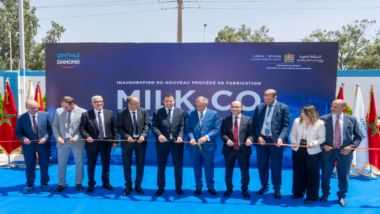
Article : Filière laitière : pour valoriser le lait local, Centrale Danone lance le procédé industriel “Milk-Co” à Fkih Ben Salah
Doté d’un investissement de 60,2 MDH, le projet permettra d’extraire du lait collecté au Maroc des composants utilisés dans la fabrication de yaourts, de fromages et de boissons protéinées.

Article : Sahara : à l’ONU, le Maroc met l’accent sur les garanties de mise en œuvre du plan d’autonomie
Lors d’un séminaire international à New York, Omar Hilale et plusieurs experts ont examiné les modèles de Rapa Nui, de la Polynésie française, des îles Åland et du Haut-Badakhchan, dans le contexte de la résolution 2797.

Article : Fekhar Law Firm certifié ISO 27001 pour la sécurité de l'information
Le cabinet d'avocats d'affaires fondé par Me Mohamed Fekhar vient d'obtenir la certification ISO/IEC 27001:2022, référence internationale en matière de management de la sécurité de l'information, à l'issue d'un processus engagé depuis dix-huit mois.

Article : Devises : les transferts des MRE franchissent 50 MMDH à fin mai 2026
Selon l’Office des changes, les envois de la diaspora ont augmenté de 8,8% en un an, avec un gain de 4.062 MDH par rapport à la même période de 2025.

Article : Tourisme : les recettes voyages progressent de 14,6% à fin mai 2026
À 53.762 MDH sur les cinq premiers mois de l’année, ce poste gagne 6.848 MDH en un an, tandis que le solde de la balance voyages atteint 39.985 MDH, selon l’Office des changes.