
AFCON 2025: How Morocco controlled their semi-final against Nigeria (video analysis)
VIDEO ANALYSIS: The national team owes its qualification for the 2025 Africa Cup of Nations final as much to the rigor of its game plan as to the efficiency of Yassine Bounou during the penalty shootout. Let’s review the main tactical lessons from the semi-final between Morocco and Nigeria.
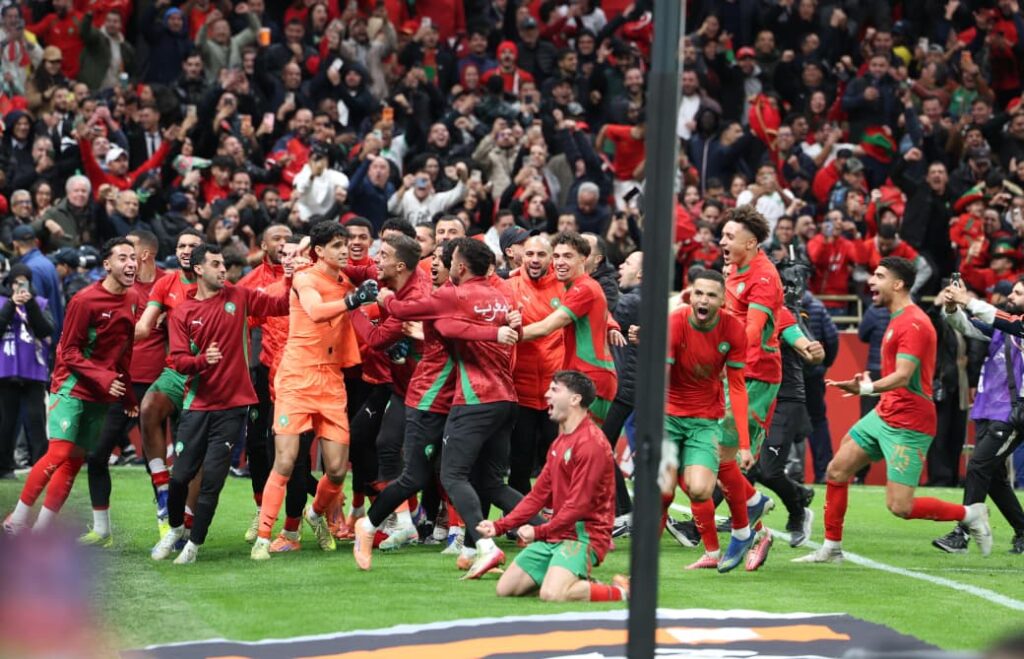
Morocco reached the final of the 2025 Africa Cup of Nations after a tense night and a dramatic penalty shootout (0-0, 4-2 on penalties), defeating Nigeria on Wednesday, January 14, in Rabat.
The Atlas Lions imposed their game plan, largely neutralizing Nigeria’s attack and carving out the match’s best chances.
Yassine Bounou once again made the difference, stopping two Nigerian attempts. He has now saved four of the last seven penalties faced across Morocco’s last two shootouts, after already making two crucial saves in the 2022 World Cup round of 16. But the qualification was mainly shaped during the game.
4/7 - Yassine Bounou has saved 4 of the 7 penalties he's faced across Morocco's last two penalty shoot-outs:
2/3 vs Spain
2/4 vs NigeriaExpert. pic.twitter.com/SRu9vX3cDa
— OptaJoe (@OptaJoe) January 14, 2026
For over 120 minutes, Morocco stuck to a clear plan, steadily reducing the Super Eagles’ influence.

Nigeria, deprived of its offensive power
The first lesson from this semi-final is statistical, but above all, it clearly reflects the balance of power on the pitch.
Nigeria managed only two shots in 120 minutes, with just one on target — their lowest tally in an Africa Cup of Nations match since Opta began tracking the competition in 2010.
2 - Nigeria attempted only two shots tonight, their lowest total in an Africa Cup of Nations match since Opta began analyzing the competition in 2010. Their last effort came in the 51st minute — silent thereafter. #CAN2025#NGAMAR pic.twitter.com/OSzTTSPFpz
— OptaJean (@OptaJean) January 14, 2026
Nigeria’s last shot came in the 51st minute, a statistic that highlights Morocco’s ability to control space, shut down the center and deny some of the tournament’s most dangerous attackers the ball in threatening areas.
This defensive dominance did not stem from a passive low block but from structured pressing, applied in defined zones by harassing the first passes and shutting down midfield lanes.

Ayoub El Kaabi played a crucial role, launching intense pressing that forced Nigeria into hurried play.
At the same time, Ismaïl Saibari and Bilal El Khannouss anticipated passing trajectories, cutting off midfield lanes and enabling Morocco to win the ball high up the pitch — as illustrated by Saibari’s early chance.
Although the move did not end in a goal, thanks to Ajayi’s excellent recovery, it perfectly illustrated Morocco’s plan: forcing errors through collective pressure and transitioning forward at once.
Two figures are enough to show the effectiveness of Morocco’s plan. The first concerns Alex Iwobi, who usually completes more than 90% of his progressive passes since the start of the tournament but fell to just 60% against Morocco.
Constantly pressured and forced backwards or wide, he struggled to play forward or link up with his strikers.

The second statistic is even more revealing and concerns Victor Osimhen. The Nigerian striker failed to register a single shot, misplaced all his passes in the final third, and touched the ball only three times inside Morocco’s penalty area.
Deprived of usable service and tightly contained in his movements, he never threatened Morocco’s defense.
Morocco exploited the flaws in Nigeria’s diamond midfield
In attack, Morocco also exposed the structural limitations of Nigeria’s 4-4-2 diamond.

The system packs the middle but inevitably leaves the flanks exposed, particularly on the far side of the ball.

It is precisely in these zones that the Atlas Lions looked to create an imbalance.
By stretching the play and switching quickly, Morocco created openings — especially on the right, where Brahim Diaz found greater freedom.
In one of these moves, the chance was carved out perfectly. The Madrid player’s shot skimmed Stanley Nwabali’s post, just inches from breaking the deadlock.
By the end of the semi-final, it was clear Morocco had not only booked their place in the final but had largely dictated the match.
The penalty shootout carried tension and symbolism, but ultimately rewarded a coherent game plan — backed by solid collective organization and once again embodied by Yassine Bounou’s decisive interventions at key moments.
à lire aussi
Article : Maroc-Pays-Bas : les cafés pourront rester ouverts pour diffuser le match
Selon Ahmed Bifergane, coordinateur de la Fédération nationale des propriétaires de cafés et restaurants, aucune interdiction n’a été émise par les autorités pour la nuit du lundi 29 au mardi 30 juin.

Article : Défense : les F-16 marocains concernés par un nouveau contrat américain sur les missiles AMRAAM
Attribuée à Raytheon pour 398,6 millions de dollars, l’enveloppe porte sur des travaux liés au système D4/C9, avec une échéance fixée à décembre 2027. Le Maroc figure parmi les pays partenaires du dispositif FMS, aux côtés notamment des Émirats arabes unis, de l’Arabie saoudite, du Japon, d’Israël et du Royaume-Uni.

Article : My Education lance “MY WAY”, un programme dédié aux compétences du XXIe siècle
Destiné aux jeunes de 9 à 16 ans, le dispositif combine des activités régulières, des bootcamps, des stages immersifs et des interventions en milieu scolaire.
Article : Le Groupe BCP et Western Union inaugurent un service de transfert d’argent instantané vers le Maroc
Grâce à une intégration API directe entre les deux systèmes, les fonds envoyés depuis l’étranger peuvent désormais être crédités automatiquement sur le compte bancaire du bénéficiaire.

Article : Les prévisions météo pour le mardi 30 juin
Voici les prévisions pour le mardi 30 juin, établies par la Direction générale de la météorologie : - Temps chaud sur le Sud-Est, le Souss, […]
Article : Attijariwafa bank signe avec les entreprises chinoises des grands chantiers africains
Le mémorandum conclu avec la Chinca, représentée par son président Fang Qiuchen, vise à rapprocher les marchés du continent des groupes actifs dans les infrastructures, l’énergie et l’ingénierie. Côté marocain, l’accord a été paraphé par Youssef Rouissi, directeur général délégué en charge du corporate & investment banking.