
Transport Aircraft: Is Lockheed Martin Better Placed to Modernize Morocco’s Fleet?
In the race to renew the Royal Air Force's (FRA) transport fleet, the showdown continues between America's Lockheed Martin and Brazil's Embraer.
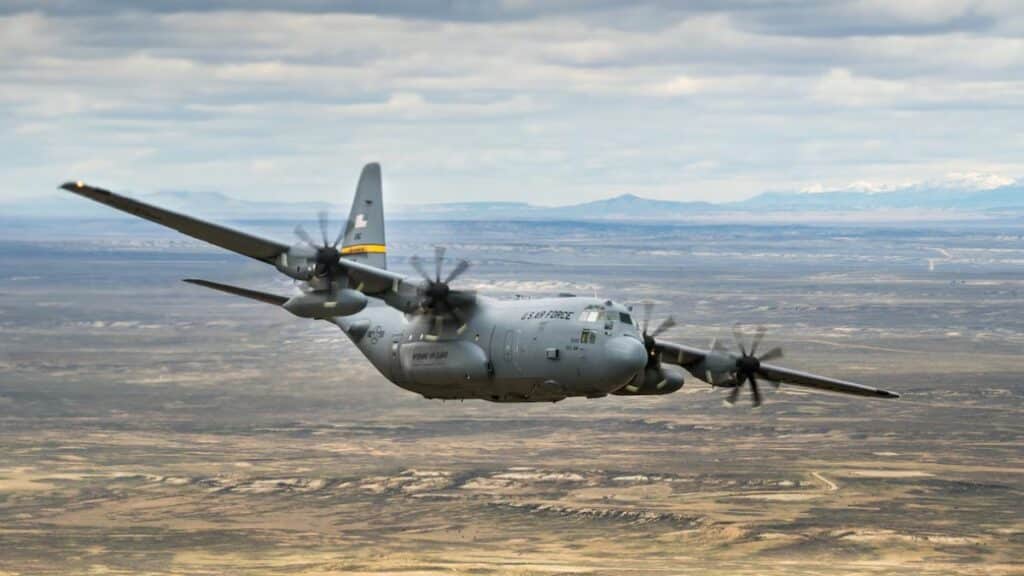
With the Royal Armed Forces (FRA) facing an urgent need to renew and strengthen their logistics transport fleet, the competition essentially comes down to Lockheed Martin's C-130J Super Hercules versus Embraer's C-390 Millennium.
According to our consultant Abdelhamid Harifi, "the likelihood of an American choice is greater than a Brazilian one," a conclusion he bases on several concrete factors.
The first advantage of Lockheed Martin lies in its tangible commitment to Morocco. "Instead of merely signing a letter of intent, they have launched a genuine investment to support the aeronautics sector’s industrial emergence plan," Harifi explains. This partnership includes a "real transfer of technology" enabling the local maintenance of the aircraft.
This investment is particularly strategic as it covers the modernization of the existing fleet of C-130H aircraft, which have been in service for over 45 years. "Faced with delays in the decision-making process for the purchase of new aircraft and the need to ensure a transition, we have opted for a modernization, much of which will be carried out locally," explains the consultant. This market, divided among several stakeholders, underscores both the strategic and urgent need to maintain current capabilities.
Logistical Continuity and Cost Control
The second major strength of the American offer is logistical and operational. "The C-130J has a maintenance program that covers nearly 65% of what is already done for the C-130H," explains Abdelhamid Harifi.
This means logistical support will be straightforward for the Moroccan maintenance teams, who already have "extensive experience" in maintaining, repairing, and operating the legendary Hercules aircraft.
By contrast, choosing the Embraer C-390 "would require a far heavier investment in logistics and infrastructure." According to the expert, Morocco would need to "build dedicated facilities for the aircraft and make substantial investments in advanced training for mechanics and pilots."
A Fundamental Technical Difference: Robustness vs. Luxury
A fundamental technical difference also tips the balance towards the American side. The Brazilian aircraft, the Embraer C-390, is described as a "somewhat high-end, luxurious" aircraft, but not designed for tactical operations in harsh conditions. "It is not suitable for landing in difficult weather conditions, for example," notes Abdelhamid Harifi.
This characteristic makes it less suitable for the operational requirements of the Royal Moroccan Armed Forces, which require a robust aircraft capable of operating in diverse terrains and challenging environments. The C-130J Hercules, by contrast, is renowned for its robustness and versatility, proven through decades of operations in theaters worldwide.
Questioning Embraer's Promises
In addition, Abdelhamid Harifi is particularly skeptical about the promises made by the Brazilian manufacturer. "A point raised by several stakeholders is that Embraer has still only signed a letter of intent to invest more than one billion dollars in the Moroccan industry, but so far, it remains just a letter of intent, with no concrete actions taken."
He fears that this might be little more than an "announcement," citing similar letters of intent signed by Embraer with countries such as Poland or Portugal, which have not always been followed by concrete action.
Long-Term Strategic American Cooperation
Finally, the choice of Lockheed Martin would be part of a broader framework of "long-term, strategic" Moroccan-American cooperation that goes beyond a simple equipment purchase.
Abdelhamid Harifi points out that Lockheed Martin has confirmed its intention to make Morocco a regional platform, not only for the maintenance and repair of American aircraft serving North African and Middle Eastern armies but also for other sectors.
"Today, when we talk about Moroccan-American cooperation, we are talking about concrete initiatives, actions already taking place on the ground, that favor the American choice," he asserts.
Significant Political Aspects
Beyond industrial and logistical considerations, political factors also come into play. American recognition of Moroccan sovereignty over the Sahara and support for resolution 2797, which confirms the preeminence of the autonomy plan, strengthen this relationship.
"These are elements that enhance the quality of cooperation between American industry and the Moroccan state," concludes the expert, while emphasizing the need to remain cautious until an official decision is announced.

à lire aussi

Article : Bourse de Casablanca : les minières sauvent un semestre marqué par la correction du marché (bilan)
Après un semestre marqué par une correction du marché, quelles valeurs ont résisté ? Quels secteurs ont tiré leur épingle du jeu ? Et où les investisseurs ont-ils concentré leurs échanges ? Voici le bilan des six premiers mois de 2026 à la Bourse de Casablanca à travers les principales performances de la cote.

Article : Textile : le déficit de main-d’œuvre dans la confection pèse sur les exportations
Les exportations textiles reculent de 9,1% à fin mai 2026, une baisse que les perturbations logistiques du premier trimestre ne suffisent plus à expliquer. L’aggravation de la baisse en avril et mai montre que le problème dépasse désormais le seul facteur logistique. La cause principale est aujourd’hui le déficit de main-d’œuvre, qui pèse directement sur la production, les délais de livraison et la capacité des entreprises à honorer leurs commandes.

Article : Traitement de l'eau. Le britannique Hydro Industries s'implante au Maroc avec Hydro Services Morocco
Le britannique Hydro Industries Limited s’implante au Maroc avec la création de Hydro Services Morocco, une SAS au capital de 1 MDH dédiée aux métiers du traitement de l’eau, de l’assainissement et du dessalement.
Article : Le Maroc face au choix du Rafale : les clés d'un arbitrage géopolitique contre le tout-américain
Si la volonté d'éviter une dépendance exclusive envers les États-Unis est réelle, l'équation budgétaire et le défi du nombre face à la flotte d'Alger imposent un examen attentif des réalités du terrain.
Article : Maroc-Chine : en attendant le Sahara, la relation bilatérale économique s'accélère
Dix ans après l'établissement d’un partenariat stratégique entre Rabat et Pékin au cours de la visite royale en Chine en 2016, l’ambassadrice chinoise au Maroc a célébré cet événement en déclarant que les relations économiques bilatérales ont connu une progression exceptionnelle. Si les perspectives industrielles et touristiques apparaissent plus que prometteuses, la question d'une éventuelle reconnaissance chinoise de la marocanité du Sahara au Conseil de sécurité de l'ONU demeure toujours entourée de précautions diplomatiques. Explications.

Article : IDE : le flux net progresse de 41,8% à fin mai 2026
Les investissements directs étrangers (IDE) au Maroc poursuivent leur progression à fin mai 2026. Porté par une hausse des recettes et un recul des dépenses, leur flux net atteint 23.319 MDH, en hausse de 41,8% par rapport à la même période de 2025. Dans le même temps, les investissements directs marocains à l’étranger (IDME) enregistrent également une nette progression.