
Phosboucraa Raises 2 Billion DH from CDG to Accelerate Its Industrial Development in the South
Phosboucraa, a subsidiary of the OCP Group, has secured 2 billion dirhams in financing from CDG to support its 23 billion dirham investment plan in Morocco’s Southern Provinces. Structured by CDG Capital, the program aims to establish an integrated industrial and logistics hub by 2030 and to steer the mine’s transition toward a sustainable, locally impactful industrial model.
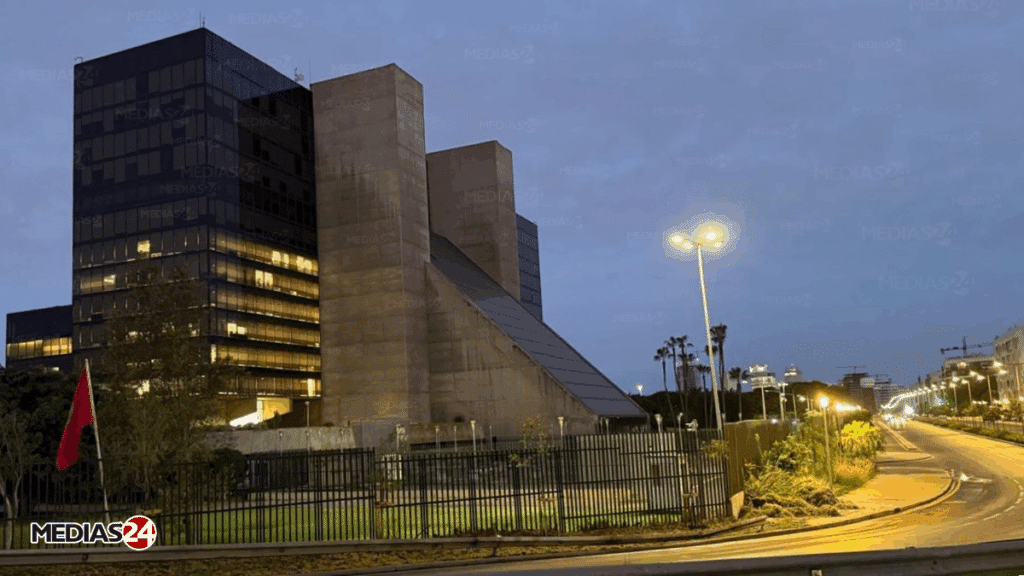
Phosboucraa announces the mobilization of 2 billion dirhams in financing from the Caisse de Dépôt et de Gestion (CDG). Structured by CDG Capital, this fundraising supports the rollout of Phosboucraa’s extensive investment program in the Kingdom’s southern provinces.
With a total budget of 23 billion dirhams, the program aims to establish an integrated industrial and logistics hub in the Morocco's southern provinces, by 2030. It encompasses the expansion of production capacity at the Phosboucraa mine, the construction of a new phosphate port to streamline exports, and the development of a high value-added fertilizer production unit, specialising in Triple Super Phosphate (TSP).
By raising funds in the capital markets, Phosboucraa benefits from favorable financing conditions to support its transition from a mining-based model to a sustainable industrial framework.The project is expected to enhance regional competitiveness and generate long-term socio-economic value, notably through the creation of sustainable jobs.
This initiative aligns fully with Morocco’s national development strategy for the Southern Provinces and reflects CDG’s enduring commitment to supporting structuring projects that drive sustainable growth across the Kingdom.
A wholly owned subsidiary of the OCP Group, Phosboucraa S.A. is based in the heart of Morocco’s Southern Provinces, where it actively contributes for the region's human, economic, and industrial development. True to its shared value creation model, Phosboucraa systematically reinvests all generated profits into the region's sustainable development.
This commitment is reflected in tangible ways: through infrastructure development, major investments in education, environmental stewardship, and vocational training, as well as efforts to foster a sustainable and inclusive regional economy.
As a true emblem of the OCP Group’s territorial anchoring, Phosboucraa embodies the Group’s vision of combining industrial excellence with social responsibility. Its activities contribute to the emergence of sustainable ecosystems, the empowerment of thriving local communities, and the responsible management of natural resources — all of which are essential to global food security and agricultural development across the African continent.
Phosboucraa places sustainability, employment equity, and local impact at the heart of its operations. It exemplifies the vision of integrated development, combining economic performance, social inclusion, and environmental reponsability.
OCP: 100% Unconventional Water, Clean Energy, and Carbon Neutrality
OCP has recently launched a green investment strategy aimed at scaling up fertilizer production while investing in renewable energy. This strategy entails a total investment of approximately $13 billion over the 2023–2027 period. As of early 2025, the Group uses 100% unconventional water—ensuring full autonomy through desalination, with a projected capacity of 560 million m³ per year by 2027. The strategy also targets 100% clean energy by 2027 and full carbon neutrality by 2040 (Scopes 1 and 2 by 2030, and Scope 3 by 2040), while expanding the production of green fertilizers.

à lire aussi
Article : Bourse de Casablanca : les minières sauvent un semestre marqué par la correction du marché (bilan)
Après un semestre marqué par une correction du marché, quelles valeurs ont résisté ? Quels secteurs ont tiré leur épingle du jeu ? Et où les investisseurs ont-ils concentré leurs échanges ? Voici le bilan des six premiers mois de 2026 à la Bourse de Casablanca à travers les principales performances de la cote.

Article : Textile : le déficit de main-d’œuvre dans la confection pèse sur les exportations
Les exportations textiles reculent de 9,1% à fin mai 2026, une baisse que les perturbations logistiques du premier trimestre ne suffisent plus à expliquer. L’aggravation de la baisse en avril et mai montre que le problème dépasse désormais le seul facteur logistique. La cause principale est aujourd’hui le déficit de main-d’œuvre, qui pèse directement sur la production, les délais de livraison et la capacité des entreprises à honorer leurs commandes.
Article : Traitement de l'eau. Le britannique Hydro Industries s'implante au Maroc avec Hydro Services Morocco
Le britannique Hydro Industries Limited s’implante au Maroc avec la création de Hydro Services Morocco, une SAS au capital de 1 MDH dédiée aux métiers du traitement de l’eau, de l’assainissement et du dessalement.
Article : Le Maroc face au choix du Rafale : les clés d'un arbitrage géopolitique contre le tout-américain
Si la volonté d'éviter une dépendance exclusive envers les États-Unis est réelle, l'équation budgétaire et le défi du nombre face à la flotte d'Alger imposent un examen attentif des réalités du terrain.
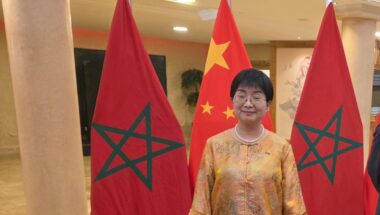
Article : Maroc-Chine : en attendant le Sahara, la relation bilatérale économique s'accélère
Dix ans après l'établissement d’un partenariat stratégique entre Rabat et Pékin au cours de la visite royale en Chine en 2016, l’ambassadrice chinoise au Maroc a célébré cet événement en déclarant que les relations économiques bilatérales ont connu une progression exceptionnelle. Si les perspectives industrielles et touristiques apparaissent plus que prometteuses, la question d'une éventuelle reconnaissance chinoise de la marocanité du Sahara au Conseil de sécurité de l'ONU demeure toujours entourée de précautions diplomatiques. Explications.

Article : IDE : le flux net progresse de 41,8% à fin mai 2026
Les investissements directs étrangers (IDE) au Maroc poursuivent leur progression à fin mai 2026. Porté par une hausse des recettes et un recul des dépenses, leur flux net atteint 23.319 MDH, en hausse de 41,8% par rapport à la même période de 2025. Dans le même temps, les investissements directs marocains à l’étranger (IDME) enregistrent également une nette progression.