
De Mistura’s First Remarks After UN Resolution: Sovereignty, Autonomy — and What Comes Next…
Staffan de Mistura, the UN Secretary-General's Personal Envoy for the Sahara, declared that "the real work starts now" during a press briefing.
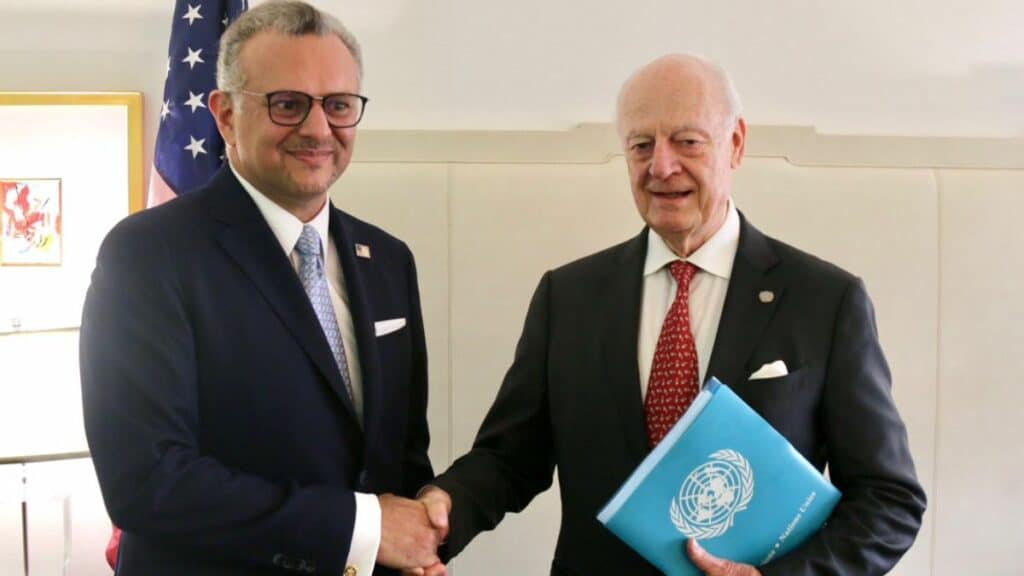
Speaking from Brussels, Staffan de Mistura held a virtual press conference with UN accredited journalists. In his remarks, he announced the launch of his mission, following the adoption of Security Council Resolution 2797 on October 31, 2025.
Here is the full transcript of the exchange (unofficial translation). Editorial comments appear in square brackets:
"After the adoption of the significant [or major] Resolution 2797, last Friday, and having metabolized its various elements, I've come to the conclusion it is time to make a few remarks — and I know some of you have been very curious about it."
"First, the Resolution 2797 is significant and it's significant also because it demonstrates a renewed international energy and determination to resolve this conflict of 50 years. We didn't have it before."
"This has become particularly relevant now, this type of energy. As I've been saying once to Member States, the UN Secretariat sometimes is like a sailing boat. It has the experience to reach a safe destination, but to do so, it requires a strong and constant wind, which means a serious engagement by one or more members of the Security cCuncil and beyond."
"Resolution 2797 was the result of a very proactive engagement of the penholder, through Dr. Massad Boulos and Ambassador Mike Walls, and other concerned members of the Council — including, perhaps, I could say, even those who abstained or did not vote. Everyone was, in one form or another, involved."
"Resolution 2797, in its very articulated paragraph, does provide — and I stress this word — a framework for negotiations. It does not prescribe an outcome, which will, as always, in order to be sustainable, be the result of negotiations conducted in good faith. [It is correct but incomplete and somewhat awkward. The outcome is not prescribed, but the endpoint is clear: genuine autonomy under Moroccan sovereignty.]"
"Let me remind you that engaging in negotiations does not automatically mean accepting their outcome. The important thing is to be part of them. [If there is an outcome, it is because a compromise has been accepted by the parties. How, then, can one say that they do not automatically accept the outcome?]"
"So, where are we today?"
"Well, we are eagerly awaiting to see from Morocco the content of an expanded and updated autonomy plan as requested in my address to the Security Council, on October 16th, 2024 [the briefing where De Mistura requested... the partition of the Sahara] and announced by His Majesty the King Mohammed VI in his recent address.
"In view of the strong support and substantive mandate provided by Security Council Resolution 2797 to the Secretary-General and his personal envoy, our own follow-up plan will be initially to call all the parties to submit proposals and suggestions [to specify that these proposals and suggestions must be based on the Moroccan autonomy plan], in order to allow the UN to develop a broad agenda for direct — or, even, if necessary, indirect — talks on the most relevant issues.'
"We shall, of course, as indicated in Resolution 2797, take the 2007 Moroccan autonomy plan as a basis for these negotiations and then, hopefully very soon, take into account Morocco’s expanded plan as an input — as well as using friendly Polisario's paper and other relevant ideas. As mentioned in the Security Council’s written resolution, which is open to ideas as well [based on the Moroccan autonomy plan under Moroccan sovereignty, as specified in the resolution]".
"Last but not least, and also on behalf of my friend and colleague USG (UN Assistant Secretary-General for Peacekeeping Operations) Jean-Pierre Lacroix, I want to express our satisfaction for the extension of MINURSO until October 2026. This will certainly help to create an atmosphere of stability needed to accompany the future negotiations."
"In conclusion, now starts the real work towards a mutually agreed solution to this 50-years-old conflict, and I count on the parties and the members of the Security Council to be constructively and constantly engaged in order to keep a positive momentum."
-oOo-
Question-and-Answer Session
Journalist: I just wanted to ask you about the reaction to the resolution. The Moroccans say it’s very pro-Moroccan, and I think the Western Sahara people also feel it’s very positive for them. But where’s the reality?
Staffan de Mistura: Well, I’m surprised you’re asking this type of question with your great experience, knowing that resolutions, as you know, are a framework — a roadmap, an indication.
"Now we will be able to tell you, I hope soon — more soon than later — how all this can translate into what we all want: a sustainable, mutually agreed outcome. The atmospherics are in the right direction. Now starts the real work. So let’s talk in about a month about that."
Journalist: My question concerns paragraph 2 of the resolution, which talks about facilitating negotiations based on the Moroccan autonomy proposal, with the aim of reaching a just, permanent, and accepted solution by both parties. How can this mix of proposals lead to a just and permanent resolution, acceptable by both parties?
Staffan de Mistura: Well, I’m sure you’ve read the resolution — and I can see you have done it.
"It is a very articulated resolution. Every word has been calculated and is part of a discussion, or a compromise, any way of a message."
"There are many messages in it, and all of them can, if properly utilized, lead towards a discussion, a negotiation, frankly a real negotiation on the outcome of this conflict."
"For instance, I’ll give you one example — there are several actually. There are very clear indications of who the parties are: Morocco, the Polisario, and Algeria–Mauritania."
"It’s very clear that the principle of self-determination is there.
There is a clear reference to Moroccan sovereignty.
The UN Charter is mentioned clearly.
There is a need — a clearly expressed need — for a mutually agreed solution."
"There is a genuine autonomy required — not just autonomy, but a genuine autonomy — and there is an openness for submitting ideas to support a final, mutually agreed solution."
"In other words, there is an option and a possibility for a genuine real discussion — of course discreet at the beginning, hopefully then in a more open way."
"There is a concern for the funding of Sahrawi refugees, which was always a worry (Editor's note: De Mistura omits to mention here the UN's repeated request to register these refugees whose number and identities are unknown).
"It reaffirms the need for negotiations without preconditions, which helps facilitators avoid initial blockages."
"And then there is a role given — a mandate — to the Secretary-General and to the personal envoy to not only facilitate but conduct negotiations."
"All that, taking as a basis the autonomy plan, but also open, as you could see, to many other constructive ideas.
And then there’s the renewal of MINURSO."
"You see how many points are coming together — each of them important to one side or the other, and hopefully to both if we properly present them."
Journalist: Is the Polisario happy with this deal ?
Staffan de Mistura: I think you should ask them. Frankly, I would not ever paraphrase whatever the position on every part is there.
"What I do know is that we are going to engage them following this resolution, and I hope they will be a part of this engagement."
à lire aussi
Article : Bourse de Casablanca : les minières sauvent un semestre marqué par la correction du marché (bilan)
Après un semestre marqué par une correction du marché, quelles valeurs ont résisté ? Quels secteurs ont tiré leur épingle du jeu ? Et où les investisseurs ont-ils concentré leurs échanges ? Voici le bilan des six premiers mois de 2026 à la Bourse de Casablanca à travers les principales performances de la cote.

Article : Textile : le déficit de main-d’œuvre dans la confection pèse sur les exportations
Les exportations textiles reculent de 9,1% à fin mai 2026, une baisse que les perturbations logistiques du premier trimestre ne suffisent plus à expliquer. L’aggravation de la baisse en avril et mai montre que le problème dépasse désormais le seul facteur logistique. La cause principale est aujourd’hui le déficit de main-d’œuvre, qui pèse directement sur la production, les délais de livraison et la capacité des entreprises à honorer leurs commandes.
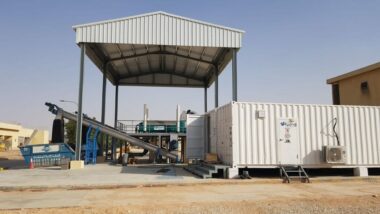
Article : Traitement de l'eau. Le britannique Hydro Industries s'implante au Maroc avec Hydro Services Morocco
Le britannique Hydro Industries Limited s’implante au Maroc avec la création de Hydro Services Morocco, une SAS au capital de 1 MDH dédiée aux métiers du traitement de l’eau, de l’assainissement et du dessalement.
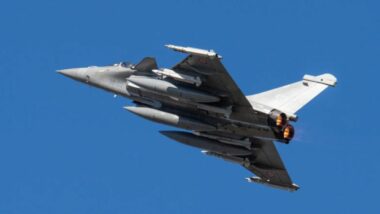
Article : Le Maroc face au choix du Rafale : les clés d'un arbitrage géopolitique contre le tout-américain
Si la volonté d'éviter une dépendance exclusive envers les États-Unis est réelle, l'équation budgétaire et le défi du nombre face à la flotte d'Alger imposent un examen attentif des réalités du terrain.
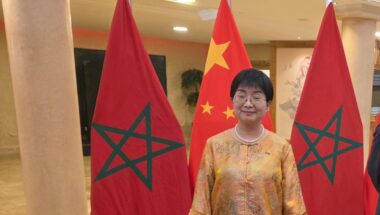
Article : Maroc-Chine : en attendant le Sahara, la relation bilatérale économique s'accélère
Dix ans après l'établissement d’un partenariat stratégique entre Rabat et Pékin au cours de la visite royale en Chine en 2016, l’ambassadrice chinoise au Maroc a célébré cet événement en déclarant que les relations économiques bilatérales ont connu une progression exceptionnelle. Si les perspectives industrielles et touristiques apparaissent plus que prometteuses, la question d'une éventuelle reconnaissance chinoise de la marocanité du Sahara au Conseil de sécurité de l'ONU demeure toujours entourée de précautions diplomatiques. Explications.

Article : IDE : le flux net progresse de 41,8% à fin mai 2026
Les investissements directs étrangers (IDE) au Maroc poursuivent leur progression à fin mai 2026. Porté par une hausse des recettes et un recul des dépenses, leur flux net atteint 23.319 MDH, en hausse de 41,8% par rapport à la même période de 2025. Dans le même temps, les investissements directs marocains à l’étranger (IDME) enregistrent également une nette progression.