

What caused the Covid-19 Testing Deficit?
CAMBRIDGE – The United States is the world’s richest country, and home to ten of the 20 largest diagnostics companies. And yet, it not only has suffered more deaths from COVID-19 than any other country, but also remains highly vulnerable to a continued escalation. The reason is simple: there are not enough diagnostic tests.
During a disease outbreak, medicines and vaccines understandably get a lot of attention. But diagnostics are effectively a first line of defense against transmission, particularly for a disease like COVID-19, which can be spread by asymptomatic carriers. As the divergent experiences of the US and South Korea show, testing can be the difference between containment and catastrophe.
The COVID-19 outbreak began on a similar trajectory in both countries, with the number of confirmed cases increasing at a comparable rate. But South Korea’s government quickly took action to create a market for rapid innovation and fulfillment of testing demand, boosting its capacity to 15,000 tests per day and establishing drive-through centers to conduct them.
As of March 20, South Korea had carried out more than 300,000 COVID-19 tests – a rate exceeding 6,000 per million inhabitants – despite being home to none of the 20 largest diagnostics companies. Just over two weeks after reaching 100 confirmed cases, the country flattened its curve, with very few – if any – new cases per day.
In the US, by contrast, delayed government intervention left markets in charge of meeting accelerating demand. As of March 20, the country had performed roughly 100,000 tests – some 300 per million people. New cases – and the death toll – continued to rise.
Simply put, swift government intervention worked in South Korea, whereas the market’s invisible hand failed in the US.
Globally, the development of diagnostics has long been left to markets, many of which are highly specialized. But while there are diagnostics markets for major infectious and non-infectious diseases, and even neglected tropical diseases, there is none for pandemic diseases.
Governments can of course counteract market deficiencies, but the commonly used mechanisms still require a trace level of demand, which does not exist for pandemic-disease diagnostics until the brink of an outbreak. And national governments, subject as they are to political and ideological constraints, cannot be relied upon always to create markets with the same swiftness demonstrated by South Korea. Reactive market creation is therefore not the way forward.
Instead, national governments should support the creation of a global coordinating platform for pandemic preparedness. Such a platform can take the lead in raising and pooling capital to channel toward rapid development, production, and distribution of diagnostics for pandemic diseases.
The blueprint for such a platform already exists. The Coalition for Epidemic Preparedness Innovations (CEPI) is a coordinating mechanism focused on advancing vaccine development and facilitating clinical validation, mass-scale manufacturing, and stockpiling. By reducing uncertainty and minimizing disruptions, CEPI makes vaccine markets more secure, accessible, and dynamic.
CEPI relies on both traditional financing (large grants from governments and foundations) and innovative financing (the returns from instruments like the International Finance Facility for Immunization, or IFFIm). In the event of an outbreak, CEPI uses instruments like Advanced Market Commitments (AMCs) or volume guarantees – which can be structured through mechanisms like the Global Health Investment Fund and InnovFin, or as conditional pledges to IFFIm and Gavi, the Vaccine Alliance – to enable it to scale up production quickly.
This blueprint can easily be replicated for diagnostics. All that is needed is a specialized entity – an institution or initiative that couples research and development with market access. Everything else could function just as CEPI does: the platform would receive funding from member states, increase spending power by investing in the IFFIm, and scale up production when necessary using AMCs or volume guarantees.
Such an entity could even work directly with CEPI. A diagnostics-vaccines partnership, built on a common market-access and financing platform, could reduce inefficiencies and transaction costs. So, in a pandemic scenario, as researchers develop and test vaccines, diagnostics could be produced fast and deployed widely, thereby drastically limiting transmission.
The COVID-19 pandemic has shown that, left to their own devices, markets will not produce the kind of responsive diagnostics production that is vital during a disease outbreak. It has also shown that this failure can quickly produce a public-health catastrophe, even in an advanced economy with leading diagnostics firms. Unless action is taken to correct this failure and ensure broad access to COVID-19 testing (and to testing for future disease outbreaks), one dreads to think what awaits poorer countries.
à lire aussi

Article : Le Nouvel an de l'hégire (1er Moharram) sera célébré ce mercredi 17 juin au Maroc
Le 1er Moharram de la nouvelle année de l’Hégire 1448 correspondra au mercredi 17 juin 2026, a annoncé le ministère des Habous et des affaires islamiques.

Article : Adouls : la Cour constitutionnelle valide l’essentiel de la réforme, mais écarte plusieurs dispositions
Saisie par 93 députés avant la promulgation du texte, la Cour a déclaré non conformes des articles touchant aux incompatibilités professionnelles, aux personnes en situation de handicap, au témoignage collectif dit “lafif” et à l’organisation des instances représentatives. Le texte devra donc être corrigé sur ces points, sans remettre en cause le cœur de la nouvelle loi 16.22.
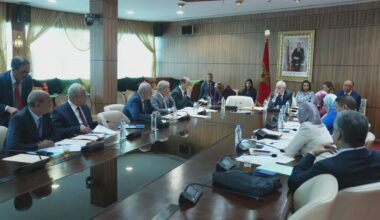
Article : En commission, les conseillers votent la nationalisation de la Samir et le plafonnement des hydrocarbures
Deux propositions de loi portant sur les hydrocarbures et la Samir ont été récemment adoptées en commission à la Chambre des conseillers. Un vote "surprise" rendu possible par un rapport de forces numérique défavorable à la majorité, lors d’une séance où l’opposition était majoritaire en nombre. Si ces textes ont franchi l’étape de la commission, leurs promoteurs sont conscients qu’ils ont peu de chances d’être adoptés en plénière.

Article : Retail : la guerre silencieuse pour conquérir le panier des Marocains
Pendant longtemps, les courses du quotidien se sont surtout jouées entre l’épicier du quartier, le grossiste et quelques grandes surfaces. Ce modèle commence à se fissurer. Entre fusion capitalistique, rachats d’enseignes, master-franchises, centrales d’achat, logistique commune et formats de proximité, les grands opérateurs installent peu à peu des réseaux capables d’accompagner le consommateur du café du matin aux achats du week-end. Non sans bousculer les équilibres.

Article : Crédit du Maroc : ce que cache l’augmentation de capital à 699 MDH
Depuis son passage sous le contrôle de Holmarcom, Crédit du Maroc a changé de rythme. La banque affiche des bénéfices en hausse, prépare son plan CDM Boost 2028, et propose désormais à ses actionnaires de suivre le mouvement via une opération ouverte du 26 juin au 16 juillet. Derrière le prix fixé à 938 DH par action, le marché devra surtout juger si cette nouvelle étape confirme une trajectoire ou ouvre un pari plus large. Décryptage.

Article : Nador West Med : derrière le port, le pari industriel de l’Oriental
ROUND UP. Prévu pour entrer en service fin 2026, Nador West Med se construit déjà au-delà de ses quais : routes dédoublées, future autoroute vers Guercif, projets chinois dans l’éolien, les pneus et les alliages, ambition énergétique autour du GNL et de l’hydrogène vert. L’enjeu est désormais de transformer cette infrastructure en véritable moteur économique régional.