
Internationalizing the Crisis
NEW YORK – As it spread from one country to another, the novel coronavirus paid no attention to national frontiers or “big, beautiful” border walls. Nor were the ensuing economic effects contained. As has been obvious since the outset, the COVID-19 pandemic is a global problem that demands a global solution.
In the world’s advanced economies, compassion should be sufficient motivation to support a multilateral response. But global action is also a matter of self-interest. As long as the pandemic is still raging anywhere, it will pose a threat – both epidemiological and economic – everywhere.
The impact of COVID-19 on developing and emerging economies has only begun to reveal itself. There are good reasons to believe that these countries will ravaged far more by the pandemic than the advanced economies have been. After all, people in lower-income countries tend to live in closer proximity to one another. A higher share of the population suffers from pre-existing health problems that render them more vulnerable to the disease. And these countries’ health systems are even less prepared to manage an epidemic than those of the advanced economies (which have hardly functioned smoothly).
A March 30 report from the United Nations Conference on Trade and Development offers an early glimpse of what lies in store for emerging and developing economies. The most successful of them rely on export-led growth, which will now collapse as the global economy contracts. Not surprisingly, global investment flows are also plummeting, as are commodity prices, indicating a tough road ahead for natural-resource exporters.
These developments are already being reflected in the yield spreads on developing countries’ sovereign debt. Many governments will find it exceedingly difficult to roll over the debts coming due this year on reasonable terms, if at all.
Moreover, developing countries have fewer and harder choices about how to confront the pandemic. When people are living hand to mouth in the absence of adequate social protections, a loss of income could mean starvation. Yet these countries cannot replicate the US response, which features (so far) a $2 trillion economic package that will blow up the fiscal deficit by some 10% of GDP (on top of a pre-pandemic deficit of 5%).
Following a virtual emergency summit on March 26, G20 leaders issued a communiqué committing “to do whatever it takes and to use all available policy tools to minimize the economic and social damage from the pandemic, restore global growth, maintain market stability, and strengthen resilience.” To that end, at least two things can be done about the dire state of affairs in emerging and developing economies.
First, full use must be made of the International Monetary Fund’s Special Drawing Rights, a form of “global money” that the institution was authorized to create at its founding. The SDR is an essential ingredient in the international monetary order that John Maynard Keynes advocated during the Bretton Woods Conference of 1944. The idea is that, because all countries will obviously want to protect their own citizens and economies during crises, the international community should have a tool for assisting the neediest countries without requiring national budgets to take a hit.
A standard SDR issuance – with some 40% of the SDRs going to developing and emerging economies – would make an enormous difference. But it would be even better if advanced economies like the United States donated or lent (on concessionary terms) their SDRs to a trust fund dedicated to helping poorer countries. One might expect that the countries providing this assistance will attach conditions, in particular, that the money not go to bailing out creditors.
It’s also crucial that creditor countries help by announcing a stay on developing and emerging economies’ debt service. To understand why this is so important, consider the US economy. Last month, the US Department of Housing and Urban Development announced that there would be no foreclosures on federally insured mortgages for 60 days. In essence, this policy is part of a broader “stay” on the entire US economy as a response to the COVID-19 crisis. Workers are staying home, restaurants are staying closed, and airlines are all but shut down. Why should creditors be allowed to continue racking up returns, especially when the interest rates they charge should have already created a sufficient risk cushion? Unless creditors grant such a stay, many debtors will emerge from the crisis owing more than they can possibly repay.
Such stays are just as important internationally as they are domestically. Under current conditions, many countries simply cannot service their debts, which, in the absence of a global stay on repayment, could lead to massive, rolling defaults. In many developing and emerging economies, the government’s only choice is either to funnel more income to foreign creditors or allow more of its citizens to die. Obviously, the latter will be unacceptable to most countries, so the real choice for the international community, then, is between an orderly or a disorderly stay, with the latter scenario inevitably resulting in severe turbulence and far-reaching costs to the global economy.
Of course, it would be even better if we had an institutionalized mechanism for restructuring sovereign debt. The international community tried to achieve that in 2015, when the United Nations General Assembly adopted a set of shared principles with overwhelming support. Unfortunately, that framework lacked the necessary buy-in from key creditor countries. It is probably too late to establish such a system now for use in the current crisis. But there will inevitably be more crises down the line, which means that sovereign-debt restructuring should be high on the agenda for the post-pandemic reckoning.
In John Donne’s immortal words, “No man is an island …” Nor is any country – as the COVID-19 crisis has made abundantly clear. If only the international community would get its head out of the sand.
© Project Syndicate 1995–2020
à lire aussi
Article : Le Nouvel an de l'hégire (1er Moharram) sera célébré ce mercredi 17 juin au Maroc
Le 1er Moharram de la nouvelle année de l’Hégire 1448 correspondra au mercredi 17 juin 2026, a annoncé le ministère des Habous et des affaires islamiques.

Article : Adouls : la Cour constitutionnelle valide l’essentiel de la réforme, mais écarte plusieurs dispositions
Saisie par 93 députés avant la promulgation du texte, la Cour a déclaré non conformes des articles touchant aux incompatibilités professionnelles, aux personnes en situation de handicap, au témoignage collectif dit “lafif” et à l’organisation des instances représentatives. Le texte devra donc être corrigé sur ces points, sans remettre en cause le cœur de la nouvelle loi 16.22.

Article : En commission, les conseillers votent la nationalisation de la Samir et le plafonnement des hydrocarbures
Deux propositions de loi portant sur les hydrocarbures et la Samir ont été récemment adoptées en commission à la Chambre des conseillers. Un vote "surprise" rendu possible par un rapport de forces numérique défavorable à la majorité, lors d’une séance où l’opposition était majoritaire en nombre. Si ces textes ont franchi l’étape de la commission, leurs promoteurs sont conscients qu’ils ont peu de chances d’être adoptés en plénière.
Article : Retail : la guerre silencieuse pour conquérir le panier des Marocains
Pendant longtemps, les courses du quotidien se sont surtout jouées entre l’épicier du quartier, le grossiste et quelques grandes surfaces. Ce modèle commence à se fissurer. Entre fusion capitalistique, rachats d’enseignes, master-franchises, centrales d’achat, logistique commune et formats de proximité, les grands opérateurs installent peu à peu des réseaux capables d’accompagner le consommateur du café du matin aux achats du week-end. Non sans bousculer les équilibres.

Article : Crédit du Maroc : ce que cache l’augmentation de capital à 699 MDH
Depuis son passage sous le contrôle de Holmarcom, Crédit du Maroc a changé de rythme. La banque affiche des bénéfices en hausse, prépare son plan CDM Boost 2028, et propose désormais à ses actionnaires de suivre le mouvement via une opération ouverte du 26 juin au 16 juillet. Derrière le prix fixé à 938 DH par action, le marché devra surtout juger si cette nouvelle étape confirme une trajectoire ou ouvre un pari plus large. Décryptage.
Article : Nador West Med : derrière le port, le pari industriel de l’Oriental
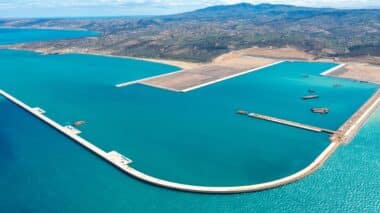
ROUND UP. Prévu pour entrer en service fin 2026, Nador West Med se construit déjà au-delà de ses quais : routes dédoublées, future autoroute vers Guercif, projets chinois dans l’éolien, les pneus et les alliages, ambition énergétique autour du GNL et de l’hydrogène vert. L’enjeu est désormais de transformer cette infrastructure en véritable moteur économique régional.