
The Most Important Story You Missed in 2019
SEATTLE – According to the most recent tally, The Washington Post, The New York Times, and The Wall Street Journal publish a combined totalof 1,000 stories every day. Although the report didn’t say how many people read all of them, it’s safe to assume that nobody managed to do so.
Each of us probably overlooks tens of thousands of important news stories every year. But the biggest one that people missed in 2019 happened on October 10 in a conference hall in Lyon, France, where a gathering of government officials, business leaders, and philanthropists pledged $14 billion to an organization called the Global Fund.
Not many people know what the Global Fund is until they hear its full name: The Global Fund to Fight AIDS, Tuberculosis, and Malaria. The Fund was established shortly after the turn of the millennium, when hundreds of thousands of children were dying from preventable diseases. The AIDS crisis was at its height, with news outlets describing the virus as a “malevolent scythe” cutting across Sub-Saharan Africa. Its unstoppable spread, some predicted, would lead to the collapse of entire countries. This was an international crisis that required an international response.
At the United Nations, then-Secretary-General Kofi Annan rallied the world around the Millennium Development Goals – a set of specific targets related to poverty and disease reduction – and launched the Global Fund to achieve them.
The Fund was designed to be a new kind of multilateral venture, not just a coalition of governments. It also brought in partners from the business and philanthropic sectors, including the newly-formed Bill & Melinda Gates Foundation. This inclusive approach enabled the initiative to draw on a wider range of expertise.
Over the last two decades, the Global Fund has transformed the way we fight AIDS, tuberculosis, and malaria – the three biggest killers in poor countries. By pooling resources, the Fund created economies of scale for life-saving products such as anti-malarial bed nets and antiretroviral drugs. Then, by working with almost 100 countries, the Fund built a massive supply chain to deliver the goods. In the process, deaths from AIDS have fallen by 50% from their peak, and malaria deaths have decreased by about 50% since the turn of the millennium. Now, the Fund has $14 billion in new funding to continue this work.
The replenishment is vitally important news, first and foremost because of the sheer number of lives it will help to save. The $14 billion, the Fund predicts, will be enough to cut the three diseases’ death rates by almost 50% again by 2023. That translates into 16 million lives saved.
But what happened on October 10 in Lyon is critical for another reason: it illustrates how we are at a pivotal point in history, from which the world might move in one direction or another.
On one hand, the successful recent fundraising effort was a testament to the way the world went about solving humanitarian crises in the early years of this century. Multilateralism, it turns out, worked – and worked extremely well.
That same period also gave rise to organizations like Gavi, the Vaccine Alliance, a global alliance of public- and private-sector stakeholders that aims to get vaccines to some of the world’s poorest children. Gavi has helped to immunize more than 760 million children to date. And the coverage rate of the diphtheria-tetanus-pertussis (DTP3) vaccine in Gavi-supported countries increased from 59% in 2000 to 81% in 2018 – only four percentage points below the global average. (Gavi, too, will need to raise new funding over the next year.)
On the other hand, the fact that no similar multilateral organization has been established since the early 2000s – at least not on such a scale – should give us pause.
The Fund managed to raise the $14 billion at a time of rising isolationism. Today, many governments seem to prefer to go it alone rather than engage in the expansive problem-solving that worked so well over the last 20 years. Brexit is one example of this. Others include US President Donald Trump’s decision to withdraw the United States from the 2015 Paris climate agreement, and his administration’s call for deep cuts to US foreign aid (which, thanks to Congress, have yet to be made).
I often wonder what would have happened had the AIDS crisis emerged 20 years later than it did. Would we be able to create the Global Fund today? The answer, I think, is no. It would be very difficult to build support for that kind of initiative in this environment.
Last month’s news from Lyon, then, is part of an ongoing story. Will the world realize that multilateral coalitions work and reverse course? Or is the era of multilateralism at an end?
The Global Fund’s replenishment may be the best news you hadn’t heard about yet in 2019. But unless we halt the slide toward isolationism and start rebuilding a global community, it’s the kind of news you may never hear again.
à lire aussi
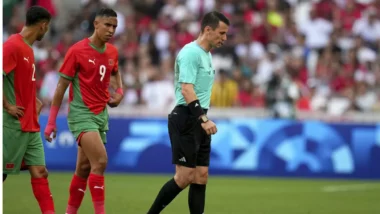
Article : Maroc-Écosse : l'Ouzbek Tantashev au sifflet, deux ans après la demi-finale olympique mouvementée contre l’Espagne
Désigné par la FIFA pour la rencontre du 19 juin au Boston Stadium, celui qui est arbitre international depuis 2013 avait quitté le terrain dès la 15e minute aux JO de Paris après une collision avec Marc Pubill.
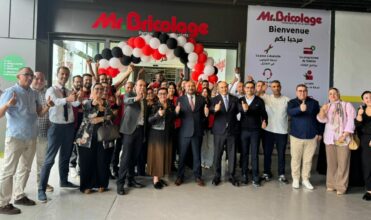
Article : Mr. Bricolage vise 45 magasins au Maroc d'ici 2032 et un plan d'investissement de 700 MDH
Mr. Bricolage Maroc prévoit le déploiement de 45 magasins d’ici 2032, au rythme d’une ouverture toutes les huit semaines, dans le cadre d’un plan porté par un investissement de 700 millions de DH.

Article : Loi 16.22 sur les adouls : l’Ordre réagit à la décision de la Cour constitutionnelle
L’invalidation partielle du texte par la Cour constitutionnelle est accueillie avec soulagement par une partie de la profession, qui y voit la confirmation de réserves exprimées depuis plusieurs mois. Mais pour Maître Driss Trali, membre du bureau exécutif de l’Ordre national, la réforme reste incomplète tant que le dépôt des fonds, l’officialité pleine de l’acte et l’indépendance de l’instance professionnelle ne sont pas consacrés par la loi.
Article : Bourse de Casablanca : le MASI termine encore dans le vert
Au lendemain de sa progression de 4,63%, l'une des plus fortes hausses de son histoire récente, le MASI poursuit son redressement le mardi 16 juin. L'indice a gagné 0,15% à 18.782,58 points, porté notamment par les valeurs immobilières et minières, dans un marché qui conserve une partie de l'élan né du regain d'optimisme sur le front géopolitique.
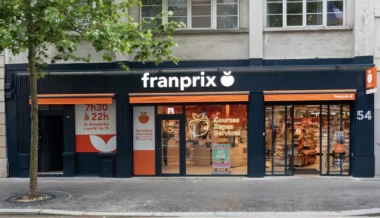
Article : Un premier magasin Franprix en test à Casablanca dès le 3 juillet
Le groupe H&S Invest Holding de Moncef Belkhayat concrétise son accord avec le groupe Casino avec l’ouverture, en test, d’un premier magasin Franprix à Casablanca.
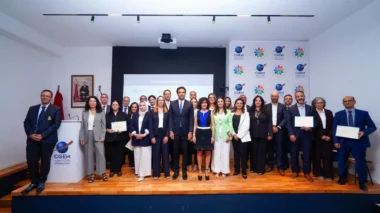
Article : 20 ans de la Charte RSE : la CGEM distingue 21 entreprises et porte à 152 le nombre de sociétés labellisées
Lancé en 2006, le dispositif patronal a récompensé cette année dix nouvelles entreprises, dont Crédit Agricole du Maroc, Pharma 5 et Rabat Région Mobilité. Onze autres ont vu leur distinction renouvelée.