
Libya’s Double Tragedy
PERTH – The plight of oil-rich, tribally segmented Libya resembles that of several other war-torn countries in the Greater Middle East, namely Afghanistan, Syria, and Yemen. In each case, a combination of internal strife and misguided external intervention has sustained a long-running conflict.
Recalling the US-led invasions of Afghanistan (2001) and Iraq (2003) in his 2014 memoir Duty, former Secretary of Defense Robert Gates argued that the United States was good at overthrowing a regime, but had no idea what should take its place. The reason, Gates argued, was that the US failed to consider national and regional complexities. The same was true of the 2011 NATO-led military intervention in Libya.
The ongoing Libyan crisis has both internal and external origins. Colonel Muammar el-Qaddafi’s dictatorship was toppled in October 2011 in a popular uprising during the so-called Arab Spring. And Qaddafi fell as a result of a US-backed, Anglo-French armed intervention that the United Nations Security Council had authorized on the basis of the “responsibility to protect” the Libyan people.
But neither the rebel forces nor the intervening powers had any plans for forging a post-Qaddafi political order in a deeply divided country. The revolutionary factions had no unifying agenda beyond ending Qaddafi’s murderous rule, while the interventionists lacked a strategy to help them build a stable new order.
The interventionist powers had swiftly overwhelmed Qaddafi’s forces, but failed to deal with the outcome’s intended and unintended consequences. Echoing America’s earlier mistakes in Afghanistan and Iraq, they underestimated the tribal nature of Libyan society and the geostrategic importance of the country’s location in the North African-Mediterranean region. The foreign powers seemed more focused on protecting Libya’s lucrative oil reserves than on helping the country’s people to regain a sense of national unity and build an inclusive and representative domestic order.
As Libya rapidly descended into chaos, with various armed groups controlling different parts of the country, the intervening powers found it expedient to scale back their involvement. Above all, they wanted to avoid being caught in the sort of quagmire that the US had faced in Iraq and continues to face in Afghanistan. That decision allowed regional and more distant powers to pursue their own interests in Libya by entering the fray in support of various groups.
Since 2015, two warring factions have become locked in an increasingly bloody power struggle for control of the country: the UN-recognized Government of National Accord (GNA) based in Tripoli, and the Tobruk-based Libyan National Army (LNA) led by the renegade general Khalifa Haftar. And they have been able to sustain their conflict – at a very high human and economic cost for the Libyan people – largely because of foreign backing. Turkey, Qatar, and Italy have poured in support for the GNA, while Egypt, the United Arab Emirates, Saudi Arabia, Russia, and France have aided the LNA. The US has oscillated between the two, although President Donald Trump has seemingly voiced a preference for Haftar.
In a worrying recent development, Egyptian President Abdel Fattah el-Sisi warned Turkey and its allied forces against seizing the strategic city of Sirte, which the LNA currently controls (along with a large chunk of territory stretching east to Libya’s border with Egypt). Although neither Turkey nor Egypt would likely want a direct military confrontation, especially given their severe domestic problems, their posturing could lead to a clash that seriously destabilizes the North African and Mediterranean region.
The absence of a national, regional, and international consensus has meant that the UN-sponsored peace talks in Geneva have so far failed to produce any tangible results, with intransigence by one side or the other torpedoing the negotiations. The stalemate has left Libya in the grip of long-term structural instability and insecurity, with little prospect of returning anytime soon to a degree of normalcy that could provide its suffering people hope.
Salvaging the situation will require outside forces to withdraw and let the Libyan people determine their own future. Unfortunately, Libya’s oil resources and geopolitical importance have become a magnet for external intervention and a curse for its citizens.
à lire aussi
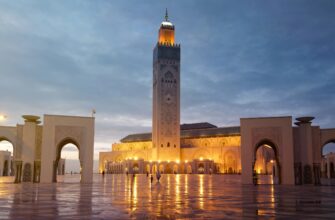
Article : Le Nouvel an de l'hégire (1er Moharram) sera célébré ce mercredi 17 juin au Maroc
Le 1er Moharram de la nouvelle année de l’Hégire 1448 correspondra au mercredi 17 juin 2026, a annoncé le ministère des Habous et des affaires islamiques.
Article : Adouls : la Cour constitutionnelle valide l’essentiel de la réforme, mais écarte plusieurs dispositions
Saisie par 93 députés avant la promulgation du texte, la Cour a déclaré non conformes des articles touchant aux incompatibilités professionnelles, aux personnes en situation de handicap, au témoignage collectif dit “lafif” et à l’organisation des instances représentatives. Le texte devra donc être corrigé sur ces points, sans remettre en cause le cœur de la nouvelle loi 16.22.
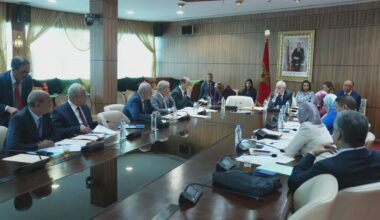
Article : En commission, les conseillers votent la nationalisation de la Samir et le plafonnement des hydrocarbures
Deux propositions de loi portant sur les hydrocarbures et la Samir ont été récemment adoptées en commission à la Chambre des conseillers. Un vote "surprise" rendu possible par un rapport de forces numérique défavorable à la majorité, lors d’une séance où l’opposition était majoritaire en nombre. Si ces textes ont franchi l’étape de la commission, leurs promoteurs sont conscients qu’ils ont peu de chances d’être adoptés en plénière.
Article : Retail : la guerre silencieuse pour conquérir le panier des Marocains
Pendant longtemps, les courses du quotidien se sont surtout jouées entre l’épicier du quartier, le grossiste et quelques grandes surfaces. Ce modèle commence à se fissurer. Entre fusion capitalistique, rachats d’enseignes, master-franchises, centrales d’achat, logistique commune et formats de proximité, les grands opérateurs installent peu à peu des réseaux capables d’accompagner le consommateur du café du matin aux achats du week-end. Non sans bousculer les équilibres.
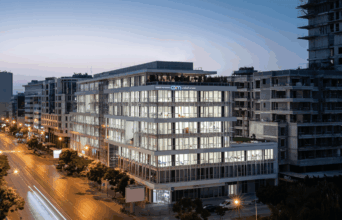
Article : Crédit du Maroc : ce que cache l’augmentation de capital à 699 MDH
Depuis son passage sous le contrôle de Holmarcom, Crédit du Maroc a changé de rythme. La banque affiche des bénéfices en hausse, prépare son plan CDM Boost 2028, et propose désormais à ses actionnaires de suivre le mouvement via une opération ouverte du 26 juin au 16 juillet. Derrière le prix fixé à 938 DH par action, le marché devra surtout juger si cette nouvelle étape confirme une trajectoire ou ouvre un pari plus large. Décryptage.
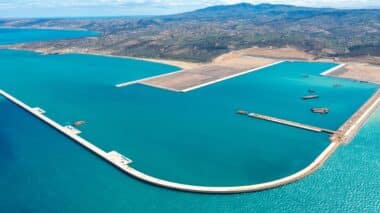
Article : Nador West Med : derrière le port, le pari industriel de l’Oriental
ROUND UP. Prévu pour entrer en service fin 2026, Nador West Med se construit déjà au-delà de ses quais : routes dédoublées, future autoroute vers Guercif, projets chinois dans l’éolien, les pneus et les alliages, ambition énergétique autour du GNL et de l’hydrogène vert. L’enjeu est désormais de transformer cette infrastructure en véritable moteur économique régional.