
Decolonizing African Scholarship
EDINBURGH – Commentaries and academic research on individual African countries present a decidedly mixed picture. Yet, whether their conclusions are bright or bleak, they tend to share the same ahistorical approach.Contemporary Africa is largely a product of colonialism, and whatever one’s focus – economics or politics, religion or geography – one will find its imprints. A clear example is the practice of democracy in Africa. For all its promise, democratic governance has struggled to deliver in most African countries.One reason is that democracy is rooted in principles (freedom, individualism, solidarity, equality) that can mean different things in different contexts. Embedded preferences, values, and beliefs tend to inform the practices and policies through which democracy itself is enacted. Hence, as an embodied set of practices and policies, democracy can be likened to a technology.All technologies can be – and are – used for vastly different purposes. A pen can be a writing instrument or a weapon. A knife can be used to cut vegetables or to participate in a street fight. But this is not to suggest that technologies are morally neutral. On the contrary, their ethics can be informed by their functions. That is why it is possible to talk about appropriate and inappropriate uses of technologies. No technology is independent of the social world. All came from somewhere.Likewise, democracy is rooted in a particular place, tradition, and culture. To transfer it from one context to another, one needs to recognize the traditions and cultures of the place to which it is being transferred. Because this did not happen in most African countries, democracy has become a weapon with which elites and strongmen oppress the weak, rather than a system for protecting rights and holding leaders accountable.The legacy of colonial institutions in Africa tends to suppress indigenous practices. Many African societies have their own ways of doing things, from family governance to the coordination of economic and political life. Most also still operate as ethnic groups whose members base their identities on shared linguistic and cultural markers. Yet following the balkanization of Africa under colonialism, these traditional societies were, in most cases, reconfigured into political units lacking a source of identity. It is little wonder that so many of them are still struggling to become functioning nation states.Geographic borders that were imposed for economic and political reasons have since become immovable realities. When there are movements for self-determination, they are usually suppressed – sometimes violently – and their leaders are accused of “treasonable felony” (itself a colonial artifact).Over time, Africa’s confected geographic borders have become psychological boundaries, too. People who were “borderized” into different countries after previously sharing an ethnic identity have since started seeing themselves as different people. While South Africa shares some ethnic groups with neighboring Zimbabwe, Mozambique, and Namibia, it now sees these countries’ citizens as foreigners and outsiders.But this dynamic runs in both directions. The Hausa-Fulanis across Sahelian Africa have continued to emphasize their common identity irrespective of national boundaries. Yet this coherence itself has become a source of tension, insofar as it fuels suspicion among the other groups living within these artificial countries.The longstanding emphasis on colonial borders, usually at the expense of traditional ethnic groups, continues to inform policies and international relations to this day. Multilateral institutions such as the World Bank, the International Monetary Fund, and the United Nations often think and act within the confines of colonial borders. The same is true of economic governance and cross-border coordination: all decisions are based on “national” interests, which themselves are based on colonial legacies and affiliations. Despite their shared ethnic identities, the Anglophones and Francophones of West Africa frequently clash over economic and political matters.Yet even outside economics and politics, academic studies of Africa tend to adhere to what social scientists Andreas Wimmer and Nina Glick Schiller call “methodological nationalism”: “a naturalization of the nation-state and a view that countries are the natural units for comparative studies.” This approach, which simply assumes that the nation-state represents a coherent society, has been widely embraced, including by for-profit management consultants. For example, Hofstede Insights, following on the work of Dutch social psychologist Geert Hofstede, has effectively commodified nationalism in advising its clients how to navigate the cultures of specific countries.One important corollary to the “national culture” literature is the literature on national institutions, and particularly on “varieties of capitalism.” The implication is that capitalism, as a practice, differs according to the institutional configurations of nation-states. And yet, again, this entire area of scholarship falls into the trap of methodological nationalism. National coherence is simply assumed, despite the fact that many separate societies can and do exist within a nation-state.Anyone who surveys the academic literature nowadays will find studies focused on specific organizational practices and economic systems within different African countries. Each is geared toward explaining a country through the lens of “national” culture and institutions, and thus takes for granted the colonial borders. Yet given that those borders were often poorly drawn and based on outside interests and priorities, one must question the reliability of such findings.After all, African countries are not homogenous. Academics with an interest in the continent need to think more critically about African cultures and institutions, and about the traditional ethnic delineations that predate today’s borders and political arrangements. A more carefully crafted approach would likely yield valuable new insights into the difficulties of governance, leadership, and management across the continent. It may not be as easy as the current methodology, but African scholars and scholars of Africa should recognize it as an enterprise worth pursuing.© Project Syndicate 1995–2019
à lire aussi
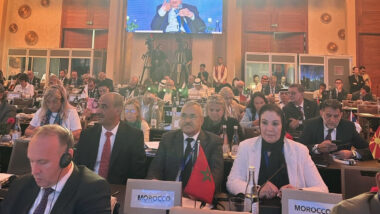
Article : Marrakech accueille les 19 et 20 juin la 4e édition du Forum parlementaire économique euro-méditerranéen et du Golfe
Parlementaires, responsables publics, CGEM et institutions financières y débattront d’intégration régionale, d’intelligence artificielle, d’emplois durables et de chaînes de valeur euro-africaines.

Article : Alerte météo : averses orageuses et grêle attendues ce mardi 16 juin dans plusieurs provinces du Royaume
La DGM a placé Ifrane, Boulemane, Khénifra et Midelt en vigilance orange, avec des cumuls de 25 à 30 mm prévus entre 14h et 22h.
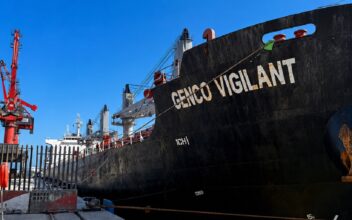
Article : Au port de Casablanca, un premier navire Supramax de 55.000 tonnes pour Cosumar
Un premier navire vraquier sucrier d'une capacité avoisinant 55.000 tonnes, affrété par le groupe Cosumar, a été accueilli au terminal polyvalent de Marsa Maroc au port de Casablanca. Ce navire est le premier à bénéficier de l’approfondissement des quais à 12 mètres de tirant d’eau.

Article : Épisode 3. « Nous ne sommes pas venus regarder un match »
Après avoir découvert la diversité des profils présents à Santiago, une autre réalité apparaît au fil des entretiens. Les centaines de Marocains qui ont traversé la planète pour assister à la finale de la Coupe du monde U20 ne se considèrent pas comme de simples spectateurs. Pour beaucoup d’entre eux, leur présence constitue une contribution à la performance de l’équipe nationale. Entre soutien moral, devoir patriotique et sentiment de participation, ils développent une conception particulière du supportérisme qui brouille la frontière entre les tribunes et le terrain.
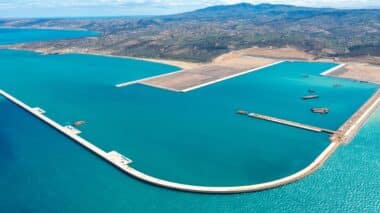
Article : Marsa Maroc : Mohammed Bendahmane aux commandes du terminal Ouest de Nador West Med
Passé par le Togo, l’Irak, le Canada et la Guadeloupe, le dirigeant rejoint un projet porté avec CMA CGM et présenté comme une étape majeure pour l’industrie maritime marocaine.
Article : L’Office des Changes lance “SARF”, sa nouvelle plateforme digitale de gestion des devises
Déployé après un programme de formation mené dans toutes les régions, l’outil doit permettre aux sociétés de change de traiter les achats et ventes de devises, d’éditer les bordereaux et de renforcer leur conformité LBC/FT.