
Morocco–Republic of Korea. Rabat looks to Seoul to accelerate industrialization
Morocco and the Republic of Korea are accelerating their economic rapprochement around a future Comprehensive Economic Partnership Agreement (CEPA). According to the Secretary of State for Foreign Trade and a senior figure in Morocco’s business community, the partnership could become a lever for industrialization, technological upgrading and deeper integration into global value chains. Explanations.
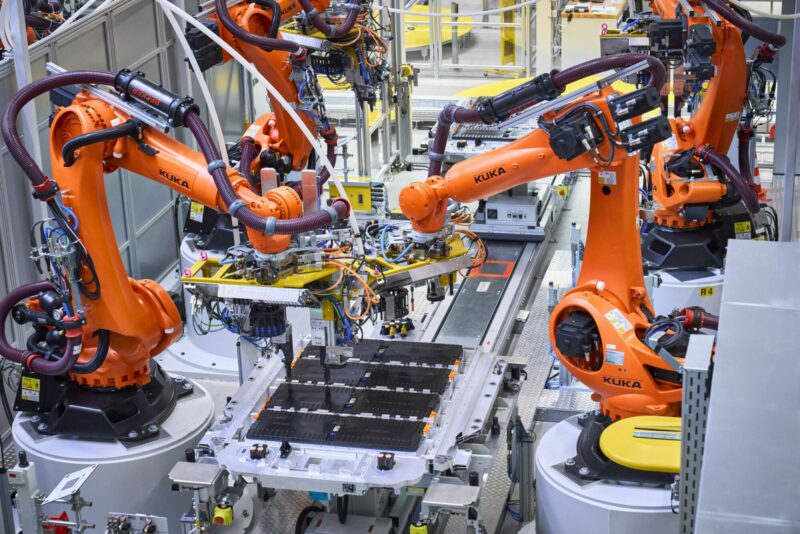
Against a backdrop of reshaping global industrial flows and supply-chain diversification, Morocco is seeking to attract more high value-added industrial investment. According to the Secretary of State for Foreign Trade, Omar Hejira, and a senior official at the General Confederation of Moroccan Enterprises (CGEM), the ongoing drive to strengthen ties with the Republic of Korea will help develop a more globally competitive local industrial base.
A meeting in June 2026 to accelerate economic ties with Seoul
After holding talks by videoconference with South Korea’s Minister of Trade, Yeo Han-koo, the Secretary of State for Foreign Trade told Médias24 that he wanted to give the bilateral partnership a strategic dimension, going beyond the framework of a simple trade agreement.
"To diversify and strengthen the trade partnerships of the Kingdom of Morocco, particularly with Asian countries, I held a virtual meeting with Mr. Yeo Han-koo last week, which made it possible to examine ways of consolidating trade and economic relations between Morocco and the Republic of Korea," the government official said.
Keen to strengthen bilateral exchanges, the Secretary of State said he had agreed with his counterpart to organize a working visit to Rabat in June to pursue this rapprochement and promote a mutually beneficial partnership commensurate with the potential of the two countries.
For Omar Hejira, this meeting will mark a new stage in accelerating discussions between the two countries around the future CEPA, which is expected to serve as a framework for broader economic cooperation focused on industrial investment, advanced technologies and exports.
A driver of industrial upgrading
According to a senior CGEM official, the realization of this partnership would represent a strategic opportunity to strengthen the industrial transformation undertaken by the Kingdom over the past decade.
"Morocco no longer wants to settle for attracting low value-added assembly activities. The CEPA will help develop industrial ecosystems capable of integrating more local production, technological skills and national suppliers," said our source within the Moroccan employers’ federation.
In the same vein, the Secretary of State added that stronger cooperation with the Republic of Korea would open up promising prospects in terms of high value-added industrial investment, technology transfer and the exchange of expertise.
Recalling that the Minister of Industry had indicated that a 69% local integration rate in the automotive sector had enabled Morocco to become Africa’s leading producer of passenger vehicles, the CGEM official explained that the objective is to replicate this momentum in new industrial sectors linked to electric mobility, batteries, the railway sector and green technologies.
Becoming a key industrial link between Asia, Europe and Africa
"Against a backdrop of global supply-chain reorganization, closer ties with Seoul will also allow Morocco to leverage its strategic position as a gateway to Africa, Europe and the Americas within more integrated and competitive global value chains," said Omar Hejira, stressing the willingness of major Asian industrial groups to diversify their locations in countries with geostrategic advantages.
Familiar with Korean companies, the CGEM official confirmed that Morocco represents a particularly attractive platform for them thanks to its economic stability, free trade agreements, logistics infrastructure and proximity to European markets.
Citing the example of the Tanger Med port, the business leader argued that Morocco’s growing industrial connectivity would allow Asian exporters to produce locally in high-growth sectors, then simultaneously access the markets of the three continents served by the Mediterranean’s main port hub.
The key sectors of the future partnership
Referring to the strategic sector of electric battery production, which is booming in Morocco, our source first recalled that the Republic of Korea is one of the global leaders in this industry, with groups such as LG Energy Solution, Samsung SDI and SK On.
"For its part, Morocco has sought-after assets in the global electric vehicle value chain — strategic mineral resources, competitive renewable energy production and an automotive ecosystem already structured around Renault and Stellantis," the business leader said, adding that the objective is to capture part of the industrial value linked to electric mobility by attracting production units for components, batteries and related technologies.
He added that the railway sector represents another major area of cooperation with Hyundai Rotem, already associated with several Moroccan projects likely to support the development of a local industry capable of producing equipment for the domestic market, as well as for export to Africa.
With the Moroccan Agency for Energy Efficiency (AMEE) and the Korean agency KOICA having launched, in March 2026, a $13.5 million program to support green jobs and the low-carbon transition of Moroccan industries, the CGEM official argued that the future Morocco-Korea partnership would also extend to energy transition and industrial decarbonization.
Cooperation aligned with the Kingdom’s economic strategy
This diversification appears necessary in an international environment where foreign markets, particularly European ones, are imposing stricter environmental standards on industrial exports from countries such as Morocco.
"This dynamic is part of the strategic vision of His Majesty King Mohammed VI, may God assist Him, aimed at strengthening the openness of our economy and consolidating Morocco’s positioning as a reliable partner and committed player in the global economy, through balanced partnerships based on mutual benefit and sustainable development," concluded Omar Hejira, pointing to the prospect of a broader economic partnership.
Pending possible strategic partnerships of a similar nature with countries that have advanced industries, such as Japan or India, the current rapprochement with the Republic of Korea could accelerate Morocco’s transformation into a regional industrial hub linking Africa, Europe and Asia.
à lire aussi
Article : Coupe du monde 2026. Qualification héroïque du Maroc face aux Pays-Bas (1-1, 3 t.a.b. à 2)
Menés à un quart d’heure du terme, les Lions de l’Atlas ont trouvé les ressources mentales nécessaires pour égaliser grâce à Issa Diop, puis éliminer les Oranjes lors de la séance des tirs au but, dans la nuit du lundi 29 au mardi 30 juin, à Monterrey, au Mexique. Yassine Bounou et Ismaïl Saibari ont propulsé le Maroc en huitièmes de finale face au Canada, samedi 4 juillet à Houston.
Article : Coupe du monde 2026. Centième sélection pour Achraf Hakimi face aux Pays-Bas
Le capitaine des Lions de l’Atlas portera le maillot du Maroc pour la 100e fois de sa carrière, dans la nuit du lundi 29 au mardi 30 juin, face aux Pays-Bas, en seizième de finale de la Coupe du monde 2026. Titularisé par Mohamed Ouahbi, Hakimi n’est plus qu’à 15 sélections pour égaler le record de Noureddine Naybet.
Article : GMT, interdiction du démarchage, IA : la triple peine de l’offshoring marocain
Longtemps porté par les donneurs d’ordre européens et les centres d’appels, le secteur de l’offshoring au Maroc doit désormais composer avec des horaires à réorganiser, des appels commerciaux de plus en plus encadrés en France et des tâches que les logiciels commencent déjà à automatiser. Les grands opérateurs invoquent l’adaptation et la montée en gamme, tandis que les syndicats redoutent moins d’embauches et davantage de postes supprimés.
Article : Maroc-Pays-Bas : les cafés pourront rester ouverts pour diffuser le match
Selon Ahmed Bifergane, coordinateur de la Fédération nationale des propriétaires de cafés et restaurants, aucune interdiction n’a été émise par les autorités pour la nuit du lundi 29 au mardi 30 juin.
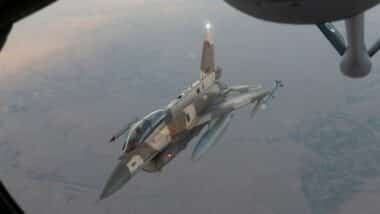
Article : Défense : les F-16 marocains concernés par un nouveau contrat américain sur les missiles AMRAAM
Attribuée à Raytheon pour 398,6 millions de dollars, l’enveloppe porte sur des travaux liés au système D4/C9, avec une échéance fixée à décembre 2027. Le Maroc figure parmi les pays partenaires du dispositif FMS, aux côtés notamment des Émirats arabes unis, de l’Arabie saoudite, du Japon, d’Israël et du Royaume-Uni.
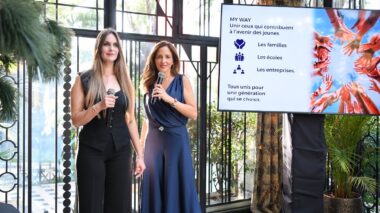
Article : My Education lance “MY WAY”, un programme dédié aux compétences du XXIe siècle
Destiné aux jeunes de 9 à 16 ans, le dispositif combine des activités régulières, des bootcamps, des stages immersifs et des interventions en milieu scolaire.