
Médias24 Brief. Analysis of the terrorist attack targeting Bamako on April 25, 2026
Mali was hit, on April 25, 2026, by an exceptionally large-scale offensive, reaching even the corridors of power in Bamako. Through this “brief”, Médias24’s new analysis format, we revisit the facts, the stakes and the blind spots of an attack that could mark a turning point in the Malian crisis. Or not.
1 - The facts.
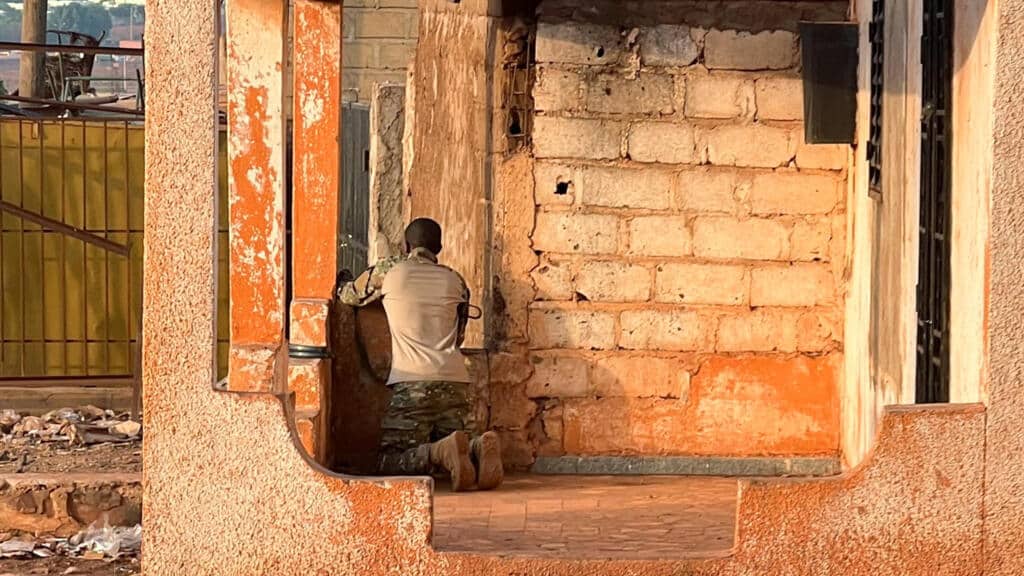
Since Saturday, April 25, 2026, the Malian authorities have been facing a dual attack by the Group for the Support of Islam and Muslims (GSIM), a jihadist organisation affiliated with the Al-Qaeda network, and Tuareg separatists from the Azawad Liberation Front (FLA).
On the first day of the offensive, the influential Minister of Defence and key figure of the transitional authorities, Sadio Camara, was killed by the assailants.
2 - The stakes.
In a state of decay following the outbreak of war in January 2012, and at one point close to collapse, Bamako had regained momentum after Colonel Assimi Goïta rose to power at the turn of the 2020s.
As a result, Mali is now largely pacified, despite France’s withdrawal following the end of Operation Barkhane in November 2022. Moreover, Assimi Goïta even hastened the departure, in December 2023, of the United Nations Multidimensional Integrated Stabilization Mission in Mali (MINUSMA).
Admittedly, some have criticised the fact that, in return, Mali has opened its doors wide to Russia and to agendas that are far from disinterested, notably through the private military company Africa Corps. Formerly known as Wagner until November 2023, the group has deployed an estimated contingent of between 1,000 and 1,500 personnel on the ground, supporting the Malian army in territorial reconquest operations, intelligence gathering, training, and direct combat support, particularly in the North and Centre. Yet, setting aside the methods, the results have, ultimately, been significant.
It is precisely this narrative of restored state authority that GSIM and the FLA are seeking to challenge, primarily in the eyes of Malian public opinion, in an attempt to demonstrate that the heart of power remains vulnerable and that territorial security is more fragile than claimed. To that end, they went as far as attacking the military base of Kati — Assimi Goïta’s stronghold on the outskirts of Bamako (around fifteen kilometres from the capital) — where Sadio Camara was located at the time of the attacks.
Targeted by a suicide bomber driving an explosives-laden vehicle, the Malian official’s residence was struck directly, leading to his death a few hours later in hospital.
Five hours after the attacks began, Malian authorities announced they had regained control of the situation. However, this may only prove temporary, as the offensive demonstrated that armed groups retain the ability to strike even within the most sensitive areas of Mali’s security apparatus.
3 - The blind spot.
At least a thousand fighters involved; Bamako, Kati, as well as Gao and Kidal in the North, struck almost simultaneously: it goes without saying, as reported by the French daily Le Monde, that this was an “unprecedented attack” targeting the authorities in Bamako. To such an extent that it raises the question of whether GSIM and the FLA alone were behind it — or whether it may, in fact, have been orchestrated by a specific regional actor: Algeria.
As is well known, Algeria has been in open opposition to its Malian neighbour since Assimi Goïta came to power. This tension escalated to the breaking of diplomatic relations after Algiers shot down a Malian drone used in the north of the country to track FLA elements.
The ties between Tuareg separatists and the Algerian military establishment are widely documented, and without external backing, the level of operational reach and coordination observed during this offensive would likely have been far more limited. The Algiers Accords of 2015, intended to stabilise northern Mali by ending the conflict between the central government and Tuareg rebels, now appear less as a resolution mechanism than as a framework that has entrenched separatist dynamics.
The same applies to GSIM, whose leader, the prominent Iyad Ag Ghali — born to an Algerian mother — is widely believed to have benefited on several occasions from interventions by Algerian services, which reportedly acted to prevent his elimination when French forces had him in their sights.
In terms of timing, one recent development alone could be sufficient to prompt an Algerian response: Bamako’s withdrawal of its recognition of the so-called “Sahrawi Arab Democratic Republic” (SADR), announced in the presence of Morocco’s Minister of Foreign Affairs, Nasser Bourita.
An affront, therefore, for a country whose President Abdelmadjid Tebboune once claimed to be “the only one in the world to truly understand Mali”.
4 - What comes next...
Mali is now entering a moment of truth. In the short term, Bamako will need to demonstrate its ability to absorb the fallout from this attack and restore its security apparatus following the death of Sadio Camara.
But the response will also unfold in the North, around Kidal and Gao, where the FLA is already seeking to turn this show of force into a fait accompli, while GSIM will likely attempt to extend the psychological impact of the offensive through a war of attrition.
In the coming days, the key indicator will be the Malian army’s ability to prevent this situation from becoming the starting point of a new phase of territorial fragmentation. Given its track record over the past six years, it would be premature to conclude, at this stage, that a strategic shift is underway.

à lire aussi

Article : Motocyclisme à El Jadida : la course test du championnat du monde sauvée in extremis
Les autorités locales d'El Jadida ont finalement levé leurs réserves sur la course test de Haouzia, permettant le maintien d'un événement présenté comme stratégique pour l'accueil d'une manche mondiale de motocyclisme sur sable.

Article : Pour près de 945 MDH, SOGEA Maroc décroche le très convoité marché de la future gare Casa Sud
Dans le cadre de la nouvelle LGV, le site prévu à l’intersection du boulevard Roudani, de la route d’El Jadida et de l’autoroute urbaine doit devenir un pôle de connexion de plus de 21.980 m², adossé au projet urbain Nassim.

Article : Avec le Grand Stade Prince Moulay Abdellah, Mawazine voit plus grand
Les 26 et 27 juin, Douzi, Cheb Khaled, Morad et ElGrandeToto se produiront dans l’enceinte de 68.500 places, appelée à devenir l’une des nouvelles scènes majeures du festival.
Article : Bourse de Casablanca : fort rebond du MASI de 1,9%
La Bourse de Casablanca a terminé la séance du 12 juin sur une nette hausse. Le MASI a gagné 1,86%, soutenu notamment par le rebond des valeurs minières après les fortes turbulences observées la veille. Managem, Attijariwafa bank et LabelVie ont concentré l'essentiel des échanges.

Article : Le Marocain Dystinct entre au Guinness grâce à ses performances sur Billboard Arabia
Ses titres "La" et "Yma" ont cumulé 15 semaines en tête du Hot 100 arabe, tandis que "La" affiche 128 semaines consécutives de présence dans les classements. Une consécration pour un artiste parti de Belgique et devenu l’un des visages les plus suivis de la pop urbaine maghrébine.

Article : Les prévisions météo pour le samedi 13 juin
Voici les prévisions pour le samedi 13 juin 2026, établies par la Direction générale de la météorologie : - Temps chaud sur le Sud-Est, l’Est […]