
Royal Theatre of Rabat. A landmark project driven by King Mohammed VI’s vision for the “City of Light”
The inauguration of the Royal Theatre of Rabat on Wednesday, April 22, 2026, forms part of the cultural policy driven by King Mohammed VI to make the capital a major centre of artistic influence. Combining remarkable acoustics, an unprecedented orchestral fusion and a dialogue between repertoires, the event celebrated the richness of a national artistic scene now equipped with a venue worthy of its ambitions.
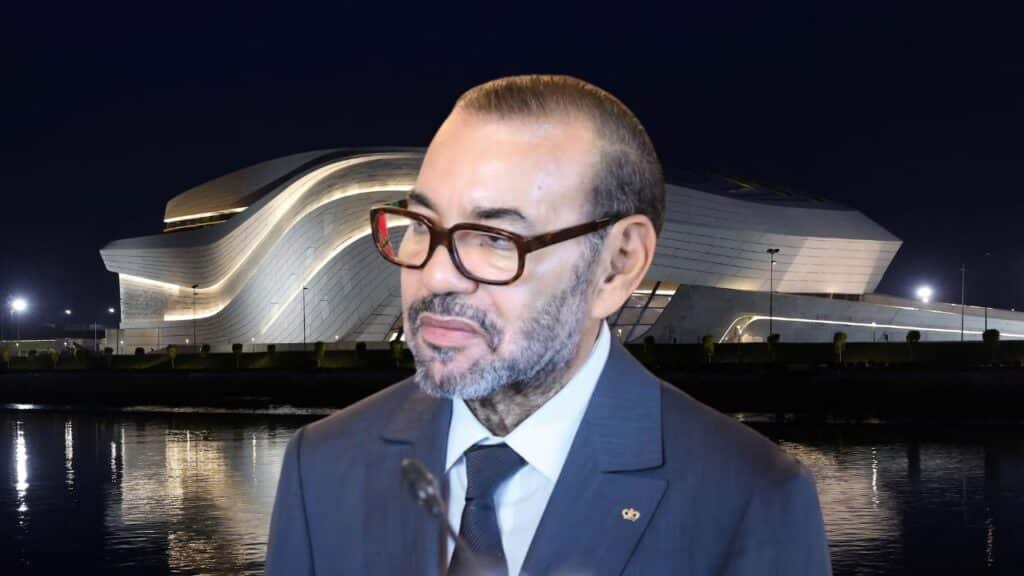
At the heart of the Bouregreg Valley, between Hassan Tower, the Mausoleum of Mohammed V and the new Mohammed VI Tower, now stands the Royal Theatre of Rabat, a flagship project launched under the impetus of King Mohammed VI as part of the “Rabat, City of Light” vision.
Part of a royal strategy aimed at enhancing the Kingdom’s heritage and cultural influence, this iconic building was inaugurated in the presence of Princesses Lalla Khadija, Lalla Meryem and Lalla Hasnaa, as well as France’s First Lady, Brigitte Macron.
Hundreds of creators, intellectuals, performing artists and members of the diplomatic corps attended the event, which underscored culture’s role as a pillar of national development, at the heart of the priorities championed by the Sovereign.
The evening opened with a film highlighting the modernist vision behind this unique architectural project, conceived as a marker of Morocco’s cultural policy. But it was the musical opening that left the strongest impression. For Farid Bensaid, a member of the Theatre Foundation’s board of directors, the performance of the national anthem by a children’s choir and orchestra was a "deeply moving" and symbolically powerful moment.
“Like everyone involved in culture, we are proud,” he told Medias24. As founder of the Moroccan Philharmonic Orchestra (OPM), he described the presence of the princesses and their guest as a major source of encouragement for the entire Moroccan artistic community, in line with the King’s continued commitment to creativity and cultural industries.
A 100% Moroccan stage for a universal repertoire
The performance rose to a significant challenge: presenting an entirely Moroccan lineup (conductor, orchestra, soloists, choirs and children). The evening also marked a historic union between two institutions: the Moroccan Philharmonic Orchestra, celebrating its 30th anniversary, and the Royal Symphonic Orchestra, with 20 years of history, illustrating the growing strength of a national cultural ecosystem supported at the highest level of the State.
Under the direction of conductor and pianist Dina Bensaïd, 76 musicians and 40 choristers combined their talents. The programme brought Morocco’s musical heritage into dialogue with the international repertoire:
- Classical piano by Marouan Benabdallah, performing Tchaikovsky.
- Great operatic arias by Bizet and Verdi, performed by mezzo-soprano Ahlima Mhamdi.
- Arab-Andalusian singing performed by Samira Kadiri.
- The oud of Driss El Maloumi, virtuoso and composer, through a contemporary creation with distinctly Moroccan sonorities.
An acoustic and technical “jewel”
One of the evening’s key takeaways was the technical quality of the venue. Farid Bensaid, himself a violinist, experienced the performance from the auditorium alongside other board members. “It’s a different way of appreciating art when you watch your colleagues perform. It allowed me to hear the orchestra differently,” he explained.
The major revelation was the acoustics: the orchestra played without any amplification. “We have a real jewel,” Mr. Bensaid enthused, adding that even for passages requiring specific amplification, such as the oud, the result remained “very harmonious to the ear.”
The Royal Theatre of Rabat is not limited to classical music. Farid Bensaid highlighted the venue’s versatility, noting its ability to host all art forms. Thanks to its orchestra pit, Morocco will now be able to stage ballets and operas to international standards.
This inauguration marks only the beginning. The institution symbolizes the cultural renewal of the capital and the affirmation of values of intercultural dialogue, promoted through the vision of King Mohammed VI to position Morocco as a regional and international cultural hub. As Mr. Bensaid noted, this new venue will finally provide classical music and other genres with a platform of excellence commensurate with the Kingdom’s global ambitions.

à lire aussi
Article : Coupe du monde 2026. Qualification héroïque du Maroc face aux Pays-Bas (1-1, 3 t.a.b. à 2)
Menés à un quart d’heure du terme, les Lions de l’Atlas ont trouvé les ressources mentales nécessaires pour égaliser grâce à Issa Diop, puis éliminer les Oranjes lors de la séance des tirs au but, dans la nuit du lundi 29 au mardi 30 juin, à Monterrey, au Mexique. Yassine Bounou et Ismaïl Saibari ont propulsé le Maroc en huitièmes de finale face au Canada, samedi 4 juillet à Houston.
Article : Coupe du monde 2026. Centième sélection pour Achraf Hakimi face aux Pays-Bas
Le capitaine des Lions de l’Atlas portera le maillot du Maroc pour la 100e fois de sa carrière, dans la nuit du lundi 29 au mardi 30 juin, face aux Pays-Bas, en seizième de finale de la Coupe du monde 2026. Titularisé par Mohamed Ouahbi, Hakimi n’est plus qu’à 15 sélections d’égaler le record de Noureddine Naybet.

Article : GMT, interdiction du démarchage, IA : la triple peine de l’offshoring marocain
Longtemps porté par les donneurs d’ordre européens et les centres d’appels, le secteur de l’offshoring au Maroc doit désormais composer avec des horaires à réorganiser, des appels commerciaux de plus en plus encadrés en France et des tâches que les logiciels commencent déjà à automatiser. Les grands opérateurs invoquent l’adaptation et la montée en gamme, tandis que les syndicats redoutent moins d’embauches et davantage de postes supprimés.
Article : Maroc-Pays-Bas : les cafés pourront rester ouverts pour diffuser le match
Selon Ahmed Bifergane, coordinateur de la Fédération nationale des propriétaires de cafés et restaurants, aucune interdiction n’a été émise par les autorités pour la nuit du lundi 29 au mardi 30 juin.
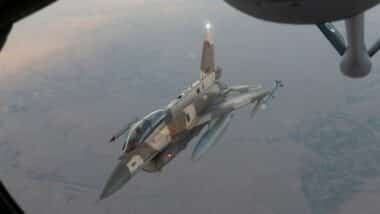
Article : Défense : les F-16 marocains concernés par un nouveau contrat américain sur les missiles AMRAAM
Attribuée à Raytheon pour 398,6 millions de dollars, l’enveloppe porte sur des travaux liés au système D4/C9, avec une échéance fixée à décembre 2027. Le Maroc figure parmi les pays partenaires du dispositif FMS, aux côtés notamment des Émirats arabes unis, de l’Arabie saoudite, du Japon, d’Israël et du Royaume-Uni.
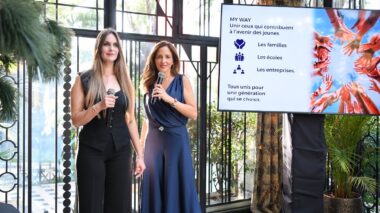
Article : My Education lance “MY WAY”, un programme dédié aux compétences du XXIe siècle
Destiné aux jeunes de 9 à 16 ans, le dispositif combine des activités régulières, des bootcamps, des stages immersifs et des interventions en milieu scolaire.