
Pharma. Yasmine Lahlou Filali’s roadmap as head of the industry federation
Elected head of FMIIP in September 2025, Yasmine Lahlou Filali discusses the major challenges facing Morocco’s pharmaceutical industry. In her first interview since taking office, she outlines for Médias24 the reforms under way, the strategies aimed at securing supply, and the measures needed to strengthen local manufacturing.
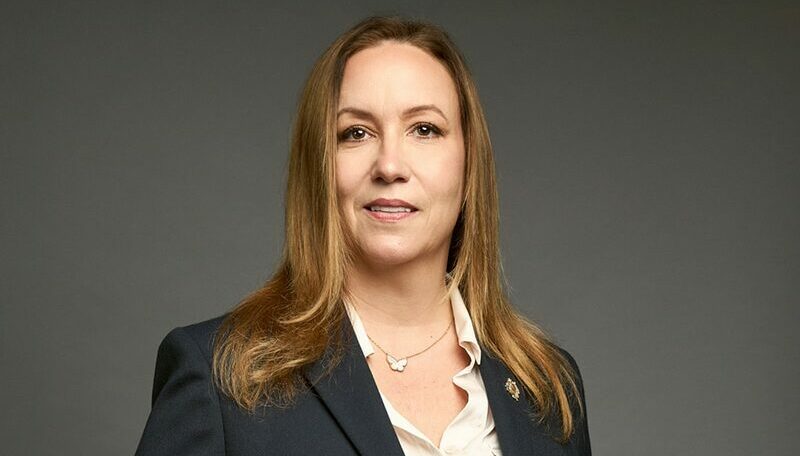
Just elected as head of the Moroccan Pharmaceutical Industry Federation (FMIIP) in September 2025, Yasmine Lahlou Filali takes office at a time of profound change in the sector.
Amid regulatory reforms, price pressures, health sovereignty challenges and rising geopolitical tensions, the president, in her first media appearance since her appointment, outlines the Federation’s main priorities, the ongoing dialogue with the Ministry of Health and the Moroccan Agency for Medicines and Health Products (AMMPS), as well as the strategies put in place to secure supply and promote local manufacturing.
In this interview with Médias24, she provides a comprehensive overview of the pharmaceutical industry.
- Médias24: How is the Federation’s work progressing today? And how would you describe the dialogue with the Ministry of Health and the Moroccan Agency for Medicines and Health Products (AMMPS)?
- Yasmine Lahlou Filali, President of FMIIP: So far, everything is going well within the Federation. Our executive team is dynamic and works closely with the Ministry of Health and AMMPS.
We meet regularly with the authorities. Our work is carried out in a spirit of partnership and constructive dialogue, with the central objective of ensuring our country’s health sovereignty.
To this end, several regulatory texts are currently under review to speed up the marketing of medicines and address still lengthy processing times. In addition, in light of the rollout of universal health coverage, an update of the decree on drug pricing is essential.
Securing stocks and local manufacturing among FMIIP’s main priorities
- What is your roadmap for the coming years? What will be your main short- and medium-term priorities?
- Several long-term initiatives are already underway. But we also have short-term priorities aimed in particular at promoting investment and local manufacturing.
VAT exemption for medicines is among the key issues we will continue to negotiate with the government. Since January 1, 2024, imported medicines have been exempt from VAT, while VAT on inputs used in locally manufactured medicines has risen to 20%, from 7% previously — a significant increase.
VAT is theoretically recoverable, but our discussions with the authorities concern both administrative burdens and full exemption. In our view, everyone recognizes that this situation creates a competitive disadvantage for local manufacturers compared with importers of finished products. Our aim is simply to ease the cash flow constraints of manufacturers creating value locally and in need of support to expand their investments.
At this stage, no consensus has yet been reached, particularly during the last finance law, but prospects remain encouraging.
- Is this your main priority at the head of the Federation?
- There are others. Another major priority is securing medicine stocks to reduce recurring shortages and supply tensions.
Several levers must be activated, with a priority on a more proactive approach. Together with AMMPS, we are working to establish a system that will monitor stocks of essential medicines and those without therapeutic alternatives, in order to anticipate shortages, identify their causes and find appropriate solutions.
This is a global phenomenon. Since the Covid-19 pandemic, demand for medicines has increased, which naturally raises the risk of shortages. These were particularly acute during the crisis. In some European countries, shortages have become chronic, whereas in Morocco, the impact remained limited for most locally manufactured medicines. This is notably the case in France, which produces very little and has some of the lowest prices, making it one of the last countries to be supplied.
If the current crisis in the Middle East persists, its effects could be felt within three months
- Has this become a structural crisis rather than a temporary one?
- It is both. Initially temporary, given the succession of global crises. During the war in Ukraine, we were heavily affected, as some excipients produced in Europe require energy, in addition to disruptions in shipping routes. Today, 80% to 90% of raw materials come from Asia. It is also structural, as geopolitical crises are part of a longer-term trend.
If the current crisis in the Middle East persists, it will eventually affect us. Its impact could be felt within three months, with significant repercussions, as 70% of inputs (raw materials, excipients, packaging, etc.) are imported, compared with 30% produced locally.
The advantage of locally manufactured medicines lies in more secure levels of raw material stocks. We currently have around six to nine months of stock, or even more for certain medicines, bringing total coverage to nine months to one year for some products.
By contrast, importers typically hold only three months of stock, or even less. For them, shortages or supply tensions will be felt more quickly.
We can already say that the impact of the crisis is beginning to be felt, though not yet on finished products purchased by patients. Shipping routes are longer, which will delay deliveries by at least three weeks, particularly due to port congestion, not to mention container costs, which have tripled. The same applies to insurance.
Air freight is also affected. Dubai is a major hub, and it is currently heavily disrupted. There are no direct flights to Morocco. Raw materials must pass through specialized hubs equipped with facilities such as cold storage, and only a limited number of such hubs exist.
Morocco has between nine months and one year of medicine stocks
- How can we estimate the Kingdom’s current level of medicine stocks?
- If we combine local manufacturing, imported raw materials and finished product inventories, current medicine stocks are estimated at around nine months to one year.
This clearly shows the importance of local production. It is one of the main responses to short-term crises.
When issues arise with inputs, we have time to react. For instance, when a change in the source of raw materials becomes necessary, regulatory procedures can be accelerated.
- Is it possible to produce these raw materials locally to reduce dependence on imports?
- The required investments would be substantial. There is indeed the possibility for Indian or Chinese companies to relocate part of their production to Morocco if they wish to move closer to American and European markets. Otherwise, these are relatively polluting industries, far more so than finished medicines. Often, the base molecule is produced by a single manufacturer, generally in Asia.
France is now saying it will produce paracetamol, but it remains dependent on importing the raw material from its country of origin. Paracetamol is a petroleum derivative, and the base substance is produced only in China.
These are heavy, capital-intensive infrastructures. Still, relocation remains a possibility for some Asian players seeking proximity to Western markets.
Imported and locally produced medicines placed on an equal footing
- One of the main reforms currently being prepared concerns medicine pricing. After months of marathon discussions with all stakeholders, where does the draft stand?
- The text is expected soon. It is progressing well and entering its final stages.
It should be recalled that the initial decree, published in 2013, already had certain limitations that we had pointed out at the time, when we were still organized as an association (AMIP).
Among the problematic provisions was Article 4, which granted a 10% additional margin to imported medicines, with a direct impact on patients, who bear the cost, and on health insurance funds, particularly for newly introduced medicines.
Other key improvements concern price revision mechanisms. On paper, the system provides for automatic price reductions when prices fall significantly in reference countries, and a five-year review upon renewal of marketing authorization. In practice, however, these mechanisms are either rarely applied or insufficiently regulated, leading to persistent price gaps.
Another issue concerns low-priced medicines, often older but therapeutically essential. Their economic model is now under strain due to rising input, energy and transport costs. With very few price increases granted over the past 12 years, some products risk disappearing altogether, in favor of more expensive alternatives.
This is why revising the decree had become necessary and has long been a demand from the profession. The current minister has undertaken a thorough review, with genuine consultation involving all stakeholders.
Today, several important advances should be noted. The removal of the 10% premium previously granted to imported medicines helps restore fairness between local production and imports. Additional corrective measures have also been introduced to improve access to and availability of medicines and generics.
Overall, this reform should correct structural imbalances and improve both the competitiveness of the local industry and patient access to medicines.
- Could this reform significantly reduce manufacturers’ margins?
- Margins are already under pressure, particularly for locally produced medicines. Prices are fixed and not indexed to rising input costs such as energy, transport or wages. Moreover, the Moroccan market remains relatively small, making economies of scale difficult.
That said, our Federation has supported this reform in a spirit of responsibility, with a view to strengthening health sovereignty, ensuring the sustainability of universal health coverage, and promoting local manufacturing and generics.
Some low-priced medicines disappear without replacement, putting patients’ lives at risk
Even without reform of the decree, it would already have been possible to correct many prices that were far too high. The problem is that this required laboratories to play along and submit their declarations.
The new decree, which provides for a review every three years, should help bring all stakeholders into a healthier dynamic.
For new products, the manufacturer price will be set based on the lowest price observed in reference countries, and laboratories will have to adjust their margins accordingly.
In reality, the issue is not the decree itself. It is primarily about correcting prices that were excessive and unjustified.
- You mentioned the issue of very low-priced medicines that disappear. How are they replaced?
- Their disappearance is a major issue. Some medicines are not replaced at all, or are replaced by much more expensive alternatives. In some cases, these are life-saving treatments. If patients cannot access them, their lives are at risk.
In other cases, when the laboratory owns and produces the medicine, it continues production at a loss. These are often very low-cost medicines.
Several manufacturers have submitted requests for price increases. But these requests move extremely slowly. Decisions are rare, even though, just as there are mechanisms for downward revisions, there should also be upward adjustments when justified, especially when the disappearance of a medicine harms patients.
In Morocco, some medicines disappeared simply because authorities refused to approve increases of a few dirhams. Price increases remain a taboo. In Germany, where the market is much larger, authorities have revalued certain medicines to ensure availability and continuity of supply.
The encouraging news is that the ministry now appears aware of this issue and is willing to correct this market imbalance.
The most critical situation concerns imported medicines. Some laboratories simply stop marketing them. This is the case for certain blood derivatives, which are now nearly unavailable or only accessible under temporary authorization (ATU). For some products imported from India, pharmacovigilance issues have also disrupted supply.
The situation worsened with the Covid-19 pandemic. The main blood donors are Americans from modest backgrounds, as blood donation is paid in the United States. Many died during the pandemic, leading to shortages while demand increased, particularly for Covid-related conditions such as Kawasaki syndrome. As a result, blood prices surged, leading to a 30% to 40% increase in the cost of blood-derived medicines in Europe and worldwide.
- Another controversial issue is the opening of pharmacy capital. What is FMIIP’s position?
- What Morocco needs above all is a reliable and efficient distribution system that takes into account the specific role of community pharmacists. The pharmacist’s role here is primarily social. In remote areas, pharmacies are often the only point of contact with the healthcare system. Even in large cities, some patients cannot afford to consult a doctor and rely on pharmacists. It is therefore essential to preserve their independence and social role.
Community pharmacists in Morocco play a much broader role: advising patients, monitoring conditions and acting as trusted intermediaries. They are currently remunerated only through product margins, unlike in countries such as France, where they are also paid for pharmaceutical services.
Opening up capital risks exacerbating pharmaceutical deserts. In rural areas, small pharmacies could become unviable in the face of large chains, which might favor higher-margin products over essential low-cost medicines. Before considering such reform, measures must be taken to ensure the sustainability of pharmacies and equitable access to care.
- What is the size of the Moroccan pharmaceutical market, and what share is produced locally?
- The market is worth 26 billion dirhams, with 13 billion dirhams currently imported.
These figures reflect a worrying trend. Local production is not declining, but imports are surging.
Fifteen years ago, local production covered around 80% of demand. Today, with imports accounting for half the market, external dependence has become significant. This underscores the importance of accelerating efforts to promote local production, which remains the foundation of health sovereignty.

à lire aussi
Article : Le Maroc intégré à un fonds Banque mondiale-SECO suisse pour renforcer les systèmes financiers
Doté de 4,65 millions de francs suisses, soit environ 54 millions de DH, le dispositif couvre quinze pays et vise à appuyer des réformes liées à l’inclusion, à la profondeur des marchés et à la résilience du secteur financier. Pour Rabat, il s’agit d’un cadre multilatéral d’accompagnement, et non d’une enveloppe bilatérale dédiée.

Article : Mondial 2026 : le Maroc “ne craint pas" le Brésil mais le "respecte”, assure Ouahbi
À la veille de l’entrée en lice des Lions de l’Atlas dans le groupe C, à East Rutherford, le sélectionneur a confirmé un groupe disponible malgré les forfaits de Nayef Aguerd et Abde Ezzalzouli, tout en appelant ses joueurs à assumer leur nouveau statut.

Article : Motocyclisme à El Jadida : la course test du championnat du monde sauvée in extremis
Les autorités locales d'El Jadida ont finalement levé leurs réserves sur la course test de Haouzia, permettant le maintien d'un événement présenté comme stratégique pour l'accueil d'une manche mondiale de motocyclisme sur sable.

Article : Pour près de 945 MDH, SOGEA Maroc décroche le très convoité marché de la future gare Casa Sud
Dans le cadre de la nouvelle LGV, le site prévu à l’intersection du boulevard Roudani, de la route d’El Jadida et de l’autoroute urbaine doit devenir un pôle de connexion de plus de 21.980 m², adossé au projet urbain Nassim.

Article : Avec le Grand Stade Prince Moulay Abdellah, Mawazine voit plus grand
Les 26 et 27 juin, Douzi, Cheb Khaled, Morad et ElGrandeToto se produiront dans l’enceinte de 68.500 places, appelée à devenir l’une des nouvelles scènes majeures du festival.

Article : Bourse de Casablanca : fort rebond du MASI de 1,9%
La Bourse de Casablanca a terminé la séance du 12 juin sur une nette hausse. Le MASI a gagné 1,86%, soutenu notamment par le rebond des valeurs minières après les fortes turbulences observées la veille. Managem, Attijariwafa bank et LabelVie ont concentré l'essentiel des échanges.