
Royal Moroccan Navy. What the South Korean Submarine Lead Really Conceals
Amid rising regional tensions and the strategic importance of the Strait of Gibraltar, is Morocco preparing its underwater shift? While a South Korean financial document points to a 2027 horizon for the sale of three submarines, the realities of defense procurement call for caution.
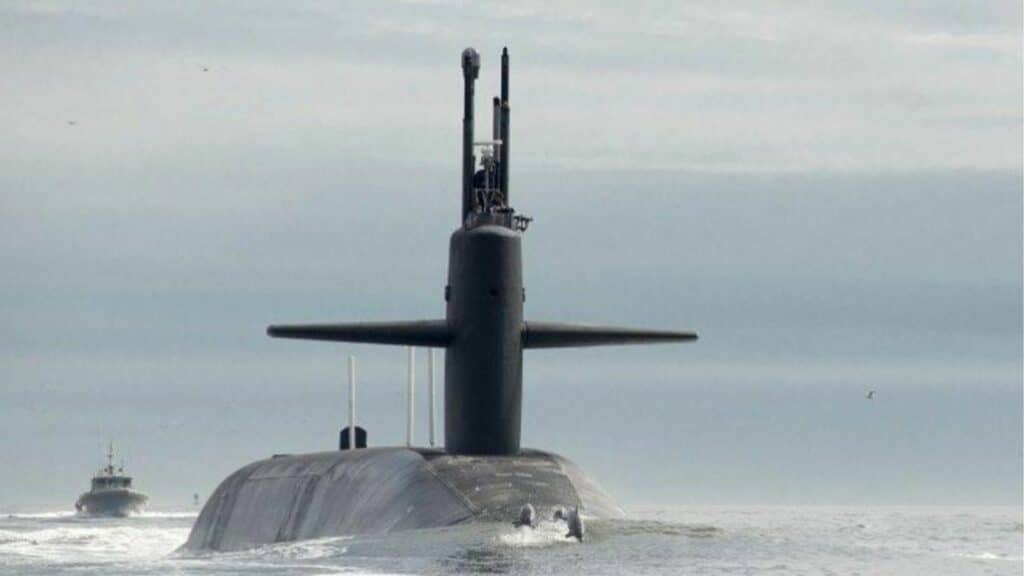
For several years, the recurring narrative of the "first Moroccan submarine" has regularly resurfaced in the national press. The debate has now been reignited by the "2026 Outlook Report" from Mirae Asset Securities. The financial institution now places Morocco in its potential sales "pipeline" for Seoul’s shipyards, projecting the sale to the Royal Moroccan Navy of 3 KSS-III Batch-I units, a highly advanced conventional attack submarine (diesel-electric) designed for maritime surveillance, deterrence, and long-range strike capabilities, with potential delivery by 2027.
First and foremost, it is important to recall the nature of the issuer. Mirae Asset is an investment bank whose role is to identify growth opportunities for Korean industrial champions in order to inform equity investors.
In its projections, the report estimates the unit price of the Korean attack submarine at around $900 million (1.2 trillion KRW), including a 20% margin over domestic production costs. While the inclusion of Morocco allows South Korean shipbuilders to project future revenues, it falls far short of constituting evidence of any contractual commitment on the part of Morocco.
The Royal Navy’s “wait-and-see” approach
The Kingdom is accustomed to such a “wait-and-see” approach. In the past, similar reports have successively linked Morocco to potential negotiations with Russia (Amur class), Germany (Type 214), France (Scorpène), and even Greece for second-hand units.
While Mirae Asset’s report highlights South Korea’s increasingly assertive positioning, it does not imply any commitment from the Royal Armed Forces. In the subtle dynamics of defense diplomacy, Morocco could just as well leverage Korean interest to secure more favorable terms from its traditional partners, such as the United States, France, or Spain.
Caution is therefore warranted. The “Morocco” line in such financial reports is, for now, more an indicator of Seoul’s commercial momentum than a reflection of the Royal Navy’s actual order book.
For Abdelhamid Harifi, our military consultant, it is also crucial not to overinterpret South Korean financial documents. In his view, the 2027 timeline does not correspond to a delivery, but rather to the likely opening of a formal consultation phase.
“You don’t buy a submarine on a whim. 2027 is just around the corner,” he cautions. “What this document suggests is a timetable for Korean shipbuilders to submit bids in various international tenders. It is plausible that Morocco could launch a tender process around 2027, but it is far too early to speak of a firm acquisition.”
Furthermore, the figure of three submarines appears ambitious for a navy that has no historical “submarine capability base”. Integrating such technology requires a level of training and institutional structuring that the proposed timeline seems to underestimate.
If the Royal Navy’s need is real, it remains part of a complex strategic trade-off. Morocco must currently strengthen its patrol and combat fleet, as well as its logistical capabilities. Investment in submarines would primarily serve a deterrence strategy, which has become increasingly relevant amid rising regional tensions.
However, for Abdelhamid Harifi, the issue goes beyond mere regional rivalry; it constitutes a global sovereignty imperative tied to the protection of maritime routes.
The Strait of Gibraltar: a global sovereignty challenge
Our military consultant directly links this ambition to the geopolitical dynamics of major international straits, citing tensions around the Strait of Hormuz as an example. “This runs counter to international law. Straits do not fall under the sovereignty of any single country,” Abdelhamid Harifi reminds. “If this principle is undermined, the security of global maritime traffic would be at risk.”
In this context, Morocco, which holds vital economic interests with Tanger Med and soon Nador West Med, must position itself as a key player in securing the Strait of Gibraltar. Acquiring a submarine capability would enable the Kingdom to safeguard maritime traffic against both asymmetric and state threats, assert itself as a pivotal and stabilizing maritime power in the region, and ultimately protect its strategic port infrastructure.
In sum, while Mirae Asset Securities’ document reflects Seoul’s commercial ambitions, it also suggests that Morocco is quietly preparing for a doctrinal shift. The 2027 horizon could mark the formal beginning of a new era for the Royal Moroccan Navy—one in which it becomes capable of monitoring not only the surface, but also the depths of its strategic waters.

à lire aussi

Article : Coupe du monde 2026. Qualification héroïque du Maroc face aux Pays-Bas (1-1, 3 t.a.b. à 2)
Menés à un quart d’heure du terme, les Lions de l’Atlas ont trouvé les ressources mentales nécessaires pour égaliser grâce à Issa Diop, puis éliminer les Oranjes lors de la séance des tirs au but, dans la nuit du lundi 29 au mardi 30 juin, à Monterrey, au Mexique. Yassine Bounou et Ismaïl Saibari ont propulsé le Maroc en huitièmes de finale face au Canada, samedi 4 juillet à Houston.

Article : Coupe du monde 2026. Centième sélection pour Achraf Hakimi face aux Pays-Bas
Le capitaine des Lions de l’Atlas portera le maillot du Maroc pour la 100e fois de sa carrière, dans la nuit du lundi 29 au mardi 30 juin, face aux Pays-Bas, en seizième de finale de la Coupe du monde 2026. Titularisé par Mohamed Ouahbi, Hakimi n’est plus qu’à 15 sélections pour égaler le record de Noureddine Naybet.

Article : GMT, interdiction du démarchage, IA : la triple peine de l’offshoring marocain
Longtemps porté par les donneurs d’ordre européens et les centres d’appels, le secteur de l’offshoring au Maroc doit désormais composer avec des horaires à réorganiser, des appels commerciaux de plus en plus encadrés en France et des tâches que les logiciels commencent déjà à automatiser. Les grands opérateurs invoquent l’adaptation et la montée en gamme, tandis que les syndicats redoutent moins d’embauches et davantage de postes supprimés.
Article : Maroc-Pays-Bas : les cafés pourront rester ouverts pour diffuser le match
Selon Ahmed Bifergane, coordinateur de la Fédération nationale des propriétaires de cafés et restaurants, aucune interdiction n’a été émise par les autorités pour la nuit du lundi 29 au mardi 30 juin.
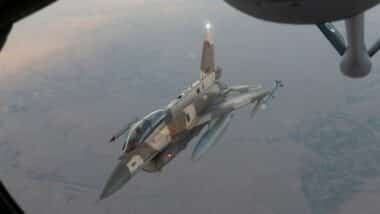
Article : Défense : les F-16 marocains concernés par un nouveau contrat américain sur les missiles AMRAAM
Attribuée à Raytheon pour 398,6 millions de dollars, l’enveloppe porte sur des travaux liés au système D4/C9, avec une échéance fixée à décembre 2027. Le Maroc figure parmi les pays partenaires du dispositif FMS, aux côtés notamment des Émirats arabes unis, de l’Arabie saoudite, du Japon, d’Israël et du Royaume-Uni.

Article : My Education lance “MY WAY”, un programme dédié aux compétences du XXIe siècle
Destiné aux jeunes de 9 à 16 ans, le dispositif combine des activités régulières, des bootcamps, des stages immersifs et des interventions en milieu scolaire.