
AFCON 2025 Final: Motsepe adopts a stance that favors Senegal
Following two nearly identical press conferences, the president of the CAF avoided reaffirming Morocco’s status as African champion, once again taking refuge behind the ongoing procedure before the CAS. Critical analysis.
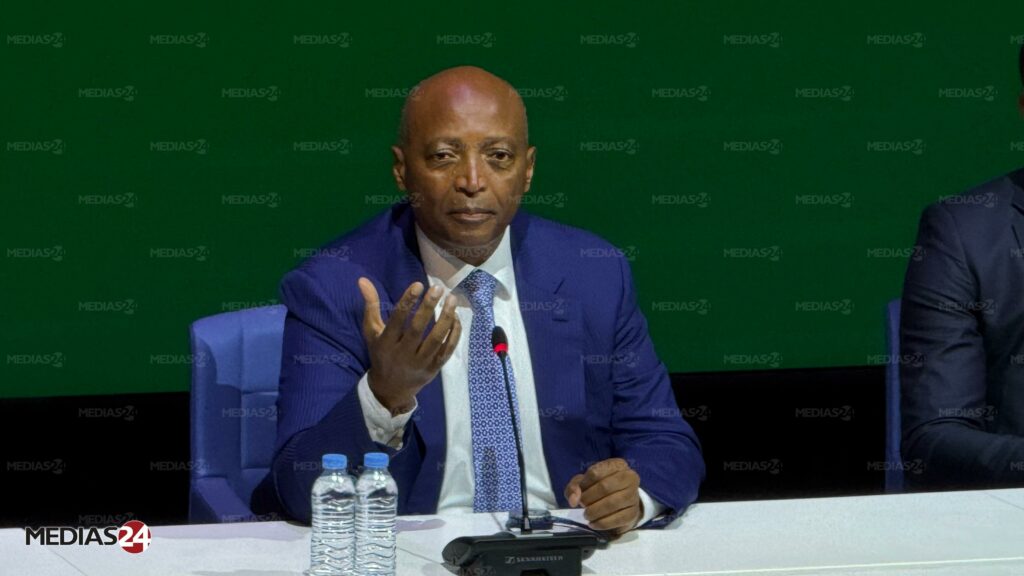
After two press conferences — one in Dakar and the other in Salé — no one really knows what Patrice Motsepe has in mind.
The president of the African Football Confederation (CAF) delivered the same message to Moroccans as to Senegalese: commitment to the continental body, love for African peoples, and focus on the 2026 World Cup — all wrapped in generalities and grand statements of principle.
We still don’t know why he made these two trips, even though it’s clear that the initiative is linked to tensions between the two countries in football terms. One can assume that he asked his Senegalese counterparts to adopt a more measured tone and to put an end to provocations.
Regarding the Africa Cup of Nations (AFCON) final, he maintains the same legal alibi — the matter is before the Court of Arbitration for Sport (CAS), so he cannot comment — while admitting that certain rules were inadequate and need reform. He announces regulatory changes without specifying them.
On the convicted fans, he refers to bilateral diplomatic channels, while acknowledging that since the event is organized by the CAF, the question is legitimate.
On corruption, he reiterates his zero‑tolerance stance and invites any government or institution to investigate the CAF.
Specifically on Morocco, he warmly praises the organization of the AFCON, the hospitality of the Moroccan people, and expresses pride in the national team’s journey to the 2022 World Cup in Qatar. Evident and commonplace remarks, therefore.
Here is our critical analysis of his press conference in Morocco.
What changes compared to Dakar:
Very little. The tone is slightly different — he is on Moroccan soil, therefore more cordial toward Morocco. He mentions Hakimi and Amrabat, praises the exceptional organization. But the substance remains identical. It’s a diplomatic copy‑paste — which he himself acknowledges.
Is Morocco the champion, yes or no?
A Moroccan journalist asks: why didn’t Motsepe publicly reaffirm that Morocco is the champion, in accordance with the CAF Appeals Board decision of March 17? This, knowing that the appeal to the CAS does not suspend the application of that decision.
Why didn't Motsepe publicly reaffirm this legal reality, and why didn't he react to the Senegalese celebrations waving a trophy that no longer belongs to them?
His response is a complete dodge. He says he “made statements” without citing any, and takes refuge behind the silence imposed by the CAS.
However, this answer is legally questionable. The CAS prohibits him from commenting on the ongoing dispute — it does not prohibit him from recalling what the current official decision is. These are two completely different things. Recalling an established legal fact is not influencing a judicial procedure. One might think he deliberately confuses the two.
The symmetrical treatment of Morocco and Senegal: equity or equivocation?
Motsepe is evidently proud to deliver "the same message" to both countries, presenting it as proof of impartiality. Yet this symmetry is actually problematic. Neutrality does not mean treating both sides identically; it means giving each their due rights.
Morocco is the African champion according to the latest official decision of the CAF itself. Senegal contests this decision before the CAS. Treating both countries strictly identically is implicitly putting the recognized champion and the contesting country on the same level. It is false neutrality that objectively favors the Senegalese side, which benefits from artificially maintained doubt in the public opinion.
An important involuntary admission:
He reveals that the program to professionalize African referees, conducted in partnership with FIFA, was interrupted without either him or Gianni Infantino being informed. It is a serious confession of managerial dysfunction within the CAF, slipped in almost casually. If the president of the CAF is unaware that its flagship programs are abandoned, it raises a serious question about the actual institution’s governance.
What he says anew and deserves attention:
He drops an important phrase about the $10 million paid to Senegal: "it's complicated". He does not elaborate, but it suggests that the possible reimbursement of these funds — if Morocco is confirmed as champion — remains a sensitive and unresolved issue. This is probably the only genuinely new and concrete information from the two conferences.
He also mentions that certain regulatory sanctions will have to be approved by the General Assembly of the 54 member nations — a process implying long delays and almost certain political dilution.
Global verdict on the two conferences:
Comparing Dakar and Rabat, a coherent strategy emerges: maintain ambiguity until the CAS judgment, avoid any statement that could be interpreted as supporting one side or the other, and manage the CAF’s institutional survival in a context where it needs both Morocco and Senegal.
The problem is that this strategy has a real cost: it allows a false narrative to thrive — that of a contested and uncertain outcome — even though the CAF itself has already issued an official decision. By refusing to clearly reaffirm it, Motsepe objectively undermines the credibility of his own institution.
What we were entitled to expect:
True leadership would have been to say: "The decision of our Appeals Board is clear. The CAS is seized with an appeal, which is a legitimate right. But as long as the CAS has not ruled, the official decision of the CAF stands. That’s how the law works.
He never uttered this phrase. And that silence is, in itself, a political act.
à lire aussi
Article : Coupe du monde 2026. Qualification héroïque du Maroc face aux Pays-Bas (1-1, 3 t.a.b. à 2)
Menés à un quart d’heure du terme, les Lions de l’Atlas ont trouvé les ressources mentales nécessaires pour égaliser grâce à Issa Diop, puis éliminer les Oranjes lors de la séance des tirs au but, dans la nuit du lundi 29 au mardi 30 juin, à Monterrey, au Mexique. Yassine Bounou et Ismaïl Saibari ont propulsé le Maroc en huitièmes de finale face au Canada, samedi 4 juillet à Houston.
Article : Coupe du monde 2026. Centième sélection pour Achraf Hakimi face aux Pays-Bas
Le capitaine des Lions de l’Atlas portera le maillot du Maroc pour la 100e fois de sa carrière, dans la nuit du lundi 29 au mardi 30 juin, face aux Pays-Bas, en seizième de finale de la Coupe du monde 2026. Titularisé par Mohamed Ouahbi, Hakimi n’est plus qu’à 15 sélections d’égaler le record de Noureddine Naybet.

Article : GMT, interdiction du démarchage, IA : la triple peine de l’offshoring marocain
Longtemps porté par les donneurs d’ordre européens et les centres d’appels, le secteur de l’offshoring au Maroc doit désormais composer avec des horaires à réorganiser, des appels commerciaux de plus en plus encadrés en France et des tâches que les logiciels commencent déjà à automatiser. Les grands opérateurs invoquent l’adaptation et la montée en gamme, tandis que les syndicats redoutent moins d’embauches et davantage de postes supprimés.
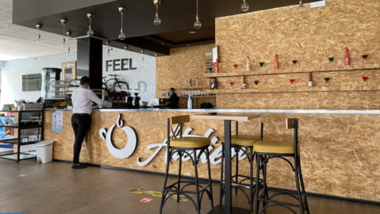
Article : Maroc-Pays-Bas : les cafés pourront rester ouverts pour diffuser le match
Selon Ahmed Bifergane, coordinateur de la Fédération nationale des propriétaires de cafés et restaurants, aucune interdiction n’a été émise par les autorités pour la nuit du lundi 29 au mardi 30 juin.
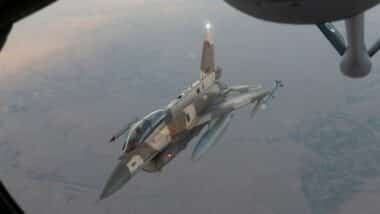
Article : Défense : les F-16 marocains concernés par un nouveau contrat américain sur les missiles AMRAAM
Attribuée à Raytheon pour 398,6 millions de dollars, l’enveloppe porte sur des travaux liés au système D4/C9, avec une échéance fixée à décembre 2027. Le Maroc figure parmi les pays partenaires du dispositif FMS, aux côtés notamment des Émirats arabes unis, de l’Arabie saoudite, du Japon, d’Israël et du Royaume-Uni.
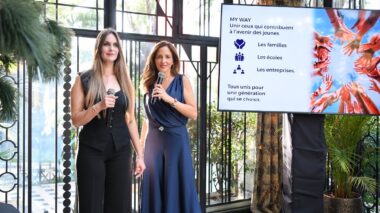
Article : My Education lance “MY WAY”, un programme dédié aux compétences du XXIe siècle
Destiné aux jeunes de 9 à 16 ans, le dispositif combine des activités régulières, des bootcamps, des stages immersifs et des interventions en milieu scolaire.