
Legal Analysis – AFCON: Can CAS Challenge Morocco’s victory?
Following the forfeit, Morocco’s victory was confirmed by the Confederation of African Football. The Senegalese Football Federation has announced its intention to appeal to the Court of Arbitration for Sport, though such an appeal does not carry immediate suspensive effect.
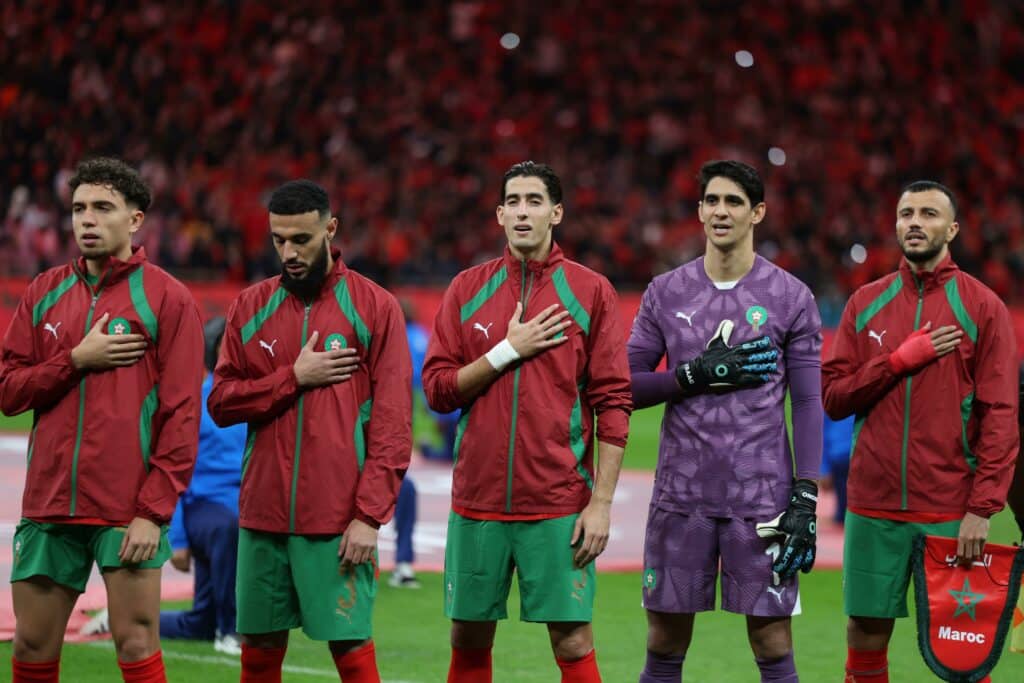
Morocco is Africa’s champion. On Tuesday, March 17, 2026, the Appeals Board of the Confederation of African Football (CAF) annuled Senegal's 1-0 victory in the 2025 Africa Cup of Nations final. While global reactions remain divided — with sharp criticism from Senegalese authorities — the fact is clear: a binding decision has been issued, carrying its legal consequences.
Behind this conclusion lies a pressing question: is the decision truly final? The Senegalese Football Federation (FSF) has already announced its intention to appeal to the Court of Arbitration for Sport (CAS). Yet, in practical terms, what impact could such an appeal still have?
An enforceable decision, despite a possible appeal
As highlighted by Me Mourad El Ajouti, president of the Lawyers' Club in Morocco, in a statement to Médias24, the CAF Appeals Board’s ruling rests on a strict interpretation of the regulations.
“The Appeals Board’s decision represents a strict application of the principle of regulatory legality. By invoking Articles 82 and 84 of the AFCON regulations to overturn the disciplinary committee’s ruling, the Board classified Senegal’s conduct as a serious breach of contractual and sporting obligations, as outlined in the competition framework. This led to the immediate legal consequence of a forfeit (3–0) in favor of Morocco — an objective sanction that leaves no room for interpretation once the breach is established.”
Procedurally, the ruling is deemed final within CAF’s internal bodies, granting it immediate enforceability. In other words, Morocco is officially recognized as Africa’s champion, regardless of any potential appeal.
The appeal by the Senegalese Football Federation to CAS, if lodged, does not suspend the enforcement of CAF’s ruling — unless the tribunal issues a provisional measure. Such a procedure, however, is subject to extremely strict legal conditions,” the lawyer explains.
CAS, a limited role
Appealing to the CAS, often seen as a final resort, does not amount to a new trial on the merits.
The Court of Arbitration for Sport functions, to a certain extent, like an appellate body. It does not re-hear the case in its entirety, but rather verifies that:
- the rules of the game were respected;
- the procedure was correctly followed;
- the competition regulations were applied;
- deadlines were observed;
- all parties were heard;
- etc.
CAS may annul (overturn) a decision, but it does not rule on the substance of the case. In addition, the timelines are relatively long: it takes three to four months to obtain a ruling.
A unique case in the history of competitions
While matches decided by default are not new in football, the current situation remains exceptional. This type of ruling is common in certain competitions, but never at this stage — and certainly not in a final with a continental title at stake. In sports history, titles have been revoked before, most often in doping cases, but a scenario like this is unprecedented.
This case is poised to set a precedent. It marks a significant turning point: without this ruling, there would have been no sanction, and therefore no justice. The sanction itself also carries a deterrent effect.
Moreover, since this final, three to four similar incidents have already been reported worldwide — notably in Turkey, where a team walked off the pitch in protest against a referee’s decision. On social media, this practice has even been dubbed “the Senegalese way.”
A clear signal has thus been sent to all: voluntarily leaving the field is not without consequences.
A Moroccan precedent... confirmed by the CAS
Since the final on January 18, 2026, Senegal’s withdrawal from the pitch has inevitably revived memories of the WAC–EST (Espérance Sportive de Tunis) case in 2019.
At that time, CAF had declared Wydad Athletic Club the loser for abandoning the match and imposed financial sanctions. A decision later upheld by CAS. “The refereeing team considered that the refusal to resume play constituted abandonment under Article 148 of the CAF Disciplinary Code. It therefore validated the decision to declare Wydad the loser by forfeit,” read the CAS statement.
This precedent demonstrates that such sanctions have already been applied… against a Moroccan club.
A strong case for Morocco
In the present matter, several elements reinforce Morocco’s position. First, the opposing team’s departure was deemed voluntary, with an absence from the pitch lasting more than 12 minutes. In addition, the official reports — from the match commissioner, security staff, and referees — all concur and make no mention of any security incident that could justify such a decision.
Images and statements further corroborate these findings.
Some have invoked IFAB's Law 5 (International Football Association Board), which stipulates that “decisions of the referee on facts connected with play are final.” Yet this rule applies strictly to matters of play on the field. Outside that scope, Articles 82 and 84 of the AFCON regulations become decisive.
Here, the issue is not a refereeing dispute but the application of regulations to conduct legally classified. The conclusion is clear: it is a forfeit, with the resulting consequences — namely, awarding Morocco a second African crown.

à lire aussi

Article : Pollution marine : à Laâyoune, le Maroc tient pour la 12e fois son exercice national d’urgence “Simulex”
Du 30 juin au 2 juillet, les opérations mobilisent la Marine Royale, la Protection civile, l’ANP et les autorités locales autour d’un scénario d’incident en mer sur la plage Tachmatach et au port.
Article : Législatives 2026 : le RNI ressort la promesse d’un chômage sous les 9% et détaille son offre sociale
À quelques semaines du scrutin de septembre, le parti qui dirige la coalition gouvernementale a présenté à Marrakech le troisième volet de son programme, consacré à “l’intégration économique”. Au menu, insertion des jeunes, protection des saisonniers, indemnisation des chômeurs et encadrement des contrats courts. Autant de sujets sensibles à l’heure du bilan.
Article : Pour améliorer le rendement agricole, le pôle digital de l’agriculture lance l'application météo E-Rchadata
Disponible en arabe et en français, le nouvel outil part de la position de l’utilisateur ou d’une parcelle délimitée pour transformer les prévisions à 14 jours et les alertes météo en indications directement utiles aux cultures, jusqu’au calcul des besoins en eau.

Article : Souveraineté alimentaire : face aux prix et à la sécheresse, Akhannouch défend son bilan agricole
À la Chambre des conseillers, le chef du gouvernement a répondu aux critiques sur le cheptel, les viandes rouges et le coût du panier quotidien en défendant les aides aux éleveurs, les investissements dans l’eau et l’agriculture, ainsi qu’une réorganisation annoncée des circuits de distribution, avec 12 marchés de gros régionaux.

Article : Driss Guerraoui, premier Africain et Arabe élu vice-président du Conseil international d’action sociale
Désigné à l’unanimité le 28 juin 2026 à Nairobi, il entame un mandat de quatre ans.

Article : Abdelkader Alaoui reconduit à la présidence de la Fédération nationale de la minoterie
À la tête de la FNM depuis 2020, le dirigeant rempile pour un mandat de trois ans.