
Electricity: Morocco Opens Self-Production After Three Years of Waiting
Published in the Official Gazette, the implementing decree sets out a long-awaited operational framework, paving the way for self-consumption and the partial resale of electricity amid mounting pressure on the national energy bill.
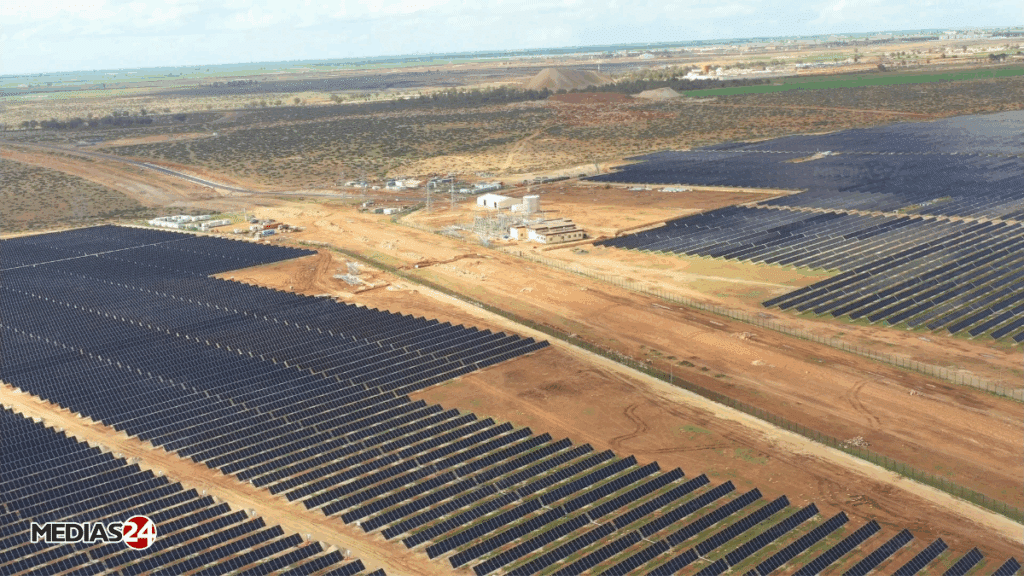
Three years after the adoption of Law 82-21 on energy self-production, the implementing decree defining the conditions and procedures for the establishment and operation of self-production facilities has been published in Official Bulletin No. 7489.
Its entry into force, expected within three months of publication—on June 9, 2026—will finally clarify the legal status of self-producers.
This long-awaited text comes against the backdrop of an energy crisis linked to the war in the Middle East, underscoring the urgent need for Morocco to reduce and optimize its heavy energy bill, 87.5% dependent on fossil fuels.
Highly anticipated, the decree removes both political and psychological barriers. It puts an end to the persistent belief that authorizing self-production would undermine, or even threaten, the competitiveness of the national electricity grid.
Domestic self-production (under 11 kW): a model tailored for self-consumption
Decree 2.25.100 paves the way for electrical self-consumption in Morocco, leveraging the country’s abundant renewable resources—especially solar—and recent technological advances. These include LFP batteries, which provide greater autonomy, as well as modern inverters that enable grid connection to optimize the balance between self-production and traditional consumption.
For installations with a capacity below 11 kW—typically covering household consumption or agricultural solar pumping—no fees are required. The decree establishes two distinct regimes:
- Declarative regime: a simple declaration to the Ministry of Energy Transition if the installation is not connected to the grid.
- Connection agreement regime: a formal connection request to the distribution network operator, namely the regional multiservice companies (SRM). These operators must ensure the availability of connection capacity on a first-come, first-served basis.
In this regard, the National Electricity Regulatory Authority (ANRE) has recently set the connection capacity at 691 MW, allocated across all distribution network operators.
Above 11 kW, technical requirements are imposed
For installations with a capacity between 11 kW and 5 MW—typically targeting buildings, businesses, supermarkets, or factories—a connection agreement to low- and medium-voltage networks is required.
Beyond the availability of connection capacity, this regime demands a comprehensive administrative and technical file. It must include the location and description of the installation, an environmental impact study, a three-year production forecast, and the electrical connection diagram of the entire self-production facility, including the equipment linking it to the self-consumption installation.
The decision to grant a connection lies with the SRM, subject to positive results from the technical study. Based on this assessment, the network operator determines the feasibility of integrating the installation and may, if necessary, propose an alternative solution to ensure safe integration.
Installations with a capacity exceeding 5 MW—intended for large industrial structures—require prior authorization for their construction and operation. This specific regime allows direct connection to medium- and high-voltage networks.
The authorization regime falls under the National Electricity and Drinking Water Office (ONEE), which, based on a technical opinion for each request, determines the feasibility of integrating the self-production installation into the grid. If technical constraints are identified, ONEE may propose an alternative solution to enable connection.
The decree also allows operational installations to request connection to the distribution or transmission network, depending on their capacity: a connection agreement for capacities between 1 kW and 5 MW, or authorization for capacities above 5 MW. Applicants must provide a report on annual electricity consumption over the past three years, or for the operating period if shorter.
ANRE finalizes regulatory framework for electricity self-production
Although the implementing decree was adopted by the Cabinet in October 2025, its effective deployment was delayed pending several complementary texts.
This regulatory void has now been filled by ANRE. Through four major decisions published between January 30 and February 20, 2026, the regulator has set the final numerical milestones for self-production:
- Surplus injection and resale: Self-producers may inject and sell up to 20% of their annual output to the public grid. ANRE has set the buy-back rate at $0.21/kWh during peak hours and $0.18/kWh off-peak.
- Medium-voltage network tariff: The use of the medium-voltage distribution network is fixed at $0.0607/kWh, giving investors clear visibility on connection and routing costs.
- Transmission network tariff: The tariff for using the national transmission network is set at $0.0685/kWh. This measure is crucial for industries lacking space or conditions for optimal renewable production on-site, allowing them to generate electricity at favorable locations and transport it to their facilities.
- Cap on connection capacity : To prevent infrastructure saturation, total available connection capacity has been capped at 3,886 MW, after deducting authorized projects in 2025. This capacity is distributed between solar (72%) and wind (28%).
How far can we really self-produce?
The resale of surplus energy—currently capped at 20%—is a major lever for making renewable installations profitable. The buy-back rates set by ANRE ($0.21/kWh during peak hours and $0.18/kWh off-peak) are comparable to the buy-back/network price ratio in France. Yet, industry stakeholders are still awaiting approval of a new decree that could promote self-production by revising the 20% resale cap.
Self-production represents a genuine philosophical shift, transforming the passive consumer into an active participant. The Australian model, where one-third of households generate their own electricity, demonstrates that a citizen-led energy revolution is possible.
However, the massive adoption of solar power raises a complex technical challenge for the national grid—the so-called duck curve. During daylight hours, high self-consumption sharply reduces overall demand, forcing conventional power plants to shut down, only to restart urgently at night when demand spikes.
This daily cycle significantly increases maintenance costs, requires greater flexibility, and threatens overall grid stability.
To encourage mass adoption, Morocco has limited connection capacities in line with its network capabilities, while anticipating a progressive expansion that should double by 2030. The challenge ahead will be to reconcile the promotion of self-production with efficient storage solutions to smooth out production peaks.
READ ALSO
Énergie renouvelable : l’ANRE lance le premier cadre tarifaire national pour l’excédent électrique
Autoproduction électrique : adoption d’un décret pour la mise en œuvre
L'autoproduction électrique au Maroc, une révolution au ralenti
Autoproduction électrique : le groupe OCP fait le grand pas à Ouled Fares (province de Khouribga)

à lire aussi
Article : Énergie : la Banque mondiale approuve 265 millions de dollars pour la STEP d’Ifahsa
Située près de Chefchaouen, l’infrastructure de 300 MW doit faciliter l’intégration du solaire et de l’éolien, tout en mobilisant environ un milliard de dollars d’investissements privés.
Article : Filière laitière : pour valoriser le lait local, Centrale Danone lance le procédé industriel “Milk-Co” à Fkih Ben Salah
Doté d’un investissement de 60,2 MDH, le projet permettra d’extraire du lait collecté au Maroc des composants utilisés dans la fabrication de yaourts, de fromages et de boissons protéinées.
Article : Sahara : à l’ONU, le Maroc met l’accent sur les garanties de mise en œuvre du plan d’autonomie
Lors d’un séminaire international à New York, Omar Hilale et plusieurs experts ont examiné les modèles de Rapa Nui, de la Polynésie française, des îles Åland et du Haut-Badakhchan, dans le contexte de la résolution 2797.

Article : Fekhar Law Firm certifié ISO 27001 pour la sécurité de l'information
Le cabinet d'avocats d'affaires fondé par Me Mohamed Fekhar vient d'obtenir la certification ISO/IEC 27001:2022, référence internationale en matière de management de la sécurité de l'information, à l'issue d'un processus engagé depuis dix-huit mois.

Article : Devises : les transferts des MRE franchissent 50 MMDH à fin mai 2026
Selon l’Office des changes, les envois de la diaspora ont augmenté de 8,8% en un an, avec un gain de 4.062 MDH par rapport à la même période de 2025.

Article : Tourisme : les recettes voyages progressent de 14,6% à fin mai 2026
À 53.762 MDH sur les cinq premiers mois de l’année, ce poste gagne 6.848 MDH en un an, tandis que le solde de la balance voyages atteint 39.985 MDH, selon l’Office des changes.