
The IAEA and OCP launch a strategic partnership based on nuclear technology for the benefit of soils and crops
Often overlooked, nuclear techniques in agriculture are emerging as a key lever to improve soil health and productivity. Partnering with Morocco’s OCP Group under the Atoms4Food initiative, the IAEA is launching a strategic alliance to optimize fertilizer use, enhance crop nutrition and reinforce food systems against climate stress.
As surprising as it may seem, the International Atomic Energy Agency (IAEA) has long played a little‑known role in agriculture and soil health through the peaceful use of nuclear techniques. In partnership with the FAO, the Agency applies these methods to better understand, protect and improve soils, crops and food security.
Within this framework, the IAEA and Morocco’s OCP Group, a global leader in plant nutrition solutions, have launched a five‑year strategic partnership to accelerate scientific innovation in support of sustainable agriculture and resilient food systems. The collaboration forms part of the Atoms4Food initiative, jointly led by the FAO and the IAEA.
Within this framework, the IAEA and Morocco’s OCP Group will establish a Coordinated Research Project (CRP) using nuclear and isotopic techniques to improve fertilizer efficiency, enhance crop nutrition and strengthen the sustainability of food systems.
This strategic partnership is designed to deliver tangible benefits to farmers on the ground, especially in regions facing significant food security challenges.
"This partnership with OCP represents a significant step forward in how strategic collaboration can amplify the impact of our Atoms4Food initiative," said IAEA Director General Rafael Mariano Grossi.
"The significant commitment of the OCP Group and its on-the-ground expertise, combined with the unique nuclear techniques know-how of the IAEA, will transform cutting-edge science into practical solutions for farmers. Together, we will generate the evidence and tools needed to use fertilizers more effectively, grow more nutritious products, and strengthen climate-resilient food systems, particularly in regions most in need."
The research will focus on optimizing the management of key macronutrients such as nitrogen and phosphorus, along with essential micronutrients including zinc, iron and selenium.
Using isotopic techniques, the project will generate robust data to support the “4R” principles of nutrient stewardship — right source, right rate, right time and right place — providing farmers with practical, evidence‑based recommendations.
"This collaboration represents a major strategic milestone for the OCP Group and a significant advancement in our mission to enhance global food security," said Meriem El Asraoui, Chief Global Affairs Officer.
"By combining the world-class expertise of the IAEA with the extensive experience of the OCP Group and its innovations in plant and soil nutrition, we will generate high-impact knowledge, support researchers and farmers in the field, and advance agricultural practices promoting better yields, improved nutrition, and sustainable environmental management in the long term."
This partnership will generate high‑quality data to inform public policies, drive fertilizer innovation and support the transition to climate‑positive, nature‑positive agriculture.
It will also strengthen scientific cooperation between Africa, the IAEA and international research networks, helping countries adopt best practices in nutrient management that improve soil health and boost agricultural yields at scale — directly contributing to global food security.
The IAEA is the world’s principal intergovernmental forum for scientific and technical cooperation in the peaceful use of nuclear technology. Established in 1957 as an autonomous organization under the United Nations, it implements programs that maximize the benefits of nuclear technologies for society while ensuring their strictly peaceful application.
Launched in 2023 by the IAEA and the Food and Agriculture Organization of the United Nations (FAO), the Atoms4Food initiative helps countries strengthen food security and address rising hunger.
It provides innovative, context‑specific solutions by leveraging nuclear techniques and other advanced technologies to boost agricultural and livestock productivity, improve natural resource management, reduce food losses, ensure food safety, enhance nutrition and adapt to the challenges of climate change.

à lire aussi

Article : Fortes chaleurs au Maroc : l’épisode se poursuit du lundi 6 au dimanche 12 juillet, jusqu’à 48 °C
Sous l’effet du chergui et de l’extension de la dépression thermique saharienne vers le centre et le nord du pays, la DGM annonce des journées très chaudes avec des nuits peu rafraîchissantes dans les provinces du Sud, le Sud-Est, les plaines intérieures, le Saïss, Oulmès et l’intérieur du Souss. Une baisse temporaire est attendue à partir de jeudi avant une remontée graduelle des températures au cours de la semaine prochaine.

Article : Importations : le taux de couverture à son plus bas niveau depuis 2018
Le Maroc importe des machines pour investir, de l’énergie pour fonctionner et des intrants pour produire. Ces achats-là sont difficiles à comprimer. Mais une autre catégorie avance plus vite, plus silencieusement : les biens déjà prêts à être consommés, des voitures de tourisme aux appareils électroniques. Leur progression depuis 2018 oblige à poser une question plus directe : le déficit commercial vient-il seulement de ce que le pays doit importer, ou aussi de ce qu’il ne fabrique pas encore assez ?
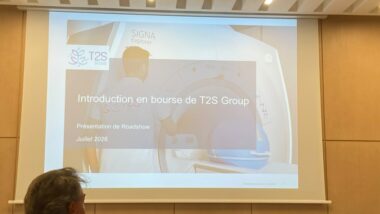
Article : Introduction en bourse de T2S : 1,1 MMDH, modèle économique, ambitions à 2030… ce qu’il faut retenir
T2S Group Holding inaugure la saison 2026 des introductions en bourse à Casablanca avec une opération plafonnée à 1,1 milliard de DH, dont 350 millions de DH d’argent frais pour le groupe et 750 MDH liés à la cession de titres existants. À 223 DH l’action, la medtech marocaine se présente aux investisseurs avec une valorisation de 4,86 MMDH et un plan de croissance qui vise 4,17 MMDH de chiffre d’affaires en 2030. Détails.

Article : Insécurité au Mali : les exportations marocaines vers l'Afrique de l'Ouest sous pression
Le Mali est l’un des grands pivots discrets du commerce routier marocain vers l’Afrique subsaharienne. C’est par ses routes que transitent des produits frais, du poisson, des légumes, des médicaments ou des équipements de bureau, avant de revenir parfois chargés de mangues, d’ananas ou de cacao. Mais la dégradation sécuritaire au-delà de Bamako oblige désormais les transporteurs à repenser leurs trajets, leurs coûts et leurs risques. Détails.

Article : Heure légale : le décret actant le retour au GMT publié au Bulletin officiel
Le texte fixe au dimanche 20 septembre 2026, à 2 heures du matin, le recul des horloges de 60 minutes. Il abroge le dispositif de 2018 qui avait instauré le GMT+1 permanent, avec exception pendant le mois de Ramadan.
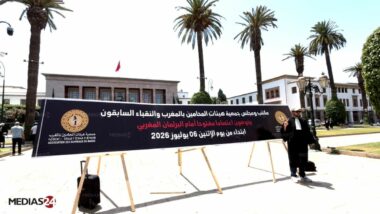
Article : Toujours en grève, les avocats organisent un sit-in ouvert devant le Parlement ce lundi 6 juillet
À l’appel de l’ABAM, bâtonniers, anciens bâtonniers et membres des conseils de l’ordre ont été conviés à Rabat pour maintenir la pression contre le projet de loi n° 66.23, adopté en deuxième lecture par la commission de la justice.