
Air Power: Morocco Ranks 4th in Africa, 37th Worldwide
In 2026, Morocco confirms its status as a regional driving force in air defense.
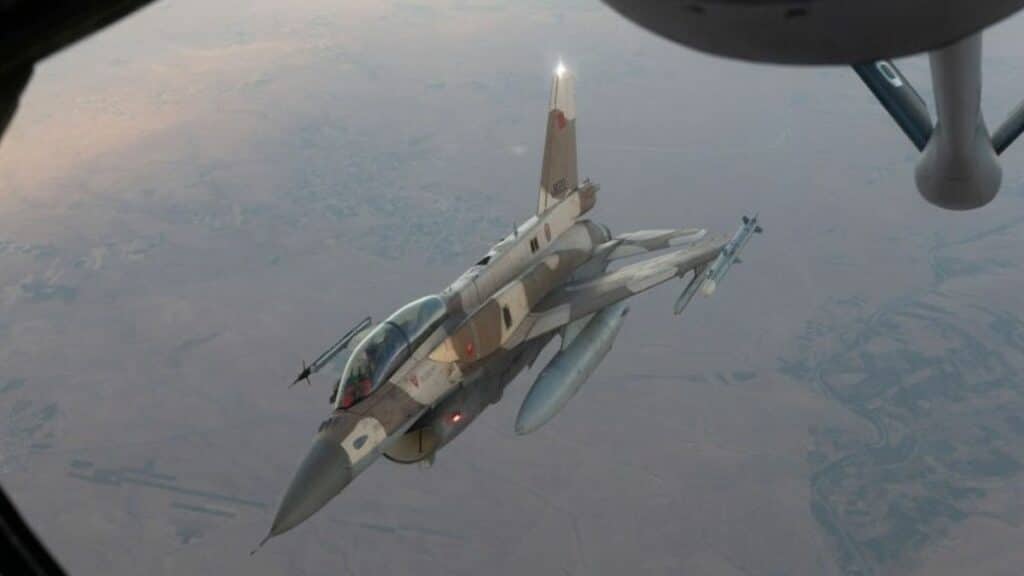
According to the latest Global Firepower report, Morocco’s Royal Air Forces (FRA) rank 37th worldwide and fourth in Africa, with a fleet of 271 aircraft. The positioning reflects not only numbers but a doctrine of modernization.
By prioritizing advanced technology and operational versatility, Morocco is turning its air arm into a tool of regional influence able to meet contemporary security challenges.
Arsenal Built on Technological Superiority
Morocco’s strength lies in the diversity and modernity of its aerial platforms, designed to cover the full spectrum of military missions.
The fleet is built around key assets such as F-16 Fighting Falcons for air superiority, C-130 Hercules transport aircraft for logistical mobility, and Eurocopter AS365 helicopters for intelligence and reconnaissance. This mix balances striking power, rapid deployment capability, and specialized surveillance.
Unlike some regional neighbors that emphasize mass and quantity, the Kingdom focuses on integrating advanced avionics systems and precision, ensuring maximum efficiency in operations.
Geography as a Driver of Air Strategy
The configuration of Morocco’s Royal Air Forces is shaped by the country’s geographical imperatives. With coastlines on both the Atlantic and the Mediterranean, and sensitive border areas in the Sahara, Morocco has built strong expertise in maritime surveillance and rapid airborne deployment.
Air patrols and Intelligence, Surveillance, Reconnaissance (ISR) platforms are central to controlling coastal approaches and deterrence.
This strategy enables the country to maintain a conventional defense posture while remaining prepared for counter-insurgency missions and regional crisis management.
Operational Excellence and Alliances
The development of Morocco’s air power also relies on strategic partnerships with the United States and Europe.
These collaborations provide access to state-of-the-art technologies and elite training programs. Beyond aircraft, Morocco invests heavily in maintenance infrastructure and advanced simulation to ensure constant operational readiness.
This ecosystem enables Moroccan pilots to achieve a high level of tactical flexibility, optimizing each unit of the 271-aircraft fleet for complex missions.
Africa’s Air Power: Quantity vs. Quality
On a continental scale, the 2026 ranking places Egypt at the top in Africa and ninth worldwide with 1,088 aircraft, followed by Algeria in 16th place globally with 620 aircraft, and Angola in third position in Africa with 278 units.
Morocco, with 271 aircraft, holds fourth place but surpasses regional powers such as South Africa, Nigeria, and Ethiopia.
The report highlights a key distinction between the two Maghreb neighbors: while Algeria emphasizes numerical superiority and a fleet backed by a high defense budget, Morocco prioritizes technological sophistication.
This qualitative approach allows the Kingdom to exert a disproportionately large regional influence compared to the raw size of its fleet.
Horizon 2027: Building a Connected Multi-Domain Force
The future of Morocco’s aviation is marked by technological advancement. From 2027, the country is set to receive 25 new F-16 Block 72 from the United States, significantly boosting its strike capability.
At the same time, the growing integration of drones and connected combat systems signals a shift towards a multi-domain force.
By combining these new fighters with an advanced surveillance architecture, Morocco reinforces its role as a pivotal security actor and an indispensable aerospace power in North Africa and the Mediterranean basin.

à lire aussi

Article : Coupe du monde 2026. Pourquoi l’équipe du Maroc était-elle méconnaissable face à la France ?
Le rêve des Lions de l’Atlas s’est brisé net face à une redoutable équipe de France, le jeudi 9 juillet à Boston, en quart de finale de la Coupe du monde 2026. Le manque de courses en profondeur et de poids dans le demi-terrain offensif n’a pas aidé les Lions de l’Atlas à se sublimer dans une rencontre où quasiment tous les indicateurs statistiques étaient en deçà de leurs standards.
Article : Bourse de Casablanca : le MASI gagne 0,37%
La Bourse de Casablanca a clôturé la séance du 10 juillet en hausse. Le MASI a progressé de 0,37%, dans un volume de 123,03 MDH.

Article : Houda Skali rejoint le directoire de Risma
Sur proposition du directoire, le Conseil de surveillance de Risma, réuni le 9 juillet 2026, a décidé de nommer Houda Skali, directrice des Opérations, en qualité de membre du directoire.
Article : Sécheresse, crises et pénurie de main-d'œuvre : l'étude d'évaluation de Génération Green officiellement lancée
Cinq années de sécheresse, la hausse du coût des intrants et une pénurie croissante de main-d’œuvre ont profondément changé le cadre dans lequel Génération Green avait été conçue. Lancée en 2020, la stratégie agricole va faire l’objet d’un bilan à mi-parcours, avec l’objectif d’identifier ses faiblesses et de redéfinir les priorités pour les années à venir. Ce que cette révision pourrait changer pour le secteur.

Article : Trottinettes électriques : casque, écouteurs, âge minimum… ce qui va changer
Face à la multiplication des trottinettes électriques et autres nouveaux engins de déplacement sur les routes marocaines, le Conseil de gouvernement a adopté un projet de décret modifiant le Code de la route. Circulation hors agglomération, transport des enfants, stationnement, véhicules immobilisés… Détails.

Article : Les prévisions météo pour le samedi 11 juillet
Voici les prévisions établies par la Direction générale de la météorologie pour le samedi 11 juillet 2026 : - Temps assez chaud sur le Sud-Est, […]