
Medical Cannabis: 145 million dirhams for Morocco’s First Pharmaceutical Unit in Chefchaouen
A national first. In Chefchaouen, a pharmaceutical unit fully dedicated to the valorization of legal cannabis, compliant with international standards, is currently under development. Led by the company "Cannablanca," this 145 million dirhams project has been approved by the National Investment Commission.
Almost five years after cannabis was legalized for medical, pharmaceutical, and industrial purposes, Morocco is taking a major step in structuring the sector.
At the heart of the Rif, Chefchaouen is set to host Morocco’s first pharmaceutical unit entirely devoted to legal cannabis. Driven by the family company “Cannablanca” and backed by the National Investment Commission, this 145-million-dirham project represents a milestone in modernizing national production and, above all, in enhancing the traditional Beldya strain.
With an investment of 145 million dirhams, the project aims to position Morocco within the global pharmaceutical cannabis value chain. It complies with international GMP (Good Manufacturing Practices) standards, ensuring product quality, safety, and traceability, particularly in the pharmaceutical sector.
The first Moroccan pharmaceutical unit fully dedicated to the valorization of cannabis
As a reminder, Morocco legalized cannabis in 2021 for medical, pharmaceutical, and industrial purposes through a dahir promulgating Law 13-21, which regulates the cultivation, processing, and export of legal cannabis. The reform pursued several objectives: formalizing a historically informal activity, improving farmers’ incomes, creating local added value, and integrating the Kingdom into a rapidly growing global market.
Since then, authorities have granted multiple authorizations to agricultural cooperatives, processors, and industrial operators. But until now, most projects remained limited to raw material production. The Cannablanca unit fills a strategic gap in the pharmaceutical sector.
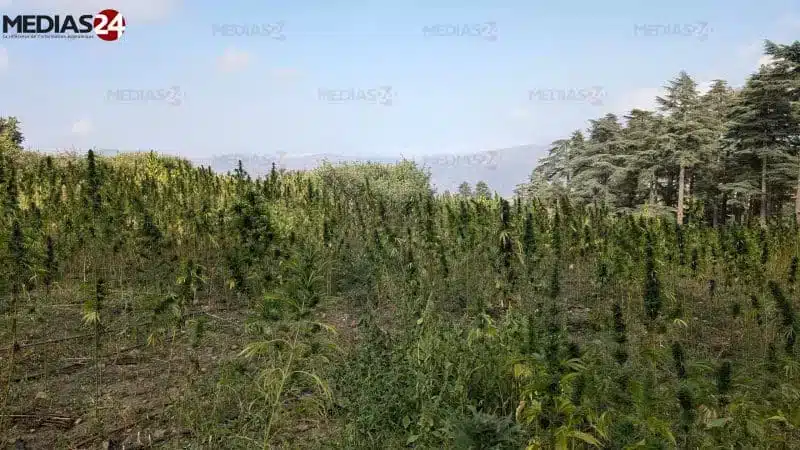
"Located on about 2 hectares in the territorial commune of Laghdir, in the province of Chefchaouen, the factory is almost integrated into the surrounding cannabis fields", we are told. "It is currently about 80% complete and is expected to begin operating gradually, in stages, until reaching full capacity by the end of 2026".
According to our information, this is the first pharmaceutical unit in Morocco fully dedicated to legal cannabis, designed as a pharmaceutical laboratory that meets international requirements.
"Cannablanca has also applied for a pharmaceutical license from the competent authorities," our sources add. "If granted, the authorization will allow the unit to produce Moroccan medicines based on cannabis, in addition to exporting raw material, particularly for pharmaceutical use."
200 to 300 direct and indirect jobs at stake
The company behind the project aims to upgrade the local Beldya variety to international pharmaceutical standards, while developing CBD production for pharmaceutical use.
“The unit will include two production lines and will operate through contracts with agricultural cooperatives, both indoors and outdoors,” our sources note.
“The factory’s total production capacity cannot be determined until operations effectively begin, as it will directly depend on the volumes supplied by partner cooperatives,” they emphasize.
Beyond its industrial role, Cannablanca seeks to play a central part in structuring the regional ecosystem. "The unit is expected to generate between 200 and 300 direct and indirect jobs, while serving the entire Chefchaouen region," our sources say.
"Cannablanca’s objective is strategic: to export products that comply with international pharmaceutical standards, while laying the foundations for a Moroccan medical cannabis pharmaceutical industry."
A pilot phase launched before the factory's commissioning
"While the export of raw material is a first step, Cannablanca also aims to develop finished medical products 'made in Morocco'", according to our sources.
They add: "Ultimately, the unit will also provide industrial services to sector operators, enabling them to process their crops — extraction, processing, and more — in a facility compliant with pharmaceutical GMP standards, a prerequisite for accessing international markets."
The project has already secured key authorizations, including environmental clearance, and has been approved by the National Investment Commission, underscoring its strategic importance. Financing is mainly provided by the investors themselves, without relying on public subsidies.
An experimental phase was launched last year with two cooperatives, covering nearly 40 hectares and involving 60 to 70 farmers. This pilot phase was designed to test agricultural and industrial processes, as the factory was not yet operational.

à lire aussi
Article : Sanlam Maroc : l’actionnaire de contrôle monte à 88,63%
L’augmentation de capital réalisée dans le cadre de la fusion-absorption d’Allianz Maroc a entraîné plusieurs franchissements de seuil dans le capital de Sanlam Maroc. Sanlam Emerging Markets Ireland Limited détient désormais 15,77% directement et 72,86% par l’intermédiaire de Sanlam Pan Africa Maroc et Allianz Africa Financial Services, les trois entités agissant de concert.
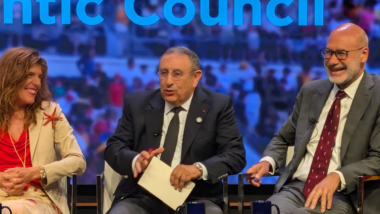
Article : Youssef Amrani : “On est prêts à faire de 2030 un succès historique”
À Washington, l’ambassadeur du Maroc aux États-Unis a présenté la Coupe du monde comme un levier de développement national. Le Royaume en attend une accélération des investissements dans les infrastructures et les transports, avec des retombées directes pour la jeunesse.
Article : La CDG vend ses dernières actions directes de CIH Bank
Réalisée le 14 juillet sur le marché de blocs, l’opération a porté sur 1.815.738 titres pour un montant de 642,77 MDH.
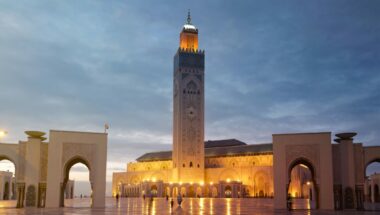
Article : Incertitude sur la date de Aïd Al Mawlid au Maroc
Les calculs astronomiques privilégient un début de Rabie Al Awal le vendredi 14 août et une célébration de Aïd Al Mawlid le mardi 25 août, correspondant au 12 Rabie Al Awal 1448, mais l’observation du croissant lunaire, prévue le jeudi 13 août, restera déterminante.
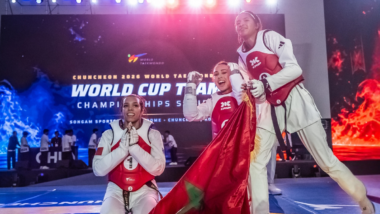
Article : Taekwondo : le Maroc sacré champion du monde féminin par équipes
Meriame Khoulal, Fatima-Zahra Ennams, Nada Laaraj et Amina Dehhaoui ont décroché l’or à Chuncheon, en République de Corée, après avoir éliminé le Kazakhstan et la Thaïlande, puis battu la Russie en finale.
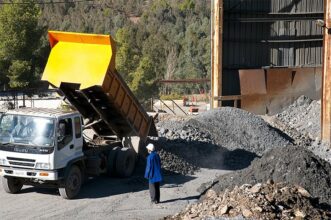
Article : CMT suspendue en Bourse après le dépôt d’une offre publique
La décision, prise à compter du 17 juillet 2026 à la demande de l’Autorité marocaine du marché des capitaux, vise à préserver l’égalité d’accès à l’information entre les investisseurs.