
Why AFCON 2025’s success provoked tensions
Editorial. As the Africa Cup of Nations reaches its final this Sunday, January 18, the first lessons of the tournament are already taking shape.
Algeria, Egypt, South Africa, Senegal (*) — four of the tournament’s heavyweights — have, each in their own way, questioned the quality of Morocco’s organization of the 2025 Africa Cup of Nations.
In the case of the neighboring country, accusations went so far as to allege referee manipulation to eliminate Algeria.
These fallacious, often aggressive and insulting accusations are more than a passing sports controversy. It is a phenomenon — political, symbolic and magnified by the media on a broad scale.
Morocco is more than a host nation. It sets the example, takes the initiative, becomes a model, wins, sets standards and establishes the norm — in infrastructure, organization, image, strategy and in the Africa Cup of Nations itself.
Morocco is becoming a sporting power. Its World Cup semi-final run in Qatar was no coincidence. The country is U20 world champion and Arab champion, and in 2025 it added new international football titles to its record.
In African football, leadership is still uncommon. When it becomes visible after continuous work since 2008, it is sometimes seen as a threat rather than a collective driving force. Morocco’s success, after all, goes beyond the sporting realm.
In football competitions, refereeing is often the scapegoat for failures. Blaming the referee is a classic. But here, it is Morocco that is being questioned. Morocco as a political and sporting actor, both regionally and internationally.
This mechanism allows a country (Algeria) as well as the Egyptian and Senegalese coaches to avoid criticism and self-criticism. It is a form of sports populism. Elimination fosters a victim mentality. The Senegal coach rode this wave to spoil the celebration and preemptively justify a possible defeat.

Morocco's success shatters an old myth and creates cognitive dissonance.
For two generations, Algeria’s ruling system has told Algerians that their country is the leader of the Third World and of Africa. That it is an international power. That Morocco is merely a small country, resorting to Photoshop and AI to showcase fake stadiums and achievements.
Similarly, until Qatar 2022, African football was regarded as lagging behind, despite occasional sparks.
According to this narrative, it was portrayed as having average infrastructure, fragile organization, and successes driven only by individual talent.
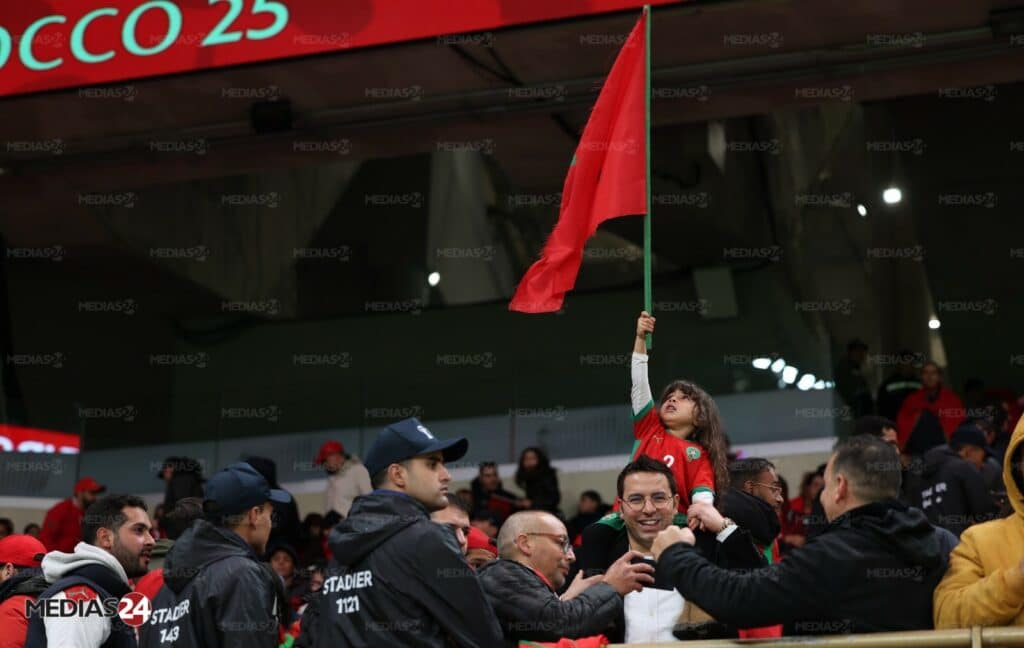
This AFCON highlights world-class stadiums, seamless logistics, premium broadcasting, economic and touristic influx, and a joyful, festive, secure atmosphere.
When reality contradicts imagination, it creates what is called cognitive dissonance. The reaction is not always rational. It becomes emotional.
The success of this historic AFCON, the prospect of a Moroccan triumph in the final, confirms Moroccan leadership in sports and soft power. Triumph and glory disturb. What is truly targeted is Morocco’s recognition.
The African hierarchy continues to reshape itself, in football and beyond. The game is transitioning towards a culture of anticipation, long-term strategies, world-class infrastructure, and a genuine culture of performance. It is happening in Morocco.
This is why the sporting and organizational success of the AFCON — and of Morocco — generates so much tension. There are those who embrace the celebration and draw lessons to improve, and those who want to spoil the party.
Football today is changing the world in a positive way. It is the epitome of soft power. Morocco's successes enhance its image, attract tourists, increase foreign investors' confidence, and boost institutional credibility.
Morocco’s organizational and operational capacity — delivered in record time without sacrificing quality — the kingdom’s strong endorsement for the 2030 World Cup; these are two undeniable conclusions of this AFCON 2025. The Moroccan brand has never shone so brightly on the global stage. As part of the 2030 World Cup, Morocco is first and foremost the leader of the entire continent and as such, is entitled to host the final at the future Hassan II Stadium.
This is why criticism should be regarded as mere noise, the collateral effect of success. Controversies will fade. The images, the stadiums, the organization, and the shared joy will remain.
-----
Note: This article was written and published before the AFCON final. The regrettable events that marred the final only serve to confirm our analysis.

à lire aussi

Article : Moment de grâce avec Dee Dee Bridgewater, une des dernières héritières des grandes voix du jazz
Quelques heures avant de monter sur la scène du Théâtre Royal de Rabat dans le cadre du Festival Mawazine, Dee Bridgewater a accordé une interview à Medias24. De son attachement au Maroc à ses souvenirs de Sonny Rollins, en passant par son amour du scat hérité d'Ella Fitzgerald, et sa conviction que le jazz est une musique éternelle, cette véritable légende américaine revient sur plus d'un demi-siècle d'une carrière jalonnée de rencontres exceptionnelles.
Article : Mondial 2030 : capacités renforcées, toitures, nouveaux aménagements... Ce que prévoit la 2e phase de transformation des stades
Après la réalisation des études techniques nécessaires, l'Agence nationale des équipements publics (ANEP) a lancé les premiers marchés relatifs à l'agrandissement et au réaménagement des stades d'Agadir et de Marrakech, en prévision du Mondial 2030. Celui de Fès ne devrait pas tarder. Round Up.
Article : Le projet d'acquisition de Safettras par TGCC soumis au Conseil de la concurrence
TGCC a notifié au Conseil de la concurrence son projet d'acquisition de 51% du capital de la Société africaine des études et des travaux spéciaux (Safettras), spécialiste des fondations profondes et des travaux géotechniques.
Article : Énergies renouvelables : un projet de décret ouvre la voie à leur intégration en moyenne et basse tension
Encore en consultation publique, un projet de décret entend accélérer l'intégration des énergies renouvelables au réseau électrique de moyenne et basse tension.
Article : Bourse de Casablanca. Le MASI termine en baisse ce 26 juin
La Bourse de Casablanca a clôturé la séance du 26 juin 2026 en légère baisse. Le MASI recule de 0,15% à 18.022,08 points, tandis que Banque Centrale Populaire domine les échanges avec 43,04 MDH.

Article : La météo du samedi 27 juin
Voici les prévisions pour le samedi 27 juin, établies par la Direction générale de la météorologie : - Temps chaud sur l’Oriental, la vallée de […]