
The Monetization of Garbage
BEREA, KENTUCKY – As a child growing up in Lagos, Nigeria, in the late 1990s, I remember women roaming through my community and chanting in Yoruba, “onigo de o! Anra bata rubber ati ayo t’on jo.” This translates as “The bottle peddler is here! We buy rubber sandals and leaky (aluminum) pots.” Some families would separate their waste, because they could give some of it to these women for cash.
There are far fewer of these peddlers nowadays, perhaps because bottling companies are no longer recycling the bottles that the women gather. But a large-scale effort along these lines to monetize waste in Lagos, if properly coordinated and funded, could potentially have a huge impact on the city’s garbage problem. And what works in Lagos could hold lessons for many other cities – and not only in the developing world.
In Lagos, action is urgently needed. The city has a population of about 22 million and, as the World Bank has highlighted, is heavily polluted. Especially in poorer areas, residents who can’t afford to pay for waste collection come out in the dead of night to dump their garbage on the streets or in the water. As a result, the city’s slums are littered with paper, household waste, and plastics.
By outsourcing most of the actual waste collection and management to some 375 private companies, the Lagos Waste Management Authority, an arm of the Lagos State government, has helped to reduce waste significantly. But much more can, and must, be done. Unless people are given incentives to monetize their garbage and minimize the amount that reaches landfills, the pollution problem will continue to fester. Three options in particular look promising.
For starters, Lagos could introduce a green-exchange program like the one established in the city of Curitiba in Brazil. There, residents bring their waste to designated local centers in exchange for bus tickets or food. Many workers in Lagos are already switching from cars to state-run commuter buses because they cannot afford the cost of fuel. If poorer people in particular could receive bus tickets for their waste, life would be easier for everyone. There would be less garbage on the streets, roads would be less clogged, and people wouldn’t need to wait for waste trucks to get rid of their rubbish. In addition, households would be more likely to separate waste if the city gave food stamps or fruit to those that recycled a certain amount of metal, clean plastic, or oil waste, for example.
Second, Lagos could reduce its plastic waste by working more closely with bottling companies and other manufacturers. This could involve public-private partnerships that require each company to operate a recycling center where consumers can bring used plastics. Citizens will feel motivated to recycle their plastic waste at centers bearing recognizable brand names, especially if a reward program is involved. No bottling companies currently have recycle-for-reward programs in the Makoko community of Lagos, where I grew up. Introducing such schemes would certainly help to cut the amount of plastic waste that is generated or discarded.
Lastly, campaigns to raise environmental awareness would encourage better waste management. By showcasing ordinary citizens being mindful of waste and their environment in everyday life, such efforts can inspire others to do the same.
My current work in Berea, Kentucky, at The Greenie Project, a non-profit student initiative which I started, shows how environmental awareness can spread. Our film “The Carlbergs” chronicles a local family that hosts huge contra-dance events in their home in a sustainable way – by using silverware and ceramic plates instead of disposable plates and cutlery, and by recycling. The film has inspired other groups and small businesses in the community, such as Berea Coffee and Tea, to be more sustainable. Similarly creative and locally relevant approaches would work well almost anywhere.
That includes Lagos, where the waste problem hits the poor particularly hard. To address it, we should create the right incentives, as the bottle peddlers in my part of the city did two decades ago. Monetizing waste will encourage poorer communities to participate, and awareness campaigns can help to show just how easy it is to be green. The result will be a cleaner, more livable city that serves as an example for others to follow.
à lire aussi

Article : La Princesse Lalla Asmaa lance à Rabat le programme “La prothèse auditive pour tous”
La Princesse Lalla Asmaa, présidente de la Fondation Lalla Asmaa, a présidé mardi 16 juin à Rabat la première Journée des patients souffrant de surdité. L’événement a été marqué par le lancement du programme national "La prothèse auditive pour tous". Un programme inédit destiné à rendre l’appareillage auditif gratuit et accessible aux Marocains les plus démunis.

Article : André Azoulay reçoit le prix Boutros Boutros-Ghali de la Paix
Le Forum de Crans Montana salue l’engagement de longue date du conseiller du Roi Mohammed VI en faveur du dialogue interculturel, de la mémoire judéo-marocaine et du rayonnement d’Essaouira.

Article : Fruits rouges : l’émirati Elite Agro porte son pari marocain à 1,3 MMDH
Avec une septième ferme de 200 hectares inaugurée à Kénitra, le groupe place le Royaume au cœur de sa production de myrtilles et de framboises.

Article : Maroc-Écosse : l'Ouzbek Tantashev au sifflet, deux ans après la demi-finale olympique mouvementée contre l’Espagne
Désigné par la FIFA pour la rencontre du 19 juin au Boston Stadium, celui qui est arbitre international depuis 2013 avait quitté le terrain dès la 15e minute aux Jeux olympiques de Paris après une collision avec Marc Pubill.
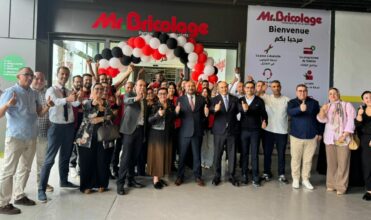
Article : Mr. Bricolage vise 45 magasins au Maroc d'ici 2032 et un plan d'investissement de 700 MDH
Mr. Bricolage Maroc prévoit le déploiement de 45 magasins d’ici 2032, au rythme d’une ouverture toutes les huit semaines, dans le cadre d’un plan porté par un investissement de 700 millions de DH.

Article : Loi 16.22 sur les adouls : l’Ordre réagit à la décision de la Cour constitutionnelle
L’invalidation partielle du texte par la Cour constitutionnelle est accueillie avec soulagement par une partie de la profession, qui y voit la confirmation de réserves exprimées depuis plusieurs mois. Mais pour Maître Driss Trali, membre du bureau exécutif de l’Ordre national, la réforme reste incomplète tant que le dépôt des fonds, l’officialité pleine de l’acte et l’indépendance de l’instance professionnelle ne sont pas consacrés par la loi.