

Globalizing the Fight Against the Pandemic
SAN JOSÉ – The COVID-19 pandemic began less than six months ago, but we have already learned a great deal about the disease. Scientists around the world are looking at new and improved methods of detecting the novel coronavirus as early as possible. And in addition to these lines of inquiry, there are already eight potential vaccines under clinical evaluation, and more than 100 vaccine candidates in preclinical stages.
All of this represents extraordinary progress that we should celebrate. But there is reason to worry that not everyone will benefit from these breakthroughs. Developing tests, treatments, and vaccines for the coronavirus is only half the battle. The other half – what might be the hardest part – is to manufacture, distribute, and administer enough of these life-saving tools to benefit everyone, everywhere.
Early on in the pandemic, Costa Rica and the World Health Organization began discussing the creation of a one-stop shop for data, knowledge, and intellectual property relating to diagnostics, medicines, vaccines, and any other tools that may work against COVID-19. As of May 29, this visionary idea has become a reality with the launch of the COVID-19 Technology Access Pool, which will ensure that progress leaves no one behind.
When effectively managed, open and global research produces results much faster than individual efforts can. The WHO’s own “Solidarity Trial” to find a COVID-19 treatment follows the same principle and is already collecting randomized data from 17 countries, with more than 100 others either getting involved or inquiring about joining. The WHO is also supporting 60 countries on related issues such as regulation, ethics, and the procurement of trial drugs, in recognition of the fact that the more countries participate, the sooner we will get results.
An open framework built around voluntarily shared information is not just good for science. It also will maximize the number of companies involved in producing in-demand technologies, thereby scaling up worldwide availability, lowering costs, and helping secure universal access. Equitable access is a key ingredient of the antidote to COVID-19. Vaccines or treatments – no matter how effective – will fail to end the pandemic unless they benefit everyone. Until everyone is protected, the world will remain at risk.
We applaud the United Kingdom for its commitment to make vaccines available to developing countries at the lowest possible cost, as part of its £84 million ($103 million) funding pledge for research at the University of Oxford and Imperial College London. We also agree with French President Emmanuel Macron, who has made a compelling case for why every COVID-19 treatment or vaccine produced in the Global North should be made accessible immediately in the Global South, prioritizing synchronization over sequencing.
When a COVID-19 vaccine does become available, it should be treated as a global public good. To that end, we are both calling on all governments to ensure that the outcomes of publicly funded COVID-19 research are affordable, available, and accessible to everyone around the world.
We also invite the pharmaceutical industry and relevant research institutions to share knowledge, data, and viable discoveries through the new access pool, so that companies large and small can join the global collective effort. Bringing more companies into the mix will expand the pool of knowledge and diversify how it is applied, increasing the odds of effective solutions being developed and delivered to more people in more places, and in less time.
Overcoming COVID-19 will require unprecedented breakthroughs in technological innovation and human collaboration. Fortunately, many countries are already coming together to realize a shared vision of health for all.
For example, both the United Nations General Assembly and the World Health Assembly have passed resolutions in support of universal, timely, and equitable access to health technologies. Private and philanthropic health leaders have been joined by 11 heads of state to support the launch of the WHO’s Access to COVID-19 Tools (ACT) Accelerator, which also places special emphasis on access. And funders from around the world are now preparing their pledges for the upcoming Global Vaccine Summit on June 4.
With the launch of the COVID-19 Technology Access Pool, we hope to complement years of work by the Medicines Patent Pool in negotiating for voluntary licenses on pharmaceuticals. This work has helped to deliver drugs for HIV, tuberculosis, and hepatitis C around the world.
But even more global solidarity is required to meet the current crisis. All pharmaceutical and technological innovators should ensure that their discoveries become beacons of hope for everyone, not just for the wealthiest individuals and countries. Combating COVID-19 calls for a global arsenal, and every tool that proves effective must be included.
© Project Syndicate 1995–2020
à lire aussi
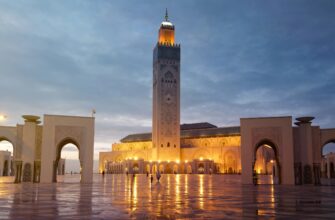
Article : Le Nouvel an de l'hégire (1er Moharram) sera célébré ce mercredi 17 juin au Maroc
Le 1er Moharram de la nouvelle année de l’Hégire 1448 correspondra au mercredi 17 juin 2026, a annoncé le ministère des Habous et des affaires islamiques.
Article : Adouls : la Cour constitutionnelle valide l’essentiel de la réforme, mais écarte plusieurs dispositions
Saisie par 93 députés avant la promulgation du texte, la Cour a déclaré non conformes des articles touchant aux incompatibilités professionnelles, aux personnes en situation de handicap, au témoignage collectif dit “lafif” et à l’organisation des instances représentatives. Le texte devra donc être corrigé sur ces points, sans remettre en cause le cœur de la nouvelle loi 16.22.
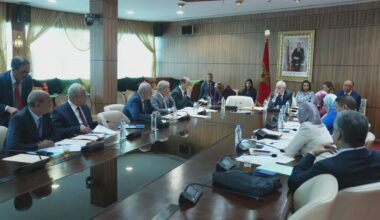
Article : En commission, les conseillers votent la nationalisation de la Samir et le plafonnement des hydrocarbures
Deux propositions de loi portant sur les hydrocarbures et la Samir ont été récemment adoptées en commission à la Chambre des conseillers. Un vote "surprise" rendu possible par un rapport de forces numérique défavorable à la majorité, lors d’une séance où l’opposition était majoritaire en nombre. Si ces textes ont franchi l’étape de la commission, leurs promoteurs sont conscients qu’ils ont peu de chances d’être adoptés en plénière.

Article : Retail : la guerre silencieuse pour conquérir le panier des Marocains
Pendant longtemps, les courses du quotidien se sont surtout jouées entre l’épicier du quartier, le grossiste et quelques grandes surfaces. Ce modèle commence à se fissurer. Entre fusion capitalistique, rachats d’enseignes, master-franchises, centrales d’achat, logistique commune et formats de proximité, les grands opérateurs installent peu à peu des réseaux capables d’accompagner le consommateur du café du matin aux achats du week-end. Non sans bousculer les équilibres.
Article : Crédit du Maroc : ce que cache l’augmentation de capital à 699 MDH
Depuis son passage sous le contrôle de Holmarcom, Crédit du Maroc a changé de rythme. La banque affiche des bénéfices en hausse, prépare son plan CDM Boost 2028, et propose désormais à ses actionnaires de suivre le mouvement via une opération ouverte du 26 juin au 16 juillet. Derrière le prix fixé à 938 DH par action, le marché devra surtout juger si cette nouvelle étape confirme une trajectoire ou ouvre un pari plus large. Décryptage.
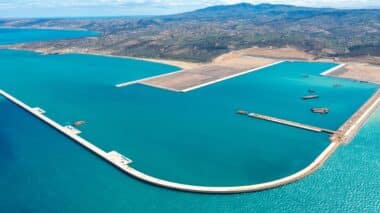
Article : Nador West Med : derrière le port, le pari industriel de l’Oriental
ROUND UP. Prévu pour entrer en service fin 2026, Nador West Med se construit déjà au-delà de ses quais : routes dédoublées, future autoroute vers Guercif, projets chinois dans l’éolien, les pneus et les alliages, ambition énergétique autour du GNL et de l’hydrogène vert. L’enjeu est désormais de transformer cette infrastructure en véritable moteur économique régional.