
Why African Cultural Restitution Matters
Until very recently, European cultural institutions preferred to act as if colonialism had not rested on the violent disavowal of African art, music, and architecture. But that is finally starting to change, owing not least to the efforts of young Africans.
NEW YORK – French Prime Minister Édouard Philippe recently presented an antique saber to Senegalese President Macky Sall at the presidential palace in Dakar. But it was not a gift. The saber was coming home, more than a century after it had been stolen.
The repatriation of an item with deep historical, spiritual, and cultural significance might seem like a mere gesture of colonial redress. But this ceremony was different, and it was about much more than a single physical object. In fact, it was a watershed moment in the West’s recognition of the cultural damage inflicted by colonialism.
The saber in question belonged to El Hajj Omar Tall, founder of the Toucouleur Empire, which once extended from present-day Senegal into Mali and Guinea. Tall was a respected religious leader and anti-colonial resistance fighter. His weapon, along with tens of thousands of other pieces of looted African heritage, had been in French hands since the 1890s. Exhibited in French museums, the saber ceased to symbolize the military prowess of a once-powerful dynasty, and instead told the tale of an African empire’s decimation, thereby legitimizing the racism and prejudice that underpinned the colonial period.
Tall’s family had been campaigning for the saber’s return since 1944, and they finally won their fight last month. Descendants traveled to Dakar from towns in Guinea, Mali, and Senegal to witness its homecoming. The saber will remain in Senegal for five years while the French parliament determines whether it – and other objects – will be permanently restituted.
This moment would have been unimaginable just a few years ago. European governments, ministries of culture, museums, and universities have long refused to recognize the immorality of the circumstances in which Africa’s cultural patrimony was removed from the continent. The handover of the saber was thus highly symbolic, auguring a shift in power dynamics and a renewed respect for Africa’s vibrant history. It also attests to the persistence of Africans – young and old, both on the continent and in the diaspora – in mobilizing to demand that leaders of former colonial powers right historical wrongs.
Colonialism rested on the disavowal of African art, music, and architecture. Brutal leaders such as Ian Smith, the prime minister of Rhodesia (now Zimbabwe) in the 1960s and 1970s, legitimized horrific abuse and injustices by undermining the culture of African people, thereby erasing their humanity.
For decades, the Open Society Foundations have supported those at the front lines of societal transformation. We recognize the power of art and culture to call into question structural inequalities, challenge prejudice, and foster the imagination of a new generation of leaders. Our cultural heritage forms the bedrock of the stories that we share to make sense of our place in history – and in the world. And at its core, the creation of cultural artifacts is fundamentally a manifestation of human hop
Recognizing this, the Open Society Foundations are launching a new $15 million initiative to strengthen efforts to ensure the restitution and re-appropriation of artifacts looted from the African continent. Over the next four years, we will be supporting citizens, artists, educators, indigenous communities, civil-society organizations, museums, universities, and other institutions working to return Africa’s heritage to its rightful home, and to nurture in future generations of Africans a sense of ownership of their history, culture, and identity.
Africa’s young people, in particular, have been demanding control over their own destinies, recently ushering in sweeping change in Ethiopia and Sudan. They recognize the importance of their cultural heritage, and have been campaigning for the return of African artifacts. Having realized that young people are a critical force on a continent where the population is expected to grow by more than one billion, to 2.5 billion, by 2050, many former colonial powers have begun to listen.
In a 2017 speech delivered to a full auditorium at a university in Burkina Faso, French President Emmanuel Macron pledged to make the return of African artifacts a priority. “African cultural heritage,” he argued, “can no longer be held captive in European museums.” And since then, the groundbreaking Sarr-Savoy Report, commissioned by the French government, has launched a global conversation about the return of items looted from Africa. The report’s authors, French art historian Bénédicte Savoy and Senegalese writer Felwine Sarr, recommended the immediate, unconditional return of any cultural objects gained through theft, plunder, pillage, despoiling, or unequal exchange during colonial times.
Since the report was released in November 2018, the global movement for art restitution has strengthened considerably. Official claims have been filed for the restitution of historical artifacts and human remains to Ethiopia, Senegal, Benin, and Nigeria. But a lot of work needs to be done to turn hopes of cultural restitution into reality.
The number of artifacts missing from Africa is staggering. The Royal Museum for Central Africa in Belgium currently holds 180,000 pieces of Sub-Saharan African heritage. The British Museum in London and the Musée du Quai Branly in Paris each hold about 70,000 African historical artifacts. This is in stark contrast to the size of the holdings of museums in Africa. Alain Godonou, a historia and curator from Benin, estimates that the inventories of most national museums in Africa do not surpass 3,000 objects. The Open Society Foundations, working with our African partners and others around the world, are working to change that.
Restitution is about more than confronting the violent legacy of colonialism – a legacy that continues to affect power dynamics in Africa and around the world. It is about supporting the work that young Africans are doing to transform the dated, racist narratives about their diverse cultural heritage and rich history. It is about giving current generations the means to shape a better future for themselves. It is, at its core, about restituting agency to a continent defining its path forward.
Copyright: Project Syndicate, 2019
à lire aussi
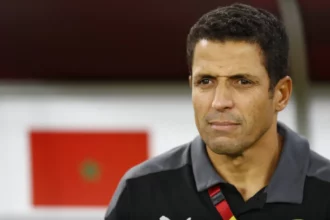
Article : Football : Al Ahly mise sur Houcine Ammouta pour relancer un cycle sportif fragilisé
Deux ans de contrat, une saison sans Ligue des champions africaine à digérer et un vestiaire à reprendre en main : le technicien marocain arrive au Caire avec un CV continental solide et une qualité qui pèse dans le choix du club égyptien, à savoir sa capacité à parler directement aux joueurs.
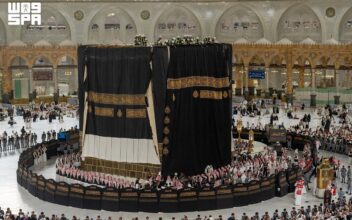
Article : En images, la Kaaba revêt sa nouvelle Kiswa
Comme chaque année, la couverture sacrée de la Kaaba, appelée Kiswa, est remplacée lors d'une cérémonie solennelle.
Article : L’Académie du Royaume consacre une journée d’étude à la “langue de l’autre”
Le 19 juin, l’Instance supérieure de traduction réunira notamment Abdelfattah Kilito, Abdessalam Benabdelali et plusieurs spécialistes pour interroger ce que le passage d’un idiome à un autre révèle de l’identité, de l’inconscient et de l’écriture.

Article : BTP : après sa victoire en cassation, Sintram tente de suspendre sa liquidation
Renvoyée devant la cour d’appel de commerce, l’affaire Sintram connaît un nouvel épisode judiciaire à Casablanca. L’entreprise de BTP veut obtenir un répit avant le réexamen de son dossier, mais ses créanciers contestent déjà la manœuvre. Détails.
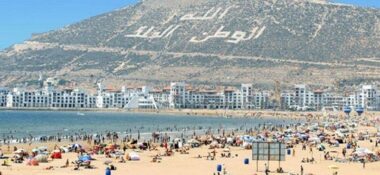
Article : Tourisme : après un début d’année 2026 solide, Agadir en route vers un été exceptionnel
À Agadir, l’été a commencé avant l’été. À fin mai, la destination affichait déjà 607.894 arrivées, 2,62 millions de nuitées et un taux d’occupation en hausse. Désormais, les professionnels misent sur un remplissage pouvant atteindre 95% en juillet-août, porté par les vacances scolaires, les réservations de dernière minute et la vigueur du marché national. Ce que disent les chiffres, et ce qu’ils annoncent pour la première station balnéaire du pays.
Article : Marrakech accueille les 19 et 20 juin la 4e édition du Forum parlementaire économique euro-méditerranéen et du Golfe
Parlementaires, responsables publics, CGEM et institutions financières y débattront d’intégration régionale, d’intelligence artificielle, d’emplois durables et de chaînes de valeur euro-africaines.