
Post-COVID Capitalism
GENEVA – No event since World War II’s end has had as profound a global impact as COVID-19. The pandemic has triggered a public health and economic crisis on a scale unseen in generations and has exacerbated systemic problems such as inequality and great-power posturing.
The only acceptable response to such a crisis is to pursue a “Great Reset” of our economies, politics, and societies. Indeed, this is a moment to re-evaluate the sacred cows of the pre-pandemic system, but also to defend certain long-held values. The task we face is to preserve the accomplishments of the past 75 years in a more sustainable form.
In the decades after WWII, the world made unprecedented strides toward eradicating poverty, reducing childhood mortality, increasing life expectancy, and expanding literacy. Today, international cooperation and trade, which drove the post-war improvement in these and many other measures of human progress, must be maintained and defended against renewed skepticism of their merits.
At the same time, the world also must remain focused on the defining issue of the pre-pandemic era: the “Fourth Industrial Revolution” and the digitization of countless economic activities. Recent technological advances have given us the tools that we need to confront the current crisis – including through the rapid development of vaccines, new treatments, and personal protective equipment. We will need to continue to invest in research and development, education, and innovation, while at the same time building protections against those who would misuse technology.
But other shibboleths of our global economic system will need to be re-evaluated with an open mind. Chief among these is the neoliberal ideology. Free-market fundamentalism has eroded worker rights and economic security, triggered a deregulatory race to the bottom and ruinous tax competition, and enabled the emergence of massive new global monopolies.
Trade, taxation, and competition rules that reflect decades of neoliberal influence will now have to be revised. Otherwise, the ideological pendulum – already in motion – could swing back toward full-scale protectionism and other lose-lose economic strategies.
Specifically, we will need to reconsider our collective commitment to “capitalism” as we have known it. Obviously, we should not do away with the basic engines of growth. We owe most of the social progress of the past to entrepreneurship and to the capacity to create wealth by taking risks and pursuing innovative new business models. We need markets to allocate resources and the production of goods and services efficiently, particularly when it comes to confronting problems like climate change.
But we must rethink what we mean by “capital” in its many iterations, whether financial, environmental, social, or human. Today’s consumers do not want more and better goods and services for a reasonable price. Rather, they increasingly expect companies to contribute to social welfare and the common good. There is both a fundamental need and an increasingly widespread demand for a new kind of “capitalism.”
To reconsider capitalism, we must reconsider the role of corporations. An early exponent of neoliberalism, the Nobel laureate economist Milton Friedman believed (quoting former US President Calvin Coolidge) that “the business of business is business.” But when Friedman pioneered the doctrine of shareholder primacy, he did not consider that a publicly traded company might be not just a commercial entity but also a social organism.
Moreover, the COVID crisis has demonstrated that companies that invested in strengthening their long-term vitality have been better equipped to weather the storm. In fact, the pandemic has hastened the shift toward a stakeholder model of corporate capitalism, following the US Business Roundtable’s embrace of this concept last year.
But for more socially and environmentally conscious business practices to stick, companies need clearer guidelines. To meet that need, the World Economic Forum’s International Business Council has developed a set of “Stakeholder Capitalism Metrics,” so that businesses can get on the same page when it comes to assessing value and risks.
If the COVID crisis has shown us anything, it is that governments, businesses, or civil-society groups acting alone cannot meet systemic global challenges. We need to break down the siloes that keep these domains separate, and start to build institutional platforms for public-private cooperation. Equally important, younger generations must be involved in this process, because it is inherently about the long-term future.
Finally, we must expand our effort to recognize the diversity of backgrounds, opinions, and values among citizens at all levels. We each have our individual identities, but we all belong to local, professional, national, and even global communities with shared interests and intertwined destinies.
The Great Reset should seek to lend a voice to those who have been left behind, so that everyone who is willing to “co-shape” the future can do so. The reset that we need is not a revolution or a shift to some new ideology. Rather, it should be seen as a pragmatic step toward a more resilient, cohesive, and sustainable world. Some of the pillars of the global system will need to be replaced, and others repaired or strengthened. To achieve shared progress, prosperity, and health requires nothing more – or less.
à lire aussi
Article : Le Nouvel an de l'hégire (1er Moharram) sera célébré ce mercredi 17 juin au Maroc
Le 1er Moharram de la nouvelle année de l’Hégire 1448 correspondra au mercredi 17 juin 2026, a annoncé le ministère des Habous et des affaires islamiques.
Article : Adouls : la Cour constitutionnelle valide l’essentiel de la réforme, mais écarte plusieurs dispositions
Saisie par 93 députés avant la promulgation du texte, la Cour a déclaré non conformes des articles touchant aux incompatibilités professionnelles, aux personnes en situation de handicap, au témoignage collectif dit “lafif” et à l’organisation des instances représentatives. Le texte devra donc être corrigé sur ces points, sans remettre en cause le cœur de la nouvelle loi 16.22.
Article : En commission, les conseillers votent la nationalisation de la Samir et le plafonnement des hydrocarbures
Deux propositions de loi portant sur les hydrocarbures et la Samir ont été récemment adoptées en commission à la Chambre des conseillers. Un vote "surprise" rendu possible par un rapport de forces numérique défavorable à la majorité, lors d’une séance où l’opposition était majoritaire en nombre. Si ces textes ont franchi l’étape de la commission, leurs promoteurs sont conscients qu’ils ont peu de chances d’être adoptés en plénière.
Article : Retail : la guerre silencieuse pour conquérir le panier des Marocains
Pendant longtemps, les courses du quotidien se sont surtout jouées entre l’épicier du quartier, le grossiste et quelques grandes surfaces. Ce modèle commence à se fissurer. Entre fusion capitalistique, rachats d’enseignes, master-franchises, centrales d’achat, logistique commune et formats de proximité, les grands opérateurs installent peu à peu des réseaux capables d’accompagner le consommateur du café du matin aux achats du week-end. Non sans bousculer les équilibres.
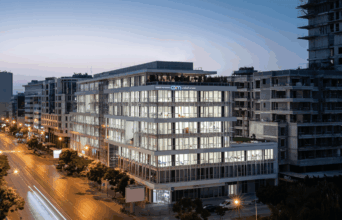
Article : Crédit du Maroc : ce que cache l’augmentation de capital à 699 MDH
Depuis son passage sous le contrôle de Holmarcom, Crédit du Maroc a changé de rythme. La banque affiche des bénéfices en hausse, prépare son plan CDM Boost 2028, et propose désormais à ses actionnaires de suivre le mouvement via une opération ouverte du 26 juin au 16 juillet. Derrière le prix fixé à 938 DH par action, le marché devra surtout juger si cette nouvelle étape confirme une trajectoire ou ouvre un pari plus large. Décryptage.
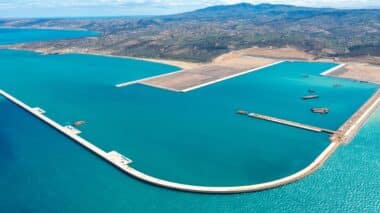
Article : Nador West Med : derrière le port, le pari industriel de l’Oriental
ROUND UP. Prévu pour entrer en service fin 2026, Nador West Med se construit déjà au-delà de ses quais : routes dédoublées, future autoroute vers Guercif, projets chinois dans l’éolien, les pneus et les alliages, ambition énergétique autour du GNL et de l’hydrogène vert. L’enjeu est désormais de transformer cette infrastructure en véritable moteur économique régional.