
Good Jobs for Disabled Workers
NAIROBI – Employment delivers more than a paycheck. It also offers personal independence, social status, and the self-esteem that these assets bring. For people with disabilities, these benefits are particularly valuable – and particularly difficult to access.
With the United Nations Sustainable Development Goals, the world has agreed to “promote full and productive employment and decent work for all” by 2030. For a young country like Kenya, where 21% of the population is aged 19-24, progress is particularly urgent, in order to convert a youth bulge into a demographic dividend. But, though the SDG agenda fails to acknowledge it, success will be impossible without addressing the unique – and formidable – challenges faced by disabled workers.
In developed countries, 50-70% of working-age people with disabilities are unemployed. In the United Kingdom, a 2017 study indicates that disabled job seekers submit 60% more applications than their non-disabled counterparts before they secure a position. Only 51% of applications from people with disabilities result in an interview, compared to 69% for non-disabled people.
In the developing world, the labor market is even tougher on people with disabilities, 80-90% of whom are unemployed. In India, for example, only about 100,000 of some 70 million people with disabilities have obtained formal private-sector employment.
This is partly a result of discrimination by employers, who might assume that disabled workers are less productive or that non-disabled workers would find working with them annoying or disturbing. Employers might also expect disabled workers to cost more. This is certainly the case in Kenya, where companies are legally required to accommodate the needs of contracted employees with disabilities.
But barriers to employment arise long before disabled workers enter the labor market. In Kenya, the UK-based Voluntary Services Overseas reports that people with disabilities often struggle to complete their education, owing to factors like inaccessible libraries and a lack of tutors trained to work with the disabled. There is only one teacher for every 105 children with emotional disabilities in Kenya, compared to one teacher for every 35 non-disabled students, meaning that the former probably receive significantly less personal attention and thus a lower quality of education.
Moreover, even disabled people who acquire technical proficiency that qualifies them for a position may not learn other key skills, such as how to communicate effectively. Imagine that a 19-year-old Kenyan woman on the autism spectrum who suffers from a severe anxiety disorder is seeking employment. Despite her impressive coding and typing skills, her inability to sell herself in a job interview severely undermines her chances of being hired.
Improving the employment prospects of people with disabilities thus requires not only the delivery of quality education tailored to their needs, but also the introduction of other targeted initiatives, such as job coaching. Job coaches would work directly with disabled people to gain a sense of their abilities, interests, and potential, while developing partnerships with employers, to whom they could recommend promising candidates. This would allow disabled people to bypass an interview process in which they would struggle to perform well, while reassuring employers that a disabled candidate would not be an overly risky or costly choice.
Job coaches could also help to negotiate the terms of a new employee’s contract through so-called customized employment, which personalizes the employment relationship to ensure that it meets the needs of both employee and employer. For example, that 19-year-old autistic woman might perform best working from home. Because her duties are largely online, this would be entirely feasible, though the company might have to make reasonable accommodations, such as allowing her to take her laptop home and ensuring that she has Internet connectivity there.
Beyond boosting the employee’s own job satisfaction and productivity, such an agreement might save the company money, as it no longer has to accommodate her needs at the workplace. Customized employment can also help to avoid friction between workers with disabilities and their colleagues.
Enabling people with disabilities to thrive in the labor market will require cooperation among multiple stakeholders, from private companies to schools to policymakers. There are promising solutions available. But if they are to take effect in time to achieve SDG8 – and, for Kenya, to harness its youth bulge – the time to start is now.
à lire aussi
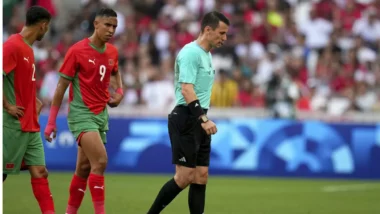
Article : Maroc-Écosse : l'Ouzbek Tantashev au sifflet, deux ans après la demi-finale olympique mouvementée contre l’Espagne
Désigné par la FIFA pour la rencontre du 19 juin au Boston Stadium, celui qui est arbitre international depuis 2013 avait quitté le terrain dès la 15e minute aux JO de Paris après une collision avec Marc Pubill.
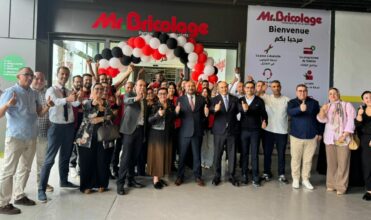
Article : Mr. Bricolage vise 45 magasins au Maroc d'ici 2032 et un plan d'investissement de 700 MDH
Mr. Bricolage Maroc prévoit le déploiement de 45 magasins d’ici 2032, au rythme d’une ouverture toutes les huit semaines, dans le cadre d’un plan porté par un investissement de 700 millions de DH.

Article : Loi 16.22 sur les adouls : l’Ordre réagit à la décision de la Cour constitutionnelle
L’invalidation partielle du texte par la Cour constitutionnelle est accueillie avec soulagement par une partie de la profession, qui y voit la confirmation de réserves exprimées depuis plusieurs mois. Mais pour Maître Driss Trali, membre du bureau exécutif de l’Ordre national, la réforme reste incomplète tant que le dépôt des fonds, l’officialité pleine de l’acte et l’indépendance de l’instance professionnelle ne sont pas consacrés par la loi.

Article : Bourse de Casablanca : le MASI termine encore dans le vert
Au lendemain de sa progression de 4,63%, l'une des plus fortes hausses de son histoire récente, le MASI poursuit son redressement le mardi 16 juin. L'indice a gagné 0,15% à 18.782,58 points, porté notamment par les valeurs immobilières et minières, dans un marché qui conserve une partie de l'élan né du regain d'optimisme sur le front géopolitique.
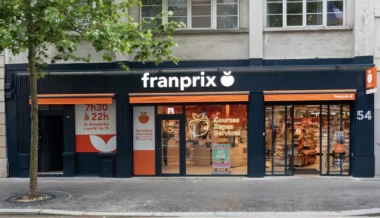
Article : Un premier magasin Franprix en test à Casablanca dès le 3 juillet
Le groupe H&S Invest Holding de Moncef Belkhayat concrétise son accord avec le groupe Casino avec l’ouverture, en test, d’un premier magasin Franprix à Casablanca.
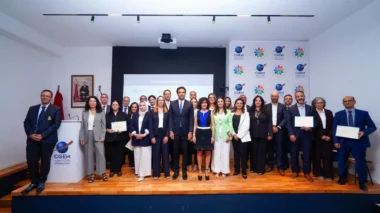
Article : 20 ans de la Charte RSE : la CGEM distingue 21 entreprises et porte à 152 le nombre de sociétés labellisées
Lancé en 2006, le dispositif patronal a récompensé cette année dix nouvelles entreprises, dont Crédit Agricole du Maroc, Pharma 5 et Rabat Région Mobilité. Onze autres ont vu leur distinction renouvelée.