Report. Eid al-Adha 2026 — The outrageously expensive sheep
On Sunday, May 24, three days before the feast of sacrifice, Médias24 toured two livestock markets in Casablanca: the municipal market set up on the edge of the International Fair, and the market at the former slaughterhouses of Hay Mohamadi. Two different approaches, two atmospheres, but the same observation: this 2026 edition, the first since last year's cancellation, comes at a high cost — too expensive for many Moroccan households.
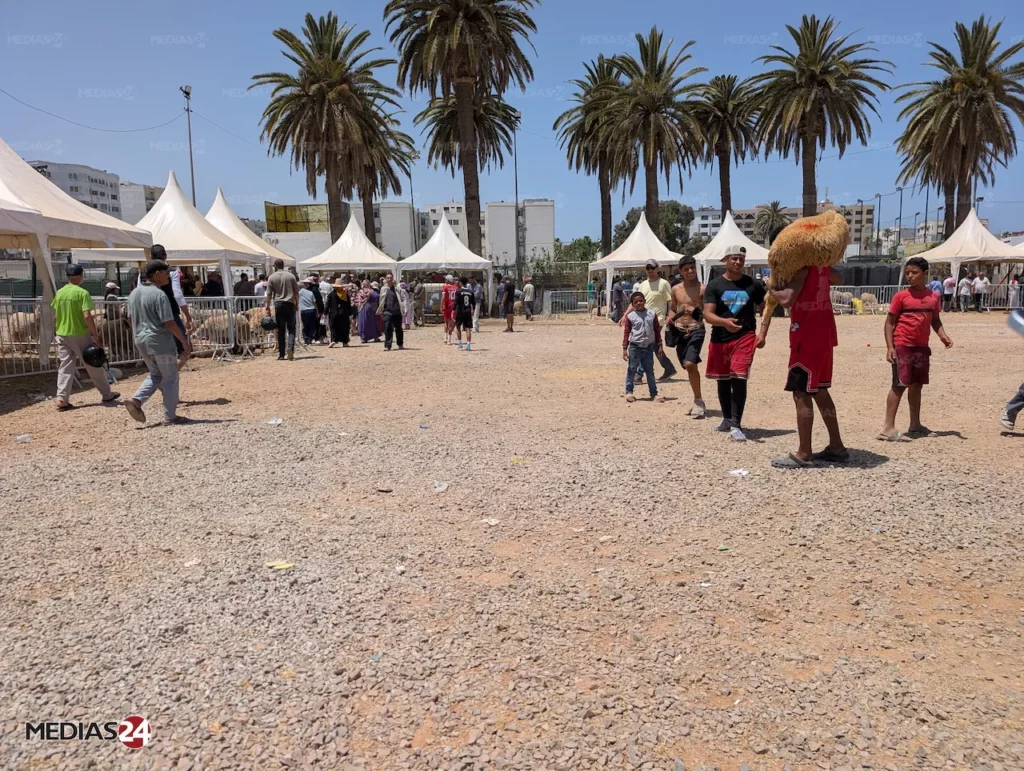
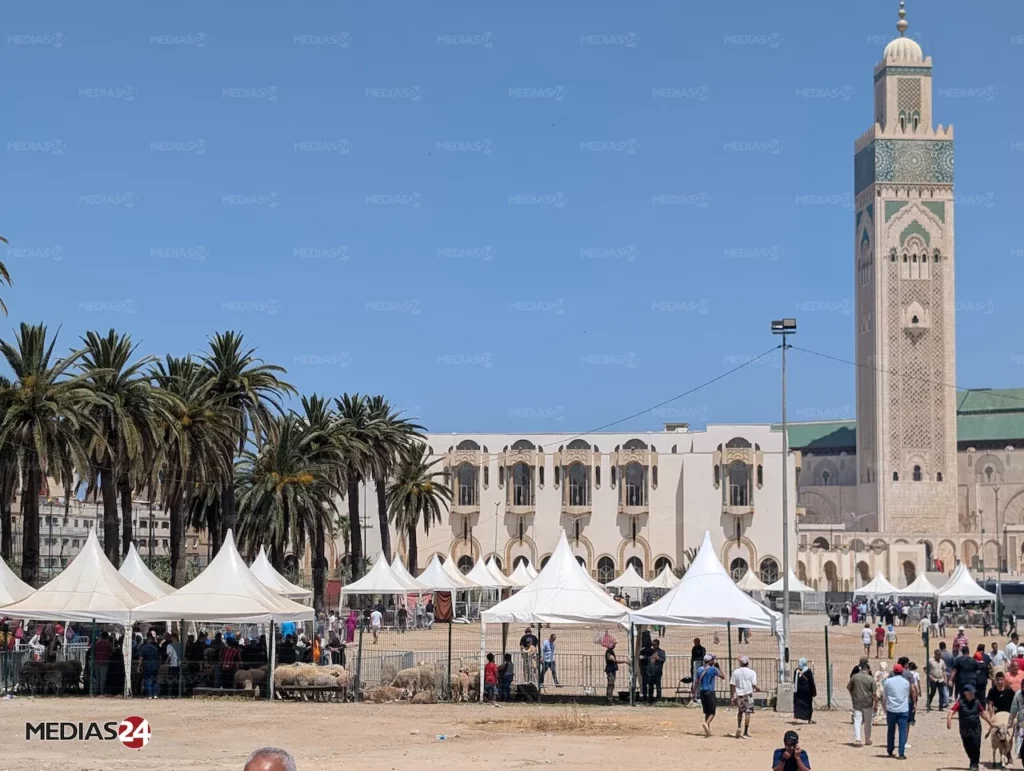
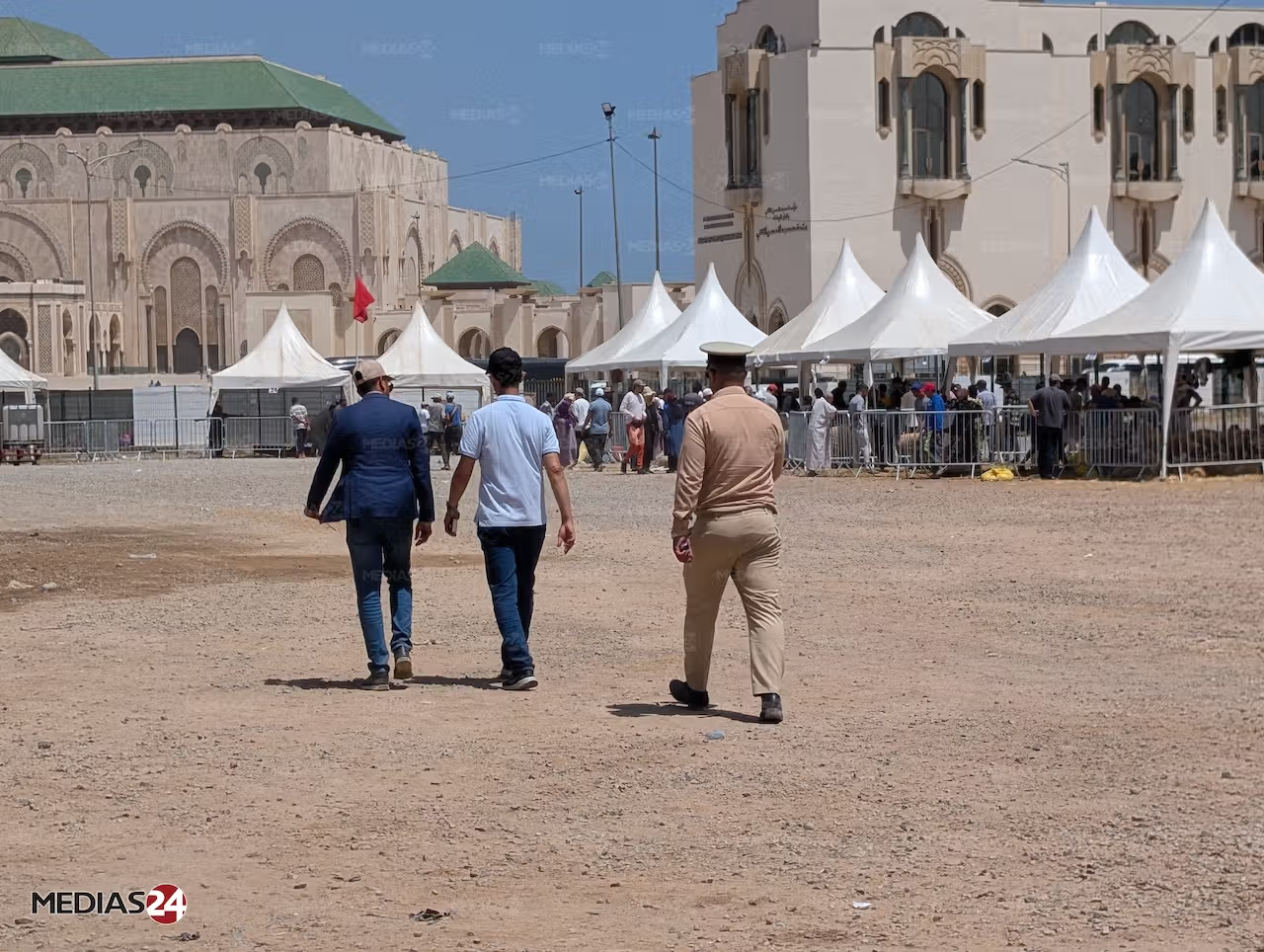
It is just after noon when the heat begins to bite on the esplanade of the Casablanca Fair. Around thirty white pagoda tents are lined up on a slightly raised vacant lot, their immaculate canvas contrasting with the ochre dust of the ground. From afar, under the imposing silhouette of the Hassan II Mosque, the setup resembles a well‑organized military encampment.
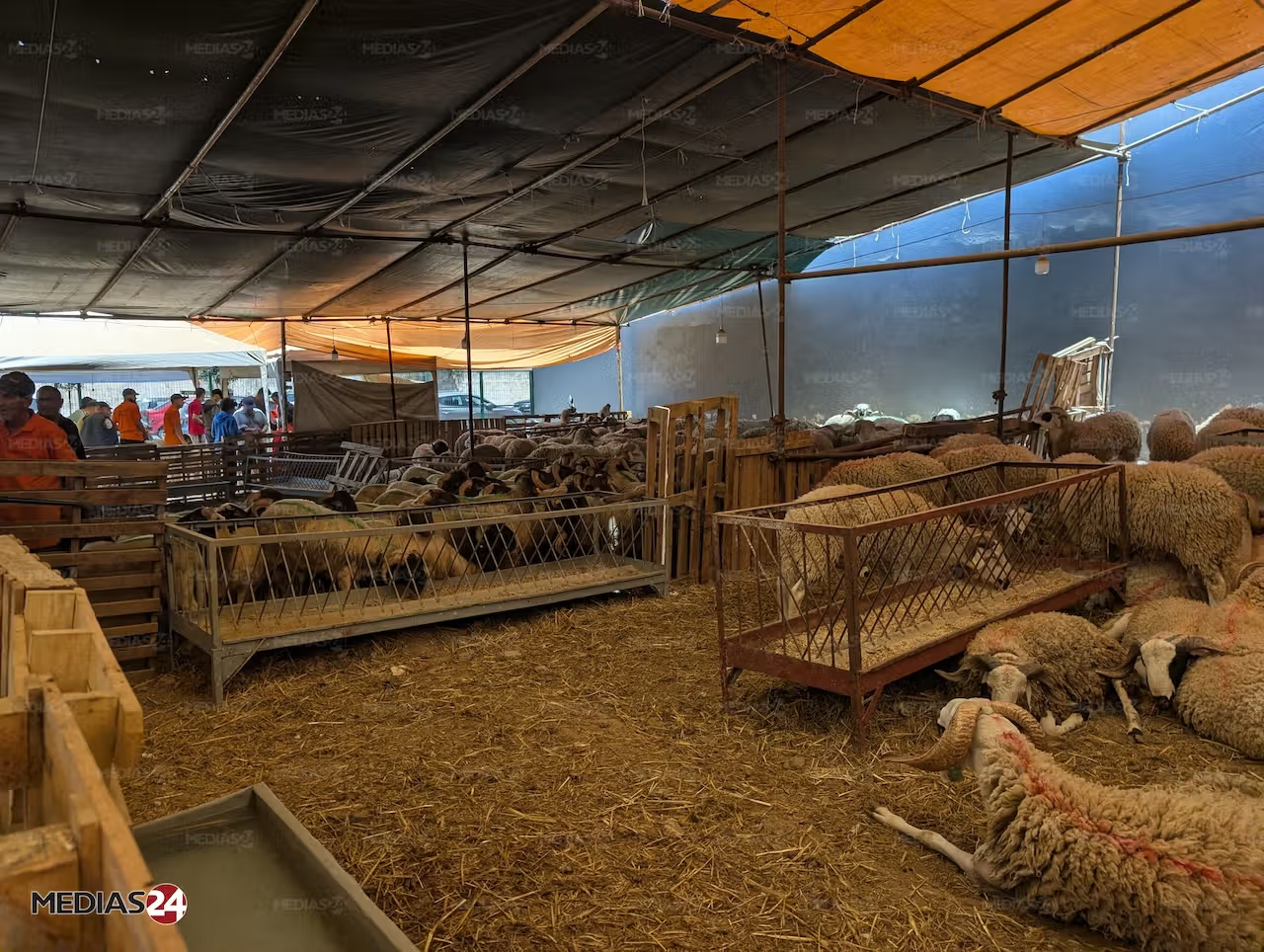
Up close, it’s a different story. Out of the twenty‑five stands set up by the city, just over half are stocked.
The others are empty: few animals, some vendors slouched at the back of their stands, next to a few empty metal feeders still lying on the ground — remnants of herds sold earlier in the week. By then, many sheep had already been sold.

Limited offerings
It’s the last weekend before Eid al‑Adha. And this market, in the heart of Casablanca, during what is supposed to be the busiest weekend before Eid, is paradoxically quiet. The commotion at the market entrance, set against an almost cinematic backdrop, contrasts with the sluggish pace of business.
Families parade in compact groups, women in djellabas accompanied by children tugging at their sleeves, men moving with their hands behind their backs, evaluating before deciding.
The atmosphere is that of a souk nearing its end, when the finest animals have already found buyers and what remains calls for negotiation. However, the vendors seem reluctant to give ground.
The comment shared out loud by a woman met on‑site sums up the general impression: "Rahba kbira ou l’hawli qlil" — "the place is large, but the offerings are insufficient." A simple economic observation partly explaining both the surge in prices and their persistence.
It must be said that the context of this 2026 edition was particularly anticipated. Rainfall has been plentiful, forage conditions are considered better, and several public support measures have been implemented to ensure a satisfactory supply and contain prices following the cancellation of the 2025 edition of Eid al‑Adha.
The statistics from the Ministry of Agriculture had appeared reassuring. Affordable Eid prices were presented as a given. On the ground, this Sunday, a different reality unfolds.
Inside the market, a woman in her thirties, accompanied by her ten-year-old daughter, stops in front of an enclosure. She asks about the price of a few animals before announcing her budget: "Do you have any sheep for 2,500 DH?" The vendor shakes his head. "There are none."
The girl, who had already spotted a lamb and climbed onto its back like a child riding a pony at a fair, insists with the innocent confidence of children: "What do you mean, there are none? And how much does this one cost?" she asks, tapping the animal on the head while still straddling it.
Without looking up, the vendor replies: "74," meaning 3,700 DH. The little girl absorbs the answer. Her mother gently leads her to the next stand, muttering about the exorbitant prices.
The scene repeats itself in different forms throughout the market. A significant share of the clientele is female, reflecting the demographic shifts documented by the latest population census. The proportion of female heads of household continues to rise — whether widowed, divorced, or simply responsible for supporting a family.
These women, often with limited means, negotiate firmly, compare prices, and circle back. They are the true barometer of the market, and many of those we met expressed deep frustration.
High‑end price anchoring
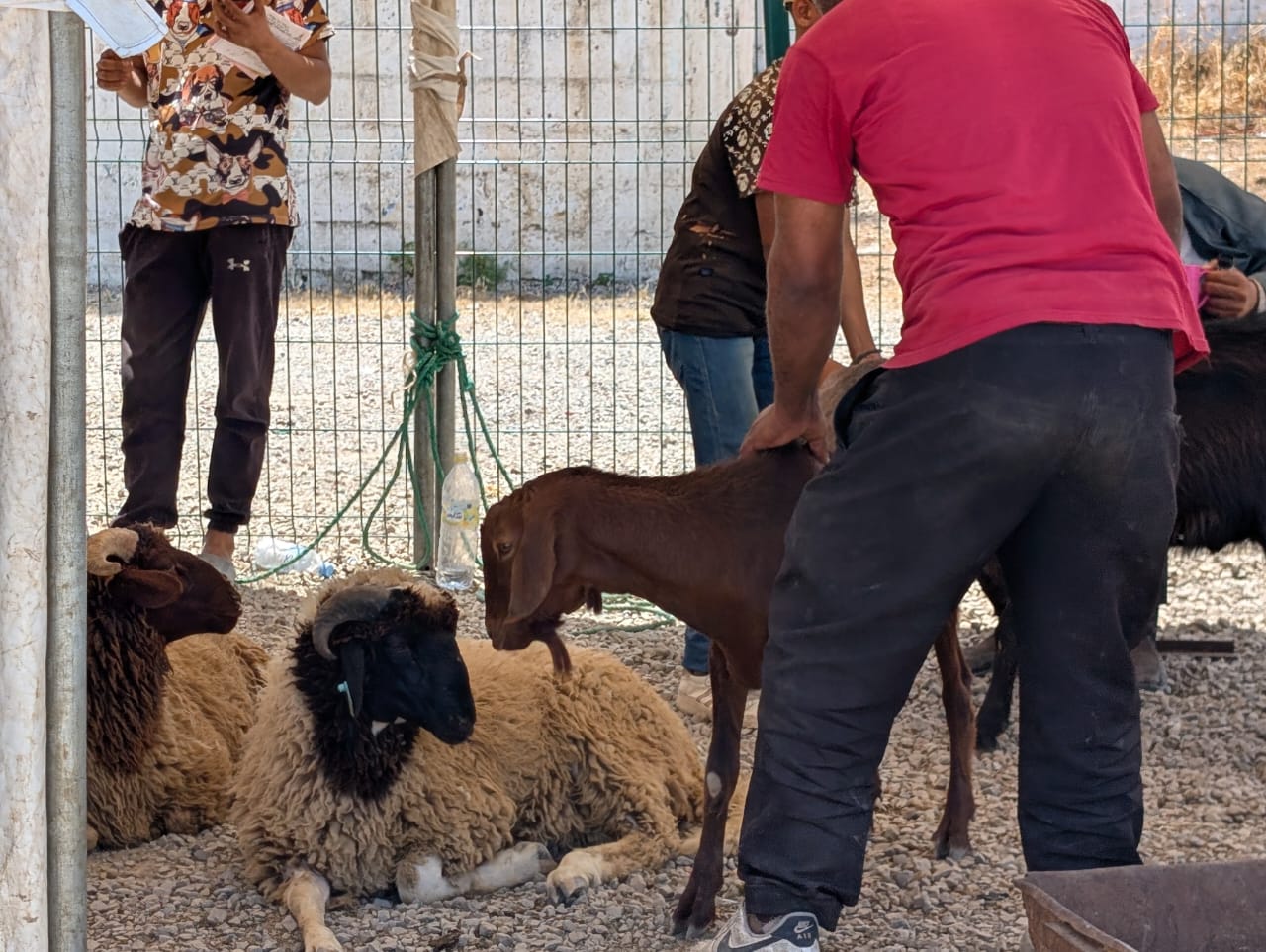
In one of the stands, a butcher from Chemaia, a small town in the Safi province known for its livestock, presents a heterogeneous lot: a few Sardi sheep, Berguis, and young reddish‑brown goat kids. Barely larger than a shepherd dog, they gaze at visitors with disarming placidity. The vendor sells them for 2,500 DH each. That morning, it is one of the few offers below the 3,000 DH mark in the entire market. Yet asking prices remain staggering.
Lambs barely six or seven months old, which make up the bulk of the available supply, are selling for between 3,000 and 4,000 DH per animal. For an animal aged one year or more — the one that fully meets the ritual requirements for sacrifice — advertised prices start at between 5,000 and 5,500 DH and quickly climb higher.
A car guard stationed at the market entrance, who had watched the entire week unfold from his corner of the sidewalk, offers a disillusioned account of the pricing dynamics.
"In the first days, they brought the larger animals. Some went for over 12,000 DH. People looked, came back, waited for the smaller ones, the cheaper ones. And then the vendors set the small ones at 3,500 DH, 4,000 DH. It’s haram what they’re doing. What is the state doing?"
The words hang in the sweltering air, capturing what economists describe as a price anchoring effect.
By first showcasing the most expensive animals, vendors reset buyers’ reference points, making acceptable what would otherwise have seemed exorbitant.
Administrative and sanitary oversight
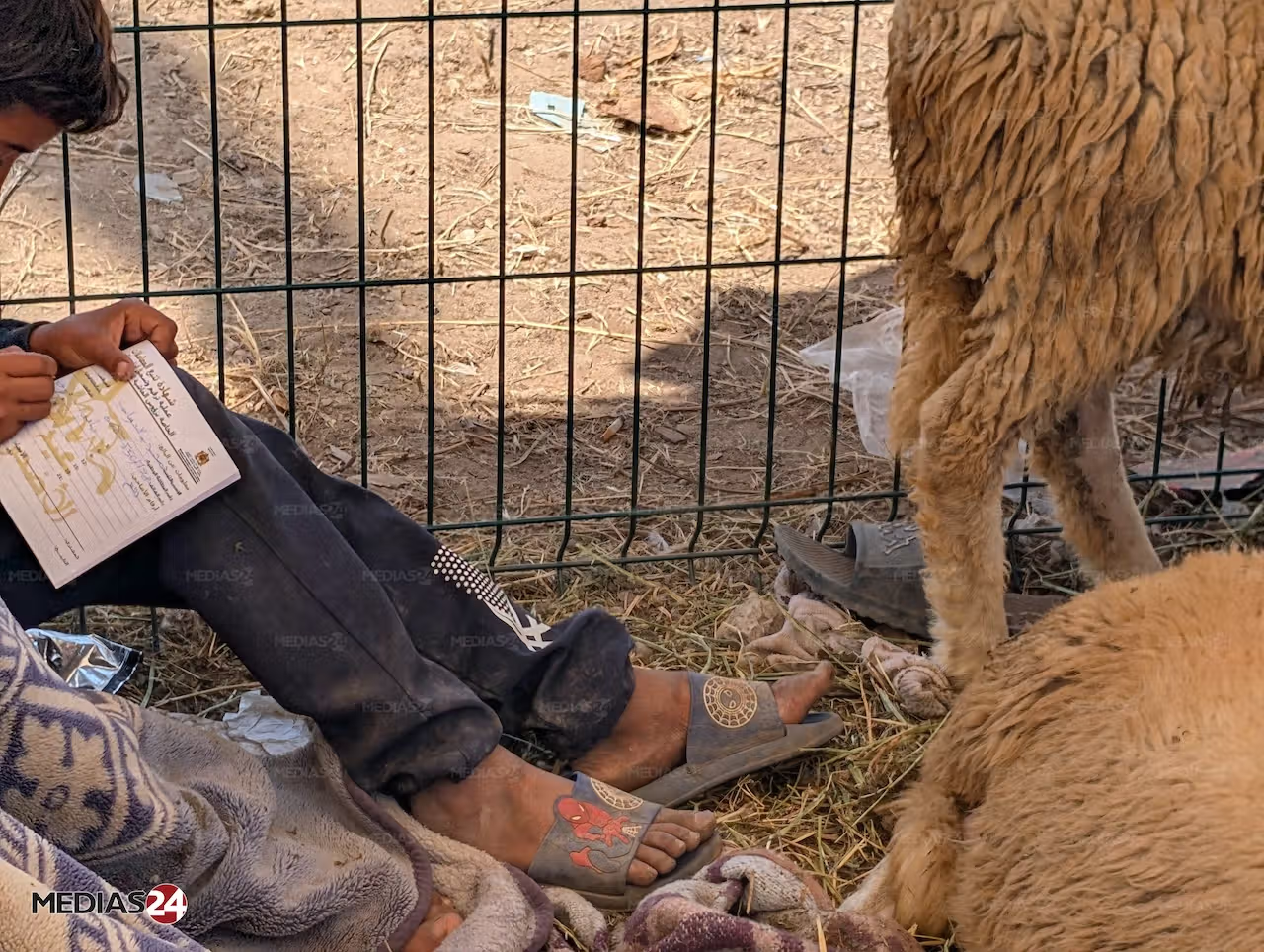
With each completed transaction, an administrative procedure is set in motion. An information sheet records the seller’s name, the buyer’s name, the animal’s tag number, the seller’s phone number, and the transaction amount. This form, designed to ensure livestock traceability, lends the act of purchase an almost notarial dimension and attests to genuine efforts to formalize a market long left to its own devices.
The presence of health authorities reinforces this impression of institutional oversight. A patrol composed of a veterinarian wearing an ONSSA cap and two local authority agents, one in mokhazni attire, moves methodically through the aisles. In front of one of the enclosures, the veterinarian calls out to a butcher and asks him to isolate an animal visibly unwell, standing apart from the rest of the lot, head lowered. The vendor complies without protest.
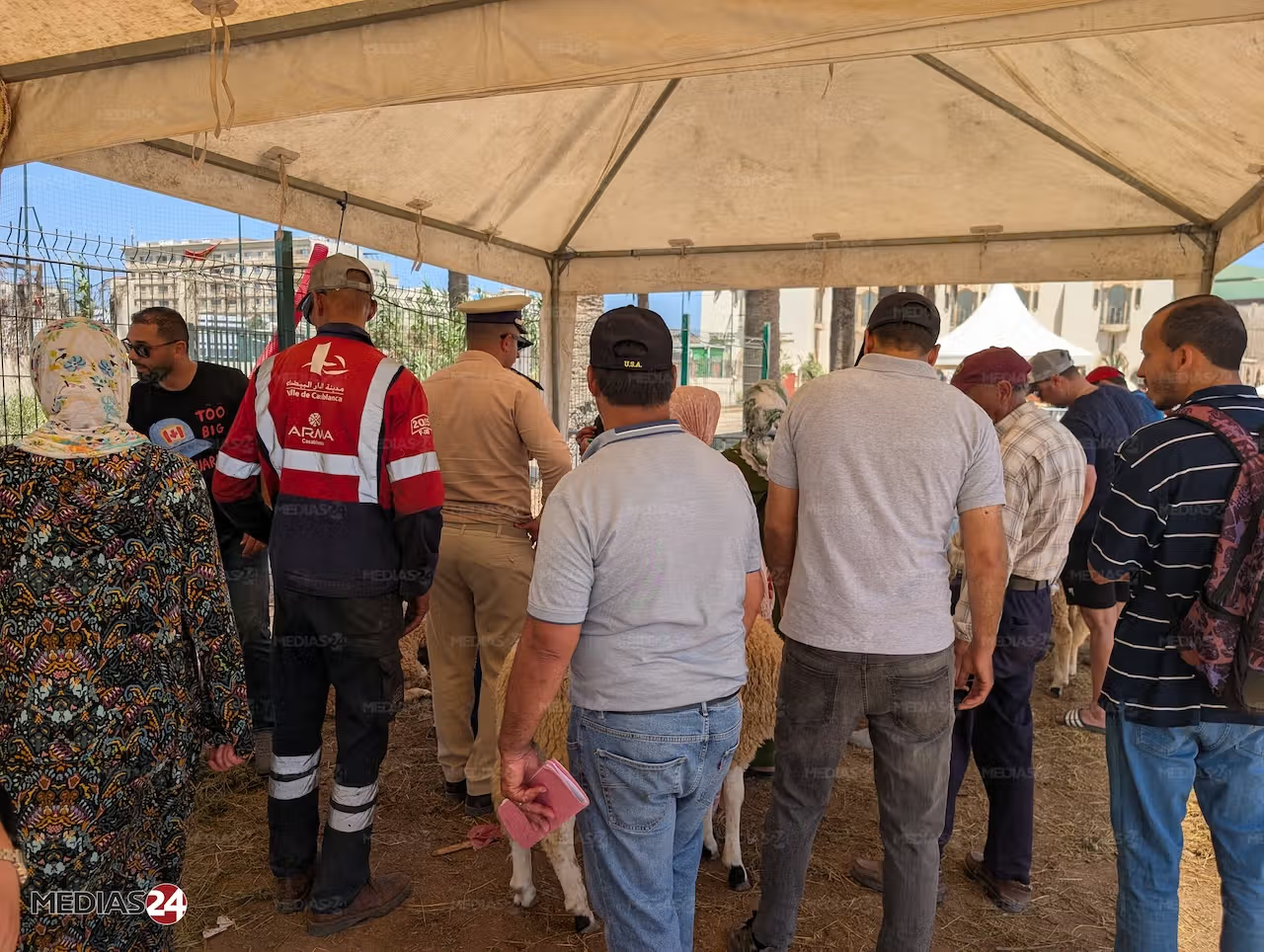
A group of young people in orange vests, emblazoned with the logo of the city of Casablanca, distributes thick white plastic garbage bags marked with sanitary indications in black to everyone. "It’s a joint operation between the city and its SDL Casa Baia," one of them explains.
The state is thus present, visible, active on the health front. Yet faced with the price dynamics, its tools seem insufficient, despite the decree from the head of government and the statement from the Competition Council.
80 DH per kilo
A few kilometers away, in the historic heart of Casablanca, the atmosphere is radically different. The livestock market at the former Hay Mohamadi slaughterhouses remains active, despite the disuse of the historic facilities.
In the shadow of the monumental structure, built in 1912 and redesigned in 1922 under the direction of architects Georges Louis Le Bon and Henri Prost — the latter having drawn up the city’s first urban development plan — the setting takes on a different character.
The large halls of ochre stone, with their semicircular arches and green‑tiled roofs, form an almost theatrical backdrop — dignified yet worn — that generations of cattle dealers, butchers, breeders, and brokers have shaped over time.
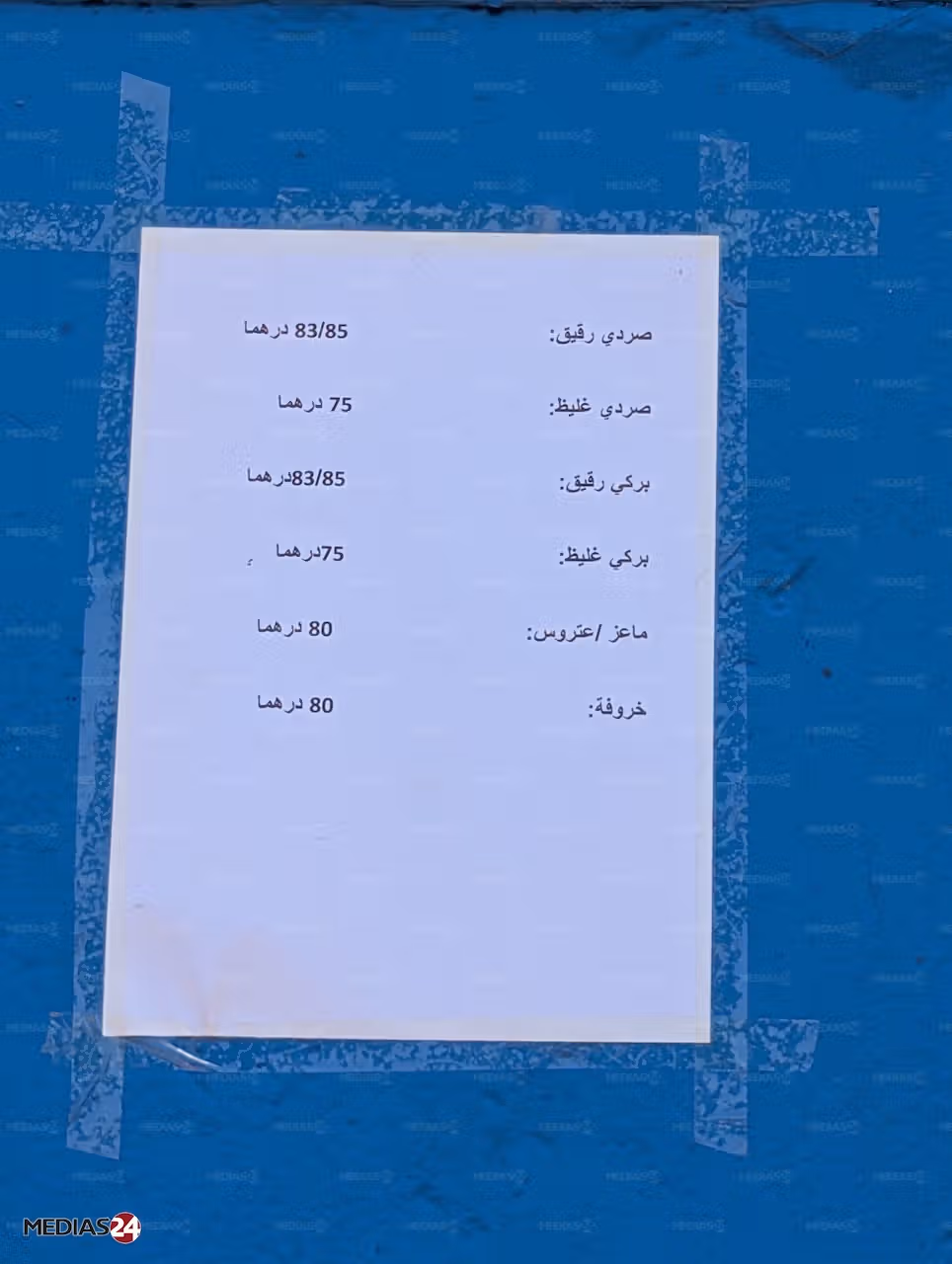
Here, animals are sold by the kilo. The difference is fundamental: the price is no longer a matter of impulse or intuition, but an objective, measured, and calculated figure. The rates are displayed on panels affixed to walls and iron doors:
- Lean Sardi (young): between 83 DH and 85 DH per kilo
- Thick Sardi: 75 DH per kilo
- Bergui: in similar ranges depending on thickness
- Kid goat and ewe: 80 DH per kilo
The consistency of prices among vendors is striking. It is not by chance, but rather the result of informal coordination among professionals who have known each other for years and have learned to avoid destructive price wars.
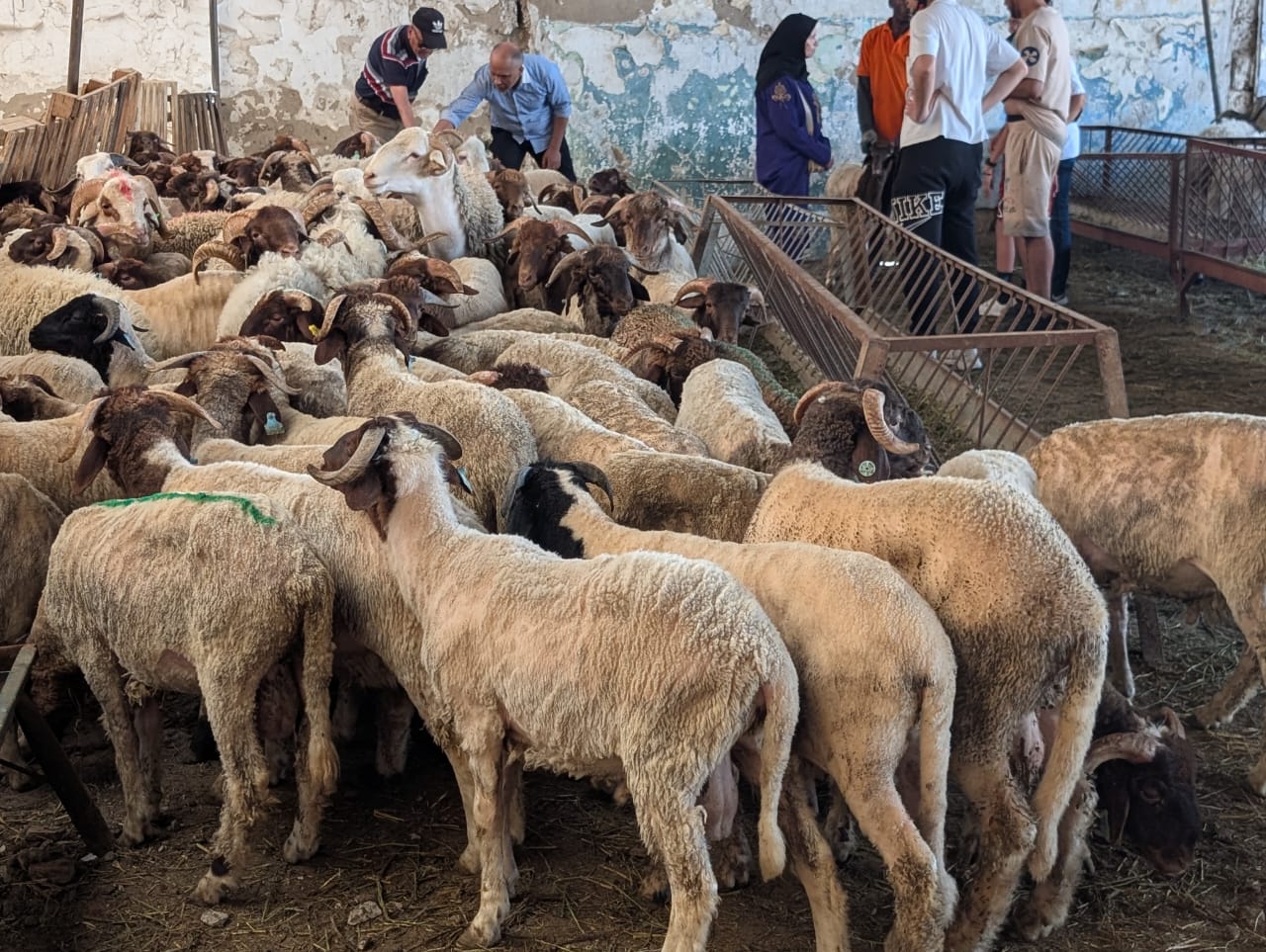
The acrid smell of hay mixed with wet wool fills the air, from the sheds lining Jaafar Al‑Barmaki Avenue, adjacent to the eateries specializing in grilled meats and smoked dishes, to the large halls of the livestock market on Aïn Al‑Hamra Street.
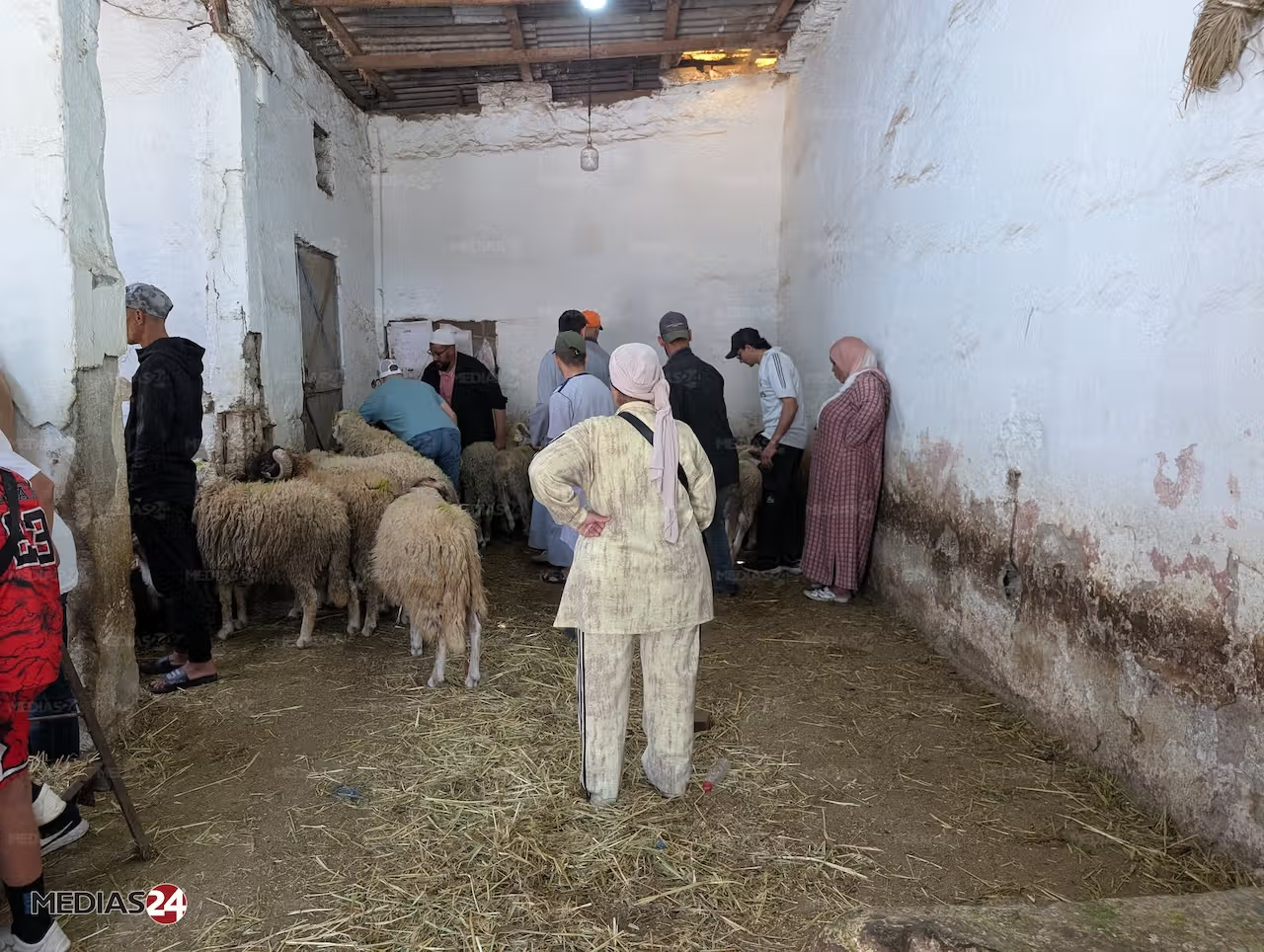
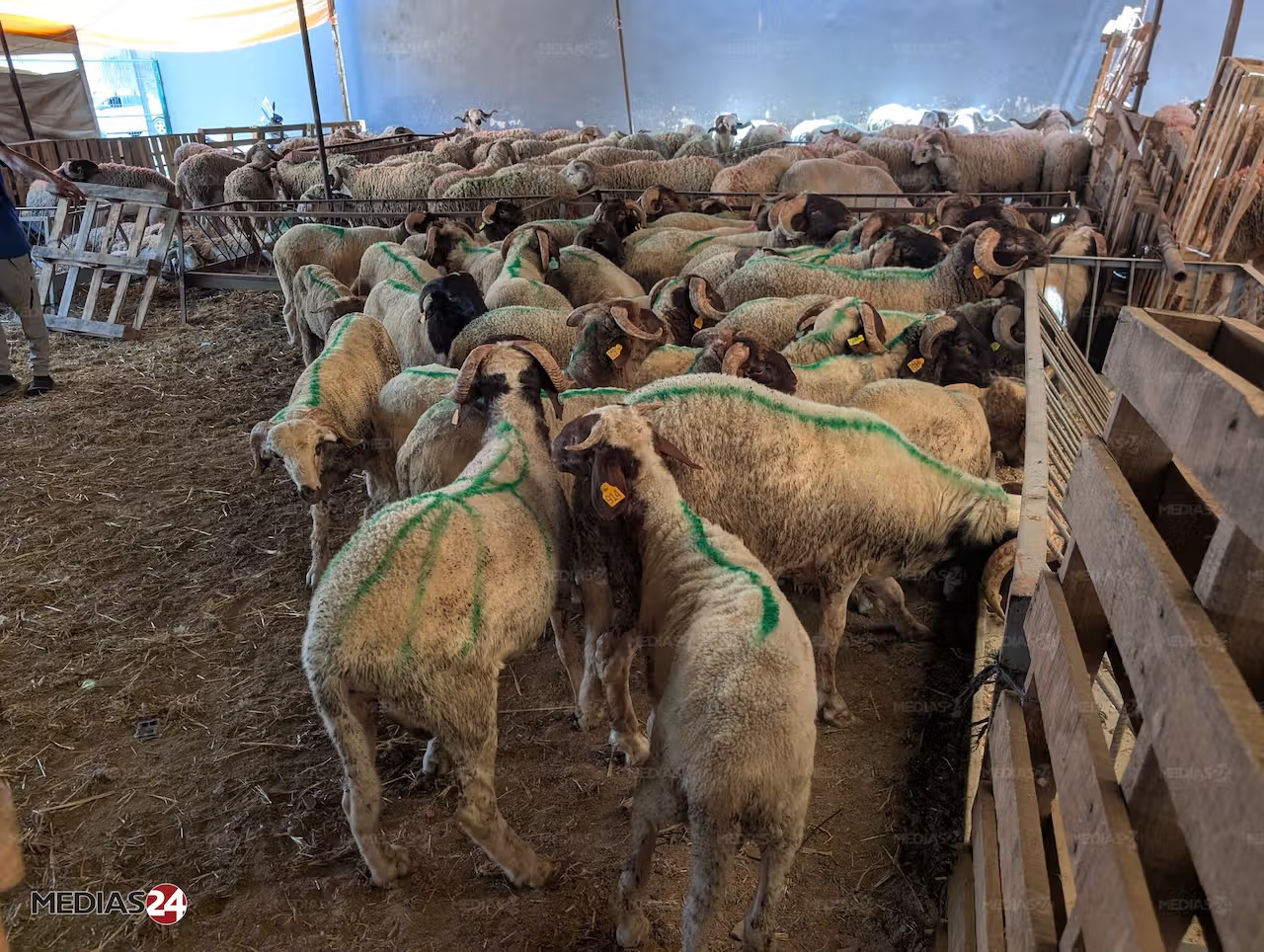
Here, the animals are categorized in separate pens, marked with a colored spot to indicate those already sold. In one of the sheds, divided into about ten pens, a vendor urgently tells his young colleague: “Don’t show this pen anymore. Everything is sold.” Customers are redirected to other lots.
The purchasing process is standardized to the point of efficiency: one selects the animal, notes the tag number on a slip, goes to the scale to determine the weight — and thus the price — pays at the cashier, and leaves with the animal, its health certificate, and a proper invoice.
Prices rising over the week
Children try to slip between the bars of an enclosure to approach the sheep, caught by a vendor with gentle firmness. "Play with them as much as you want, but don’t enter the enclosure." There are about ten like them, fascinated by the animals, weaving between the legs of adults in joyful disorder.
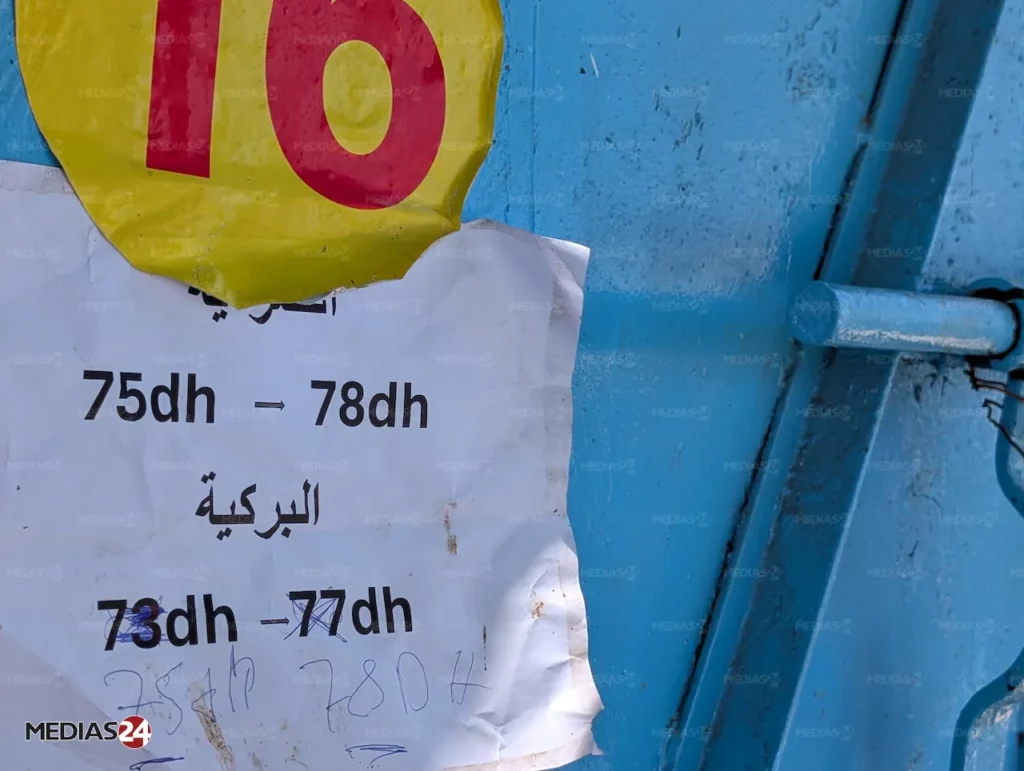
What stands out here, beyond the organization, is the price trail inscribed on the walls. At the entrance to the livestock market, a printed poster shows the prices at the beginning of the week: 73 DH to 77 DH per kilo, depending on the category. These figures are crossed out in ballpoint pen, replaced by 75 DH to 78 DH. Lower down, a more recent indication is tagged in red marker: 80 DH.
Three price layers in a week, confirmed by one of the carriers waiting for clients at the entrance: "This past weekend raised prices by five to six DH per kilo. It’s the demand pressure towards the end." The increase is not trivial — on a lamb weighing around thirty kilos, it represents an additional charge of 150 DH to 200 DH, depending on whether the transaction took place at the beginning or end of the week. And it’s not over.
This Monday, during a second visit to the fair, the agitation at the entrance is even livelier than on Sunday; prices have continued their upward trend amid pre‑holiday excitement.
Paradoxically, it is in the supermarkets that the first sign of easing appears that day. Prices there are dropping slightly, from 80 DH to 78 DH per kilo — a marginal adjustment likely calculated to attract customers who may have turned away from traditional channels, but also illustrating the structural fragmentation of a market whose segments respond to different logics and pressures.
Prices contradicting official discourse
One question lingers among those gathered around an enclosure or at the entrance to a livestock market: how do official figures, promising an adequate supply following a rainy year and support measures, align with the sight of half‑empty stands at the fair and prices that make Eid inaccessible to an increasing share of households?
This year marks the return of a deeply popular festival in Morocco — a return after a cancellation that exposed the structural flaws of a fragmented, poorly organized sector, overly exposed to climatic hazards, insufficiently capitalized, and lacking regulation to absorb shocks without passing them on to consumers.
The 2025 cancellation, the massive state support since 2023, and the rainy year have indeed helped rebuild herds. Yet this was not enough to reform market structures or stabilize prices across the chain. What the two markets in Casablanca show on this final Sunday before Eid is that the festival will take place — but at different speeds.
Households able to spend well beyond 5,000 DH will leave with the animal of their choice. Middle‑class families will make painful trade‑offs between age, size, and price. And for working‑class families, the 2026 edition may be the one where they could not afford a sheep. The little girl who was caressing the head of the lamb she wanted at 3,700 DH had to give it up. And we may never know whether her mother managed to find a sheep for 2,500 DH…

à lire aussi
Article : ONU : le Sénégal soutient officiellement la candidature de Macky Sall au poste de secrétaire général
Le Sénégal a décidé de soutenir officiellement la candidature de l'ancien président Macky Sall au poste de secrétaire général de l'Organisation des Nations Unies, une décision accompagnée d'une mobilisation du gouvernement et du réseau diplomatique sénégalais auprès des États membres de l'ONU.
Article : Le soir où 70.000 Casablancais exigèrent de voir Keegan
Mort le 20 juillet à 75 ans, Kevin Keegan avait marqué les esprits jusqu’au Maroc. En novembre 1980, blessée et d’abord absente, la star anglaise fut rappelée de son hôtel pour affronter le Raja devant un Stade d’Honneur en ébullition.
Article : À Farnborough 2026, le Maroc présente ses atouts aéronautiques
Avec un pavillon réunissant l’AMDIE, le GIMAS, l’IMA, des industriels et des start-up, le Royaume cherche à attirer de nouveaux investissements, notamment dans les moteurs et les trains d’atterrissage.

Article : Mardi 21 juillet 2026 : le dirham se déprécie face au dollar
Ce mardi 21 juillet 2026, vers 8 h 30, la première cotation centrale USD/MAD de la journée, telle que publiée par Bank Al-Maghrib (BAM), fait […]
Article : Football : le WAC, un club en quête de repères
À quelques heures d’une assemblée générale élective qui écrira un nouveau chapitre de son histoire, ce mardi 21 juillet, le Wydad Athletic Club avance à vue sur un chemin où la passion et l’amour des supporters semblent éclipsés par une politique sportive défaillante et des guerres intestines.
Article : Sahara : la Roumanie confirme son soutien au plan d'autonomie sous souveraineté marocaine
La Roumanie estime qu'une "autonomie véritable sous souveraineté marocaine peut constituer une solution viable" à la question du Sahara marocain.