
World Cup 2026: Best and worst possible draw for Morocco
Morocco has been placed in pot 2 for the 2026 World Cup, which begins June 11, 2026 in North America. FIFA announced the seeding, opening the door to several scenarios. So, what would be the worst and best draw for Morocco?
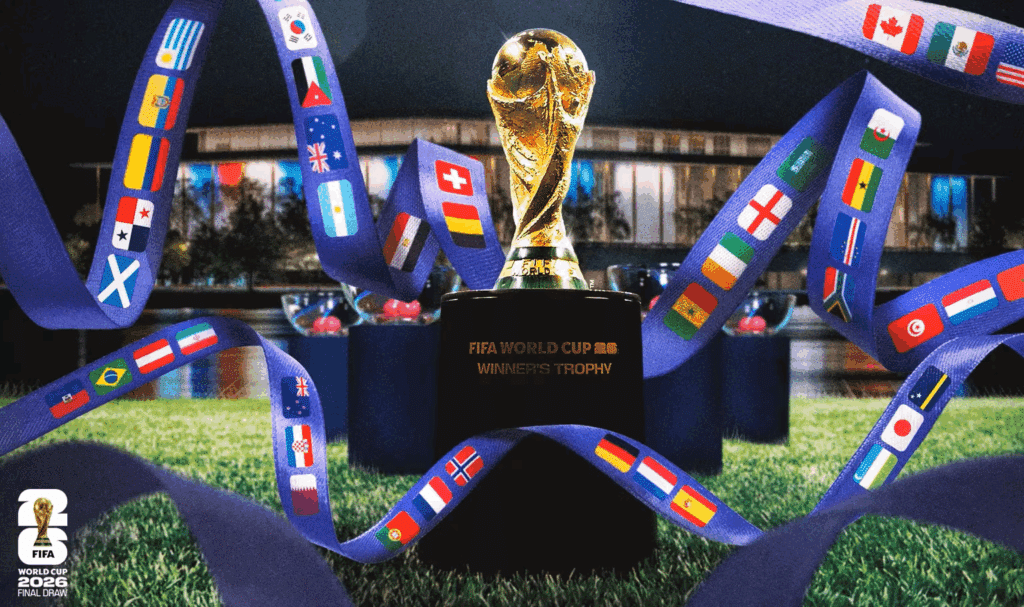
On Dec. 5, the Kennedy Center in Washington will host the final draw for the 2026 World Cup. The tournament, held in Canada, Mexico and the United States, runs from June 11 to July 18, 2026.
Meanwhile, FIFA has confirmed the pots and procedures for the draw. Morocco is in Pot 2, ranked 11th in the world.
Here is the composition of the four pots:
Pot 1: Canada, Mexico, United States, Spain, Argentina, France, England, Brazil, Portugal, Netherlands, Belgium, Germany.
Pot 2: Croatia, Morocco, Colombia, Uruguay, Switzerland, Japan, Senegal, Islamic Republic of Iran, Republic of Korea, Ecuador, Austria, Australia.
Pot 3: Norway, Panama, Egypt, Algeria, Scotland, Paraguay, Tunisia, Ivory Coast, Uzbekistan, Qatar, South Africa.
Pot 4: Jordan, Cape Verde, Ghana, Curaçao, Haiti, New Zealand, winners of European play-offs A, B, C, and D, plus winners of FIFA play-off tournaments 1 and 2.

Achieving seeded status was out of reach for Morocco, which required a place in FIFA’s top four. The team, however, had a chance to enter Pot 1 by climbing to 10th and overtaking Germany.
Morocco missed chance to be in Pot 1
Yet, the Atlas Lions were not strategic in selecting opponents to maximize points. Still, Walid Regragui's men now hold the record for 18 consecutive wins.
But not all victories carry the same weight in the FIFA's ranking. Beating France or Brazil does not yield the same reward as beating Mozambique.
Nevertheless, Morocco is assured of a place in Pot 2 for a competition unprecedented in many respects.
Firstly, because, for the first time in history, it will be played across three countries, similar to the following edition, which will be co-hosted by Morocco, Spain, and Portugal in 2030.
Secondly, the global event will feature 48 teams divided into 12 groups. The expansion offers hope to nations that struggled to reach a 32-team World Cup, such as Cape Verde or Curaçao.
However, many football enthusiasts have criticized FIFA's decision, arguing that the World Cup should pit the best from each confederation against one another. In other words, the overall level may decline.
But we are not there yet. Morocco must first learn the identity of its opponents on Friday, December 5, before FIFA unveils the following day, Saturday, December 6, the updated match schedule with the timings and venues for each match.
How will the draw take place?
According to FIFA, the draw procedure will start with the host countries. The green ball representing Mexico will be the first drawn and placed in Group A, position A1.
The red ball representing Canada is then drawn and placed in Group B at position B1, followed by the blue ball representing the United States, which is placed in Group D at position D1.
The remaining nine teams from Pot 1 are then drawn. Once placed in their respective groups, the draw continues with the teams from Pots 2, 3, and 4, in that order, with each pot needing to be emptied before moving on to the next.
The draw concludes once all teams from Pot 4 have been assigned to a group. FIFA ensures, as far as possible, that no group contains multiple teams from the same confederation.
This principle applies to all confederations except UEFA, which is represented by 16 teams.
"Each group must have at least one UEFA representative, but no more than two. Thus, four of the 12 groups have two UEFA representatives (including the four future winners of the European play-offs)," FIFA specifies.

The best and worst draw for Morocco
Given FIFA’s constraints — no two African nations facing each other in the group stage, and a maximum of two European representatives per group — the most favorable scenario for the Atlas Lions would be:
- Pot 1: Canada
- Pot 3: Qatar
- Pot 4: New Zealand
A group well within reach for Achraf Hakimi's teammates, against modest or inexperienced opponents at this level. Such a draw would give Walid Regragui's men a genuine chance to aim for the top spot and approach the second round with full confidence.
Conversely, the most daunting scenario would place the Atlas Lions against global giants and in-form opponents such as Norway.
- Pot 1: Argentina
- Pot 3: Norway
- Pot 4: Italy (via European play-offs)
A true "group of death," where the national team would have to battle the reigning world champions, a strong European side, and a four-time world champion seeking redemption after missing the last two editions. First, however, they must navigate through the play-offs.
It is worth noting that the top two teams from each group, along with the eight best third-placed sides, will advance to the second round.


à lire aussi
Article : Coupe du monde 2026. Diminué par les blessures, le Maroc éliminé en quart (0-2)
Malgré un état d’esprit irréprochable, l’équipe nationale s’est inclinée en quart de finale du Mondial 2026 face à la France (0-2), ce jeudi 9 juillet à Boston. Les absences de Chadi Riad et Ismaïl Saibari ont été rédhibitoires dans le parcours des Lions de l’Atlas. Tout comme le plan de jeu restrictif du sélectionneur Mohamed Ouahbi.

Article : En direct de Boston, l'ambiance avant le match
Confiants avant le choc face à la France, les supporters marocains y croient.

Article : Mondial-2026 (1/4 finale): Composition du Maroc face à la France
Voici la composition de la sélection marocaine de football pour le match des quarts de finale de la Coupe du Monde 2026 face à la France.

Article : Mondial-2026 (1/4 finale): Composition de la France face au Maroc
Voici la composition de la sélection française de football pour le match des quarts de finale de la Coupe du Monde 2026 face au Maroc.

Article : BTP, textile, câblage : dans les métiers manuels, la pénurie de main-d’œuvre s’installe
Malgré un chômage encore élevé, les entreprises voient se raréfier les profils prêts à rejoindre les chantiers, les usines ou les ateliers. Le problème n’est plus seulement conjoncturel : niveau réel des revenus, coût de la vie, pénibilité, horaires contraignants et concurrence des services redessinent les arbitrages des travailleurs, notamment chez les jeunes. Décryptage.
Article : Bourse de Casablanca. Le MASI termine en baisse ce 9 juillet
La Bourse de Casablanca a poursuivi son repli jeudi 9 juillet, le MASI cédant 0,75% à la clôture. La séance a été marquée par un volume de 183,27 MDH, largement concentré sur Minière Touissit, qui a représenté à elle seule près des deux tiers des échanges.